Dress for the Colony You Want: Colonial Dress and the Tropics

In the mid 1800s, it was a commonly believed that wearing a flannel or woolen band wrapped around the abdomen could prevent disease. This item, dubbed the ‘cholera belt’ (fig. 1), was championed as both preventative tool and a treatment for cholera from the 1830s to the 1890s. Up until the very end of the 19th century, physicians and scientists contended that diseases like malaria, cholera, and plague were spread by miasmas – noxious gasses which emanated from rotting organic matter, swamps and marshes, or general filth such as human excrement. Despite the emergence of germ theory as an alternative epidemiological approach founded upon the research of figures such as John Snow, Robert Koch, Ronald Ross, and Louis Pasteur, the miasma theory persisted residually into the early 20th century. Founded upon inaccurate medical and environmental knowledge and heavily influenced by colonial cultural ideas of tropical regions of East Asia as inherently dangerous to the European body, the cholera belt created a boundary between the colonist and the tropics, one of isolation and protection.
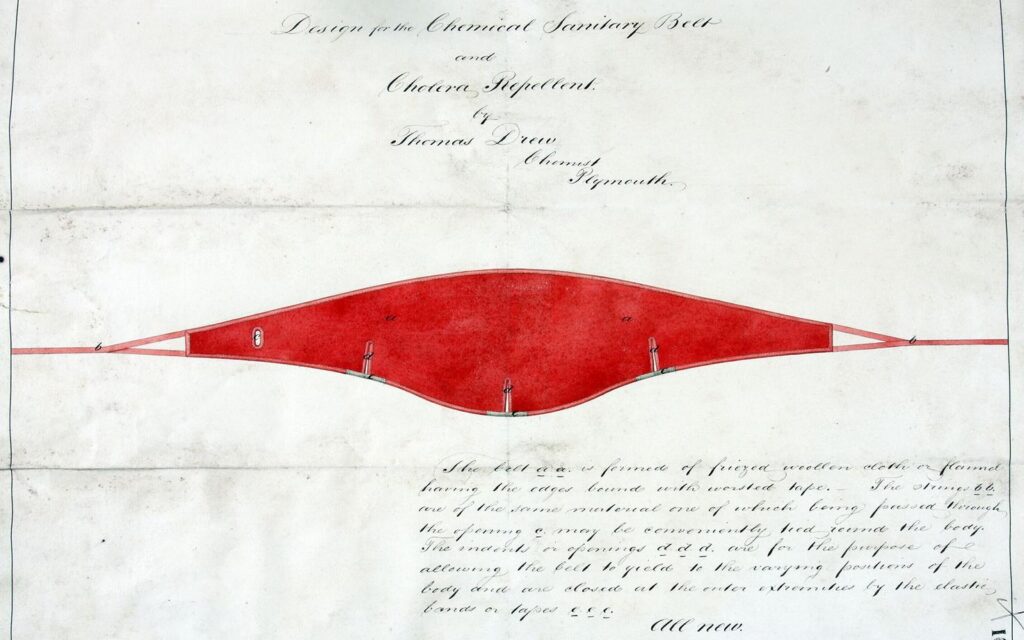
Figure 1. Thomas Drew, ‘Design for the Chemical Sanitary Belt and Cholera Repellant’, 1848. Courtesy of the National Archives, BT 45/9/1610.

To protect Europeans in the tropics, physicians, scientists, and medical professionals developed curious medical technologies such as the ‘cholera belt’ which supposedly shielded the body from disease by filtering air and warming the abdomen, but this quack prophylactic was an impractical defense against diseases. As is known today, cholera is spread by Vibrio Cholerae; however, despite the bacterium’s discovery by Filippo Pacini in 1854 and John Snow’s breakthrough waterborne transmission theory that same year, germ theory was not widely recognized until later research by Robert Koch in the 1880s.1 Prior to these discoveries, physicians believed that cooling the body made it more vulnerable to contracting diseases. Sweating was commonly understood to prevent disease, thus the repression of it by cool night breezes was something medical publications warned against. As one 1803 treatise remarks, cooling of the body “is always followed by a feverish dry skin, owing to a stoppage of perspiration, and very often proves a cause of violent diseases”.2 By the 1820s, medical texts advised people to “wear a flannel waistcoat or flannel bandage around [one’s] loins and abdomen, and avoid exposure to the night-dews and fogs” to protect against cholera.3 On and off, the cholera belt was required by British Army clothing regulations.The 1874 Sungie-Ujong and 1875 Perak expeditions in Malaysia listed cholera belts (sometimes two to each man) as official dress for the tropical campaigns.4 Woolen and flannel products continued to be advertised as “[protection] from disease” (fig. 2) as late as the 1890s. However, by the turn of the century, medical authorities and soldiers alike reported unanimously that “body bands did not contribute either to comfort, warmth or health…Ultimately, in 1917…their issue ceased”.5 The cholera belt could not protect the colonist, and medical and scientific professionals finally abandoned the garment.
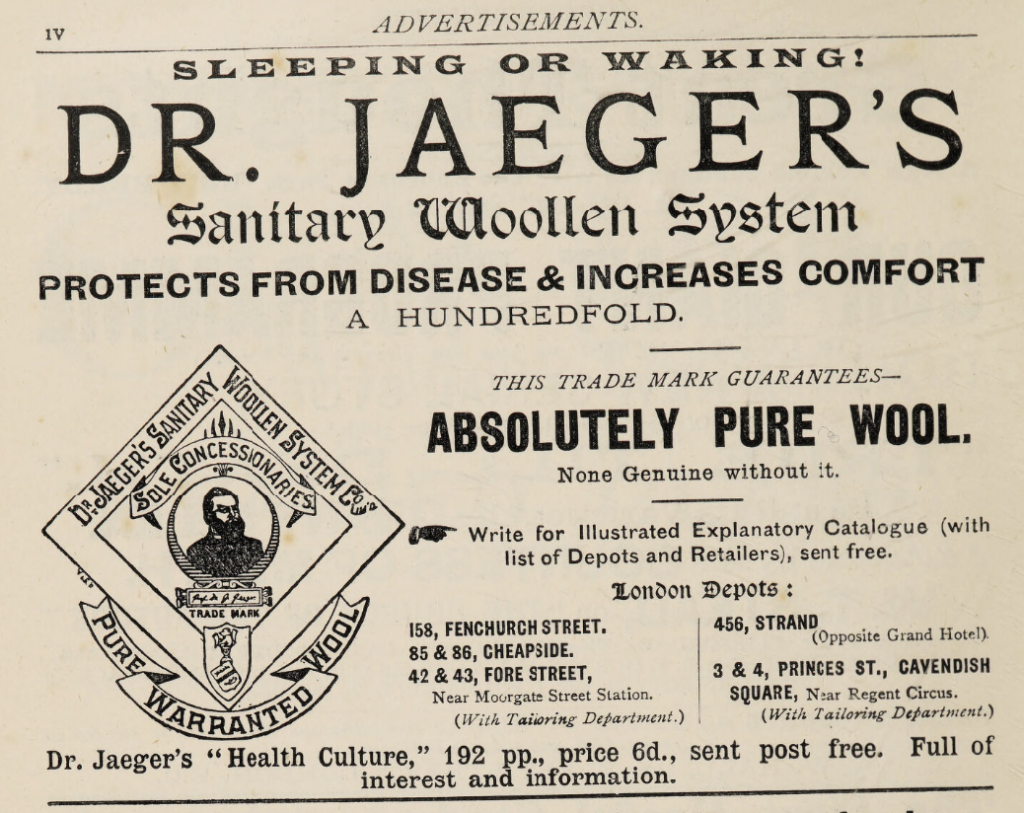
Figure 2. ‘Dr Jaeger’s Sanitary Woollen System’, The Strand Magazine 1:2 (London, 1891), p. iv.

The cholera belt’s prolonged use into the 20th century is indebted to the failure of colonial hygienists and physicians to distinguish between the dangers of tropical climates and that of tropical diseases. David Arnold outlines that the sweeping fluctuations of temperature, high humidity, and intense sunlight common to many tropical countries were thought to “[weaken] the constitutions of Europeans who were not designed for, or adapted to, warm climates”. 6 Under most circumstances, traveling to the tropics was deadly for Europeans. In the 19th century, death rates for Europeans in tropical regions were more than double that at home (fig. 3).7 Epidemiologically, moving troops to new environments will expose them to diseases they have not developed immunities for, but many contemporary Europeans understood this phenomenon to signify the “danger of a ‘tropical climate'” rather than the danger of tropical diseases.8
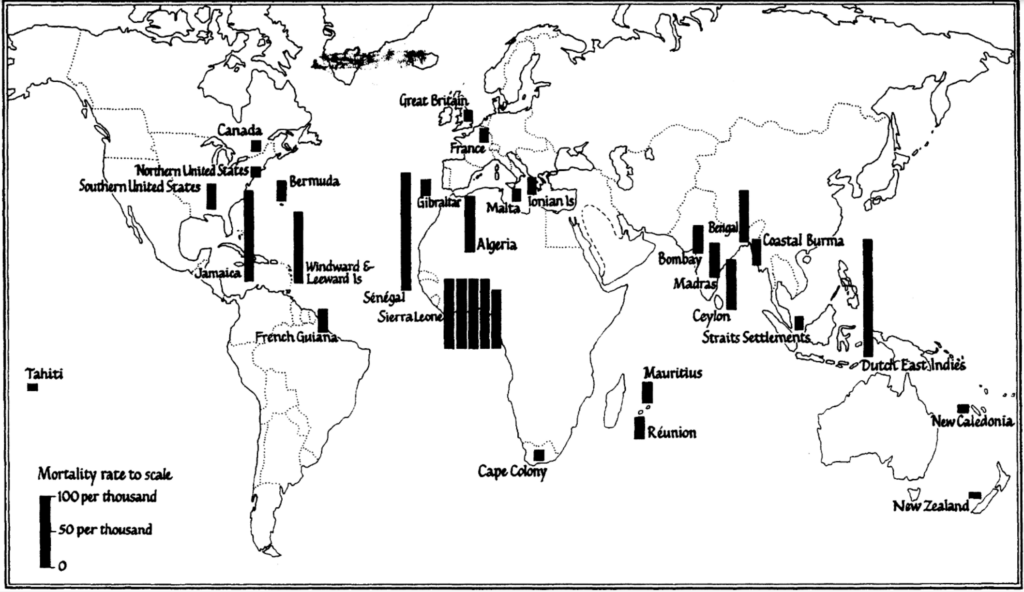
Figure 3. Mortality of European Troops at Home and Abroad, 1817-38. Curtin, Death by Migration, p. 11.

As the work of Snow, Koch, Ross, and others advanced epidemiological understandings of tropical diseases toward an acceptance of germ theory, conceptions of the tropical climate as specifically hostile to Europeans were subdued. Although the cholera belt did not live up to its prophylactic objectives. it had been instrumental in perpetuating colonial understandings and experiences of the tropics as dangerous. Its decline was a small step in a much larger process of deepening understandings of the environment, medicine, and health in the colonial era.

  1. David Arnold (ed.), Warm Climates and Western Medicine: The Emergence of Tropical Medicine, c. 1500-1900 (Amsterdam, 1996), p. 150. [↩]
  2. Thomas Masterman Winterbottom, Medical Directions for the Use of Navigators and Settlers in Hot Climates (London, 1803), p. 9. [↩]
  3. James Annesley, Researches into the Causes, Nature, and Treatment of the More Prevalent Diseases of India, and of Warm Climates Generally, vol. 2 (London, 1828), p. 403. [↩]
  4. Andrew Duncan, The Prevention of Disease in Tropical and Sub-tropical Campaigns (London, 1888), p. 36. [↩]
  5. W. G. Macpherson, W. H. Horrocks, and William W. O. Beveridge (eds), Medical Services: Hygiene of the War, vol. 1 (London, 1923), p. 314. [↩]
  6. Arnold, Warm Climates and Western Medicine , p. 183. [↩]
  7. Philip D. Curtin, Death by Migration: Europe’s Encounter with the Tropical World in the Nineteenth Century (Cambridge, 1989), p. 1, 11. [↩]
  8. Ibid., p. 12. [↩]

Get the Picture?: Images of Kampongs in the Dutch East Indies, 1910-1911

How does a photograph become an instrument of social reform? In documentary photography, shots are characterized as neutral, objective, and truthful, but visuals carry narratives just as texts do. After settling in the Dutch East Indies in 1896, Dutch pharmacist and entrepreneur H.F. Tillema (1870-1952) turned his camera toward the kampongs of Semarang, a major port city, calling attention to links between unsanitary housing conditions and deadly epidemics. Lacking effective sewage drainage, these densely populated water-based dwellings deteriorated into slums where disease like cholera, typhoid, and dysentery proliferated. Dutch historian K.M. van Roosmalen remarks that Tillema’s photography was not a hobby, but instead was intended to motivate public health reform.1 Tillema’s photographs challenged colonial authorities to confront inadequacies of public health infrastructure in these communities, but also embodied an objectified view of Malay people.

Featured alongside statistics and maps, his photographs of the urban environment demonstrated the troubling relationship between urban planning and public health in Semarang and the need for sanitary infrastructural improvements. Due to poor drainage systems, urban kampongs flooded frequently. Even after weeks of drought, stagnant water accumulated, providing the perfect breeding grounds for infectious diseases. Unsettled by disproportionately high infection rates among kampong residents, Tillema compiled a study, Riooliana (Sewage), in which he argued that, although expensive, constructing a modern sewage system, establishing sanitary water supply systems, and educating the public on hygienic standards and practices were together crucial for combating infectious diseases.2 Two years later, he curated a second, larger study on living conditions in Semarang and pointedly sent it to colonial administrators in the Dutch East Indies.3 Throughout the next decade, at his own expense, he printed and mailed thousands of pages and six volumes of his research and photographs to executive and legislative authorities in both the Netherlands and the Dutch East Indies.

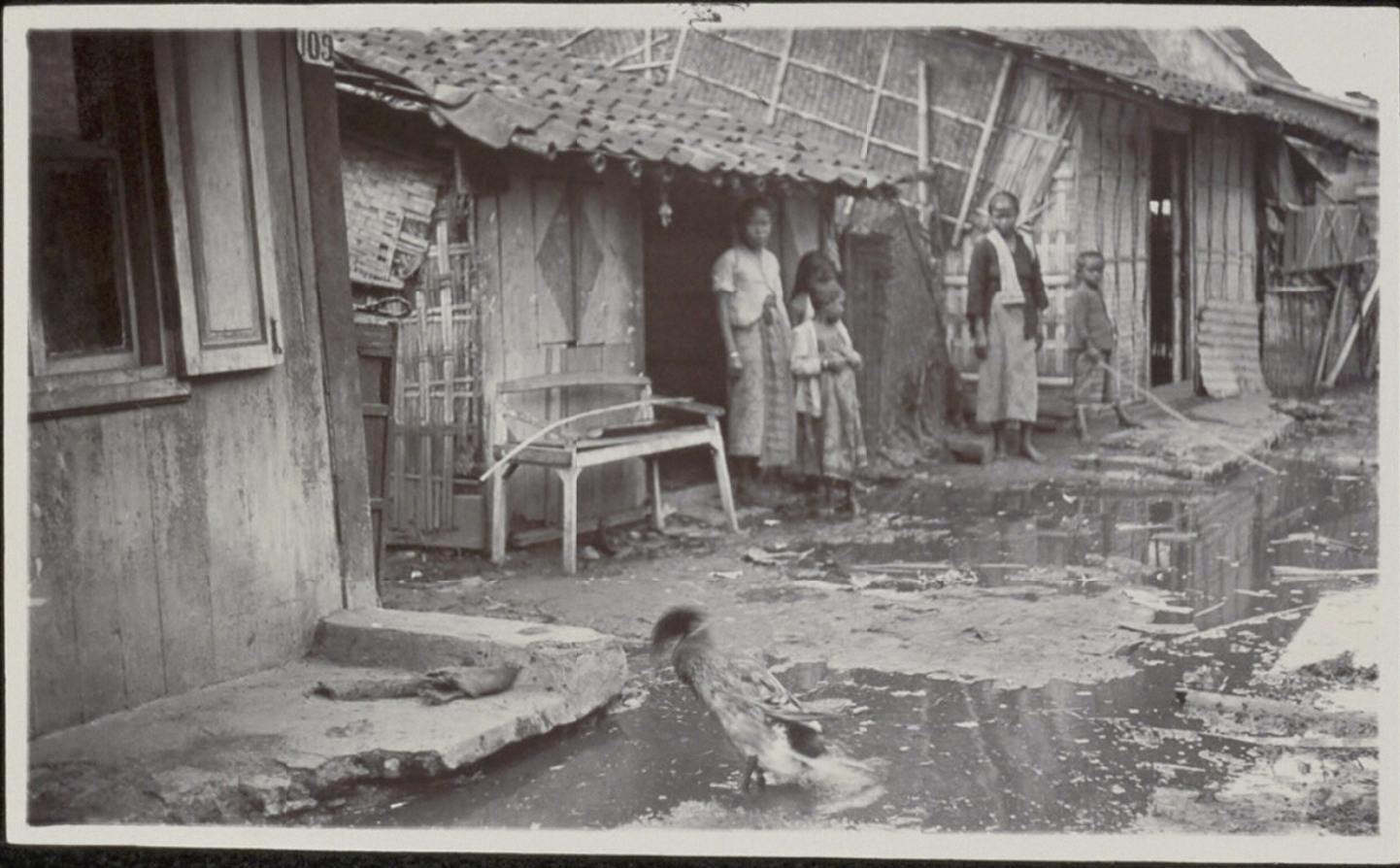
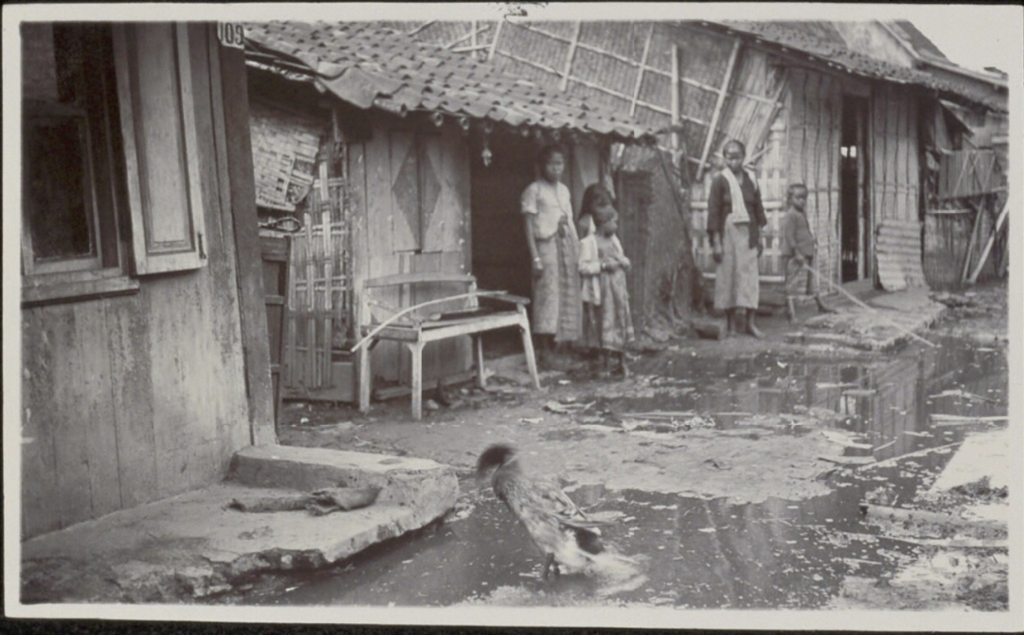
Figure 1. H.F. Tillema, ‘Flooding in a street in a kampong’, ca. 1910, Semarang. Courtesy of Wereld Museum, RV-A440-aa-183.

The cultural and fiscal context of Tillema’s Dutch origins and colonial ties adds a metaphorical distance to scenes of huddled families in muddy streets (fig. 1). Ideologically, his studies carry residues of European colonial assumptions that Asian populations were culturally predisposed to unsanitary habits. Although he advocated for infrastructural improvements on behalf of Malay residents, he did this in part because he believed the ‘civilizing mission’ concept that needed to be advocated for:

“Since the population is so uneducated and consequently so superstitious, considerable difficulties are encountered when implementing hygienic measures. At times, the population rises up and becomes resistant, as I believe happened in Bandoeng [Bandung].” H.F. Tillema, Kromoblanda (The Hague, 1915-1923), p. 45.

Moreover, Tillema held positions of both fiscal and administrative power, providing resources to fund his photography and the authority to confront colonial policy makers. Owing to Hygeia, his bottled mineral water company, Tillema financially benefited from the lack of safe drinking water since his product as a safe alternative to the unsanitary well-water.4 His fortune led him to be elected a member of the Semarang Municipal Council in 1910. In this context, human subjects in Tillema’s photographs, staring absently from their flooded homes (fig. 1), off-center in their own composition, are not the focus; rather, they are simply another statistical component of his study.

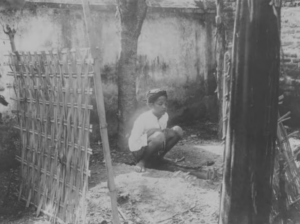
These images capitalize on the view of indigenous populations as in need of colonial intervention, effectively framing them as ‘other’. In this colonial gaze, figures become part of the landscape. In one photograph, residents stand still in contrast to the blurred motion of the duck in the foreground (fig. 1). Their immobility symbolizes inaction and reflects Tillema’s assumption that Malay people were indifferent to their unsanitary environments and uninterested in taking action to learn new hygiene practices. In another example, Tillema photographed a child defecating (fig. 2) to illustrate the insufficiency of public health amenities, but in the process committed a gross infringement upon the subject’s privacy and humanity; the child is here defined solely by his unsanitary practices. The Malay subjects of Tillema’s photography are characterized as complacent in their filth, thus necessitating colonial sanitation programs.

Figure 2. H.F. Tillema, ‘Public W.C. in Kampong Randoesari’, ca. 1910, in Riooliana, p. 10.

The Dutch East Indies Malay population was also objectified and disregarded by the colonial administration. Van Roosmalen specifies that the Malay people were dismissed as ambivalent to colonial urban planning policies.5 In reality, widespread illiteracy hampered Malay civic participation. Lacking a line of communication to voice their objections, indigenous peoples and lower classes were fundamentally absent from colonial authorities’ conceptions of urban communities.

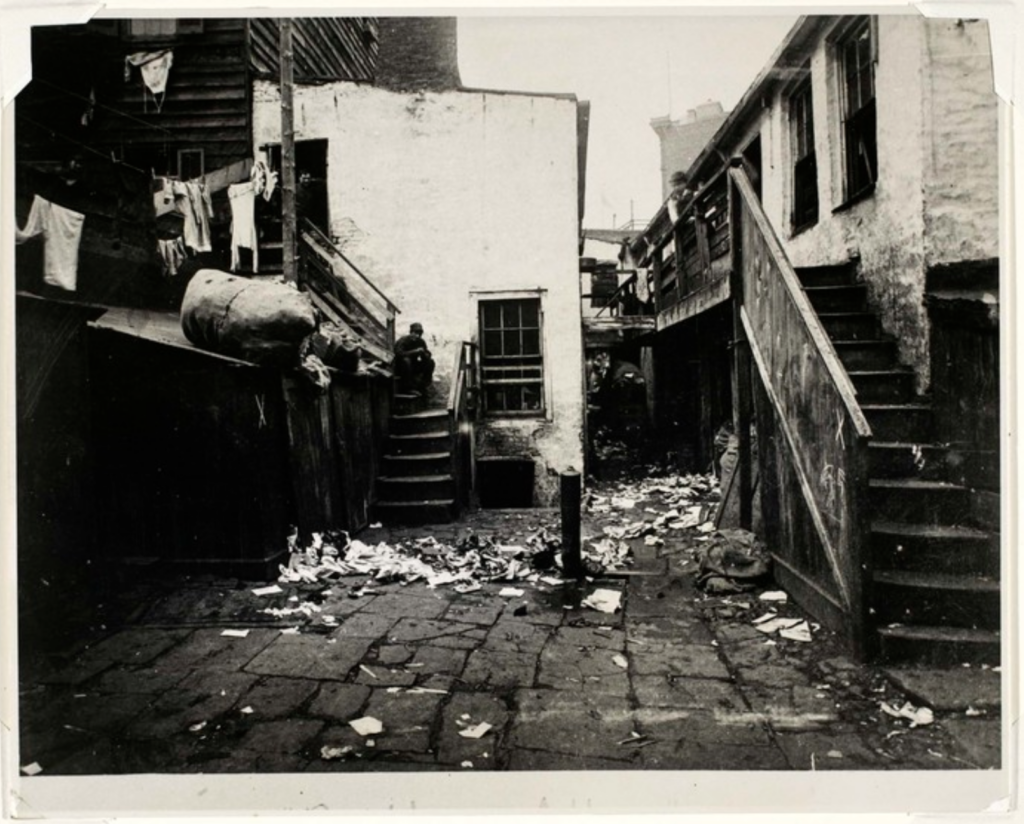
Paradoxically, Tillema’s photographs also advocated for these disenfranchised communities, despite their derogatory characterizations of kampong residents and Tillema’s own ties to colonial power. His depictions of kampongs fall into the school of ‘social photography’ exemplified by American photographer Jacob Riis (1849-1914) (fig. 3).6 This genre of photography, “designed to appeal to the sympathies of the viewers”, seeks to advocate for marginalized communities by highlighting systemic injustices7 Tillema’s scenes of squalor challenged the romanticized aesthetic of the colonial era as tempo doeloe – the ‘glory days’.4 Through these photos, a centralized colonial government detached from local experiences was confronted by the needs of its public. Ultimately, sanitation systems in urban kampongs were modernized due to fears that kampongs would birth a communist uprising.8 Nevertheless, Tillema’s photographs are vivid testimonies of life, revealing details which city plans and maps fail to encapsulate. One sees streets from the perspective of people living there rather than the bird’s-eye viewpoint of urban planners. Although his photographs did not give full autonomy to Malay residents pictured, they did urge colonial officials and urban planners to see not only streets, but those who walked in them. H.F. Tillema’s photos of Semarang emphasize the necessity to examine visual historical sources as contextually ramified.

Figure 3. Jacob Riis, ‘A Mulberry Bend Alley’, ca. 1888-1889. International Center of Photography, 265.1982.


  1. Pauline K.M. van Roosmalen, ‘Netherlands Indies Town Planning: An Agent of Modernization (1905-1957)’, in Freek Colombijn and Joost Coté (eds), Cars, Conduits, and Kampongs: The Modernization of the Indonesian City, 1920-1960 (Leiden, 2015), p. 94. [↩]
  2. Hendrik Freerk Tillema, Riooliana (Semarang, 1911), p. 13. [↩]
  3. E. Vanvugt, ‘Tillema, Hendrik Freerk (1870-1952)’, Biographical Dictionary of the Netherlands, 12 November 2013, <http://resources.huygens.knaw.nl/bwn1880-2000/lemmata/bwn5/tillema> [accessed 8 October 2026]. [↩]
  4. Vanvugt, ‘Tillema’. [↩] [↩]
  5. van Roosmalen, ‘Netherlands Indies Town Planning’, p. 93. [↩]
  6. In striking parallel to Tillema, Riis employed photography to drive legislative and social reform for the residents of New Yory City’s horrifically overcrowded tenements. [↩]
  7. Peter Burke, Eyewitnessing: The Uses of Images as Historical Evidence (London, 2001), p. 22. [↩]
  8. van Roosmalen, ‘Netherlands Indies Town Planning’, pp. 95-96. [↩]