In the mid 1800s, it was a commonly believed that wearing a flannel or woolen band wrapped around the abdomen could prevent disease. This item, dubbed the ‘cholera belt’ (fig. 1), was championed as both preventative tool and a treatment for cholera from the 1830s to the 1890s. Up until the very end of the 19th century, physicians and scientists contended that diseases like malaria, cholera, and plague were spread by miasmas – noxious gasses which emanated from rotting organic matter, swamps and marshes, or general filth such as human excrement. Despite the emergence of germ theory as an alternative epidemiological approach founded upon the research of figures such as John Snow, Robert Koch, Ronald Ross, and Louis Pasteur, the miasma theory persisted residually into the early 20th century. Founded upon inaccurate medical and environmental knowledge and heavily influenced by colonial cultural ideas of tropical regions of East Asia as inherently dangerous to the European body, the cholera belt created a boundary between the colonist and the tropics, one of isolation and protection.
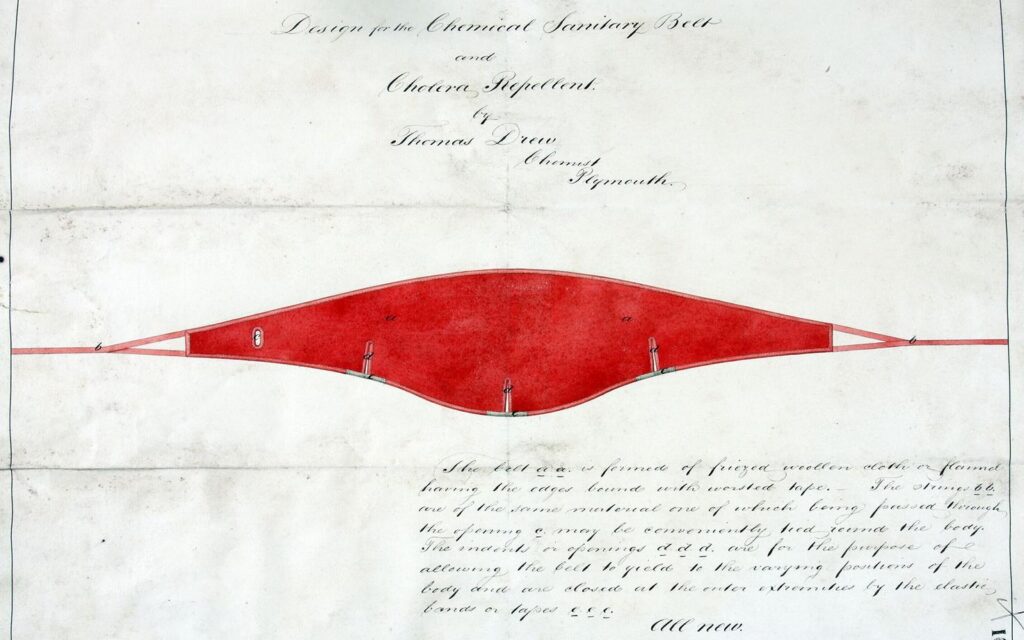
Figure 1. Thomas Drew, ‘Design for the Chemical Sanitary Belt and Cholera Repellant’, 1848. Courtesy of the National Archives, BT 45/9/1610.
To protect Europeans in the tropics, physicians, scientists, and medical professionals developed curious medical technologies such as the ‘cholera belt’ which supposedly shielded the body from disease by filtering air and warming the abdomen, but this quack prophylactic was an impractical defense against diseases. As is known today, cholera is spread by Vibrio Cholerae; however, despite the bacterium’s discovery by Filippo Pacini in 1854 and John Snow’s breakthrough waterborne transmission theory that same year, germ theory was not widely recognized until later research by Robert Koch in the 1880s.1 Prior to these discoveries, physicians believed that cooling the body made it more vulnerable to contracting diseases. Sweating was commonly understood to prevent disease, thus the repression of it by cool night breezes was something medical publications warned against. As one 1803 treatise remarks, cooling of the body “is always followed by a feverish dry skin, owing to a stoppage of perspiration, and very often proves a cause of violent diseases”.2 By the 1820s, medical texts advised people to “wear a flannel waistcoat or flannel bandage around [one’s] loins and abdomen, and avoid exposure to the night-dews and fogs” to protect against cholera.3 On and off, the cholera belt was required by British Army clothing regulations.The 1874 Sungie-Ujong and 1875 Perak expeditions in Malaysia listed cholera belts (sometimes two to each man) as official dress for the tropical campaigns.4 Woolen and flannel products continued to be advertised as “[protection] from disease” (fig. 2) as late as the 1890s. However, by the turn of the century, medical authorities and soldiers alike reported unanimously that “body bands did not contribute either to comfort, warmth or health…Ultimately, in 1917…their issue ceased”.5 The cholera belt could not protect the colonist, and medical and scientific professionals finally abandoned the garment.
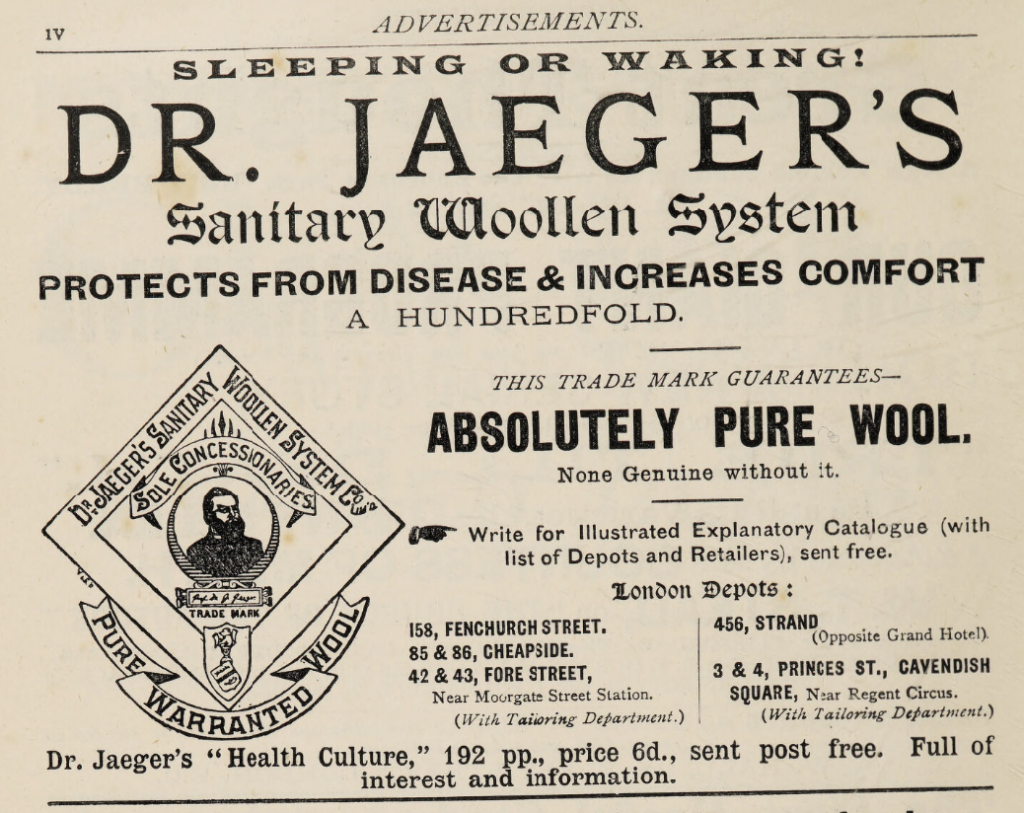
Figure 2. ‘Dr Jaeger’s Sanitary Woollen System’, The Strand Magazine 1:2 (London, 1891), p. iv.
The cholera belt’s prolonged use into the 20th century is indebted to the failure of colonial hygienists and physicians to distinguish between the dangers of tropical climates and that of tropical diseases. David Arnold outlines that the sweeping fluctuations of temperature, high humidity, and intense sunlight common to many tropical countries were thought to “[weaken] the constitutions of Europeans who were not designed for, or adapted to, warm climates”. 6 Under most circumstances, traveling to the tropics was deadly for Europeans. In the 19th century, death rates for Europeans in tropical regions were more than double that at home (fig. 3).7 Epidemiologically, moving troops to new environments will expose them to diseases they have not developed immunities for, but many contemporary Europeans understood this phenomenon to signify the “danger of a ‘tropical climate'” rather than the danger of tropical diseases.8
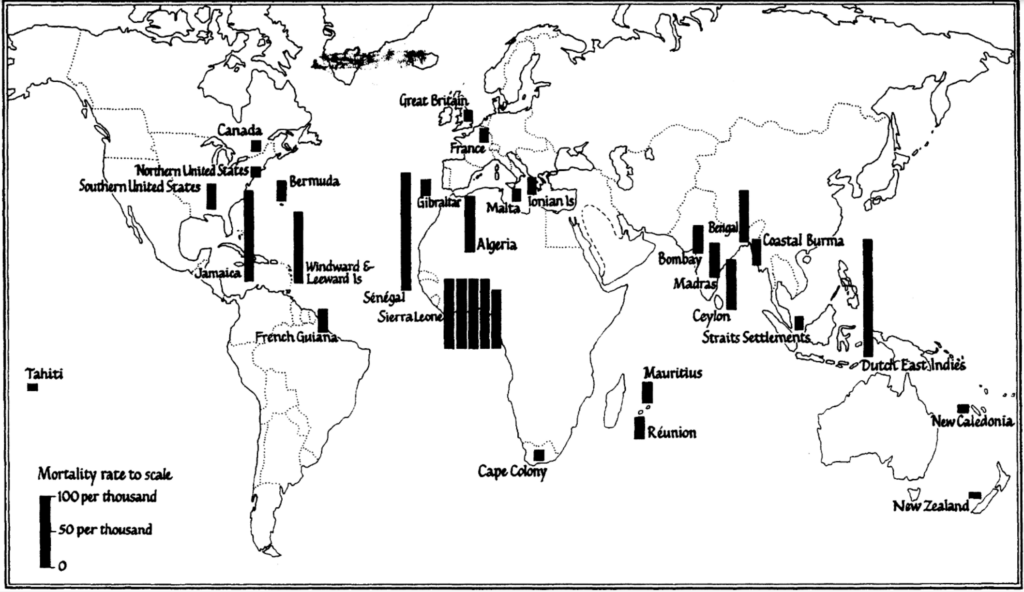
Figure 3. Mortality of European Troops at Home and Abroad, 1817-38. Curtin, Death by Migration, p. 11.
As the work of Snow, Koch, Ross, and others advanced epidemiological understandings of tropical diseases toward an acceptance of germ theory, conceptions of the tropical climate as specifically hostile to Europeans were subdued. Although the cholera belt did not live up to its prophylactic objectives. it had been instrumental in perpetuating colonial understandings and experiences of the tropics as dangerous. Its decline was a small step in a much larger process of deepening understandings of the environment, medicine, and health in the colonial era.
- David Arnold (ed.), Warm Climates and Western Medicine: The Emergence of Tropical Medicine, c. 1500-1900 (Amsterdam, 1996), p. 150. [↩]
- Thomas Masterman Winterbottom, Medical Directions for the Use of Navigators and Settlers in Hot Climates (London, 1803), p. 9. [↩]
- James Annesley, Researches into the Causes, Nature, and Treatment of the More Prevalent Diseases of India, and of Warm Climates Generally, vol. 2 (London, 1828), p. 403. [↩]
- Andrew Duncan, The Prevention of Disease in Tropical and Sub-tropical Campaigns (London, 1888), p. 36. [↩]
- W. G. Macpherson, W. H. Horrocks, and William W. O. Beveridge (eds), Medical Services: Hygiene of the War, vol. 1 (London, 1923), p. 314. [↩]
- Arnold, Warm Climates and Western Medicine , p. 183. [↩]
- Philip D. Curtin, Death by Migration: Europe’s Encounter with the Tropical World in the Nineteenth Century (Cambridge, 1989), p. 1, 11. [↩]
- Ibid., p. 12. [↩]