Following centuries of sakoku, Japan’s isolationist policy, the international exposure of the Meiji period (1868-1912) brought a flood of social, political, and cultural ideas into Japan. Intent on reframing national identity, the Meiji government utilized legislative power and public media to create institutions which conveyed new nationalist sentiments. One of the most interesting ways in which this happened was the sociocultural curation of the ‘family unit’ in the early 20th century, in which mass-market publications communicated a new definition of family and the home called katei that centered on a tight-knit nuclear family structure, the education of children, and the efficient management of the home. In 19th century Japan, “the social and physical boundaries of the house were porous”, as wealthy households often included servants, concubines, apprentices, or extended family.1 The Meiji agenda sought to define these boundaries and apply moral meaning to them. Despite the ideological efforts of domestic manuals and propaganda to establish katei as a social standard, some Japanese were not convinced by the ornamented ideals of familial decorum espoused by its media. Two contrasting illustrated representations of danran, translated as the ‘family circle’ by Jordan Sand, reveal how katei ideologies were both extolled and mocked in early 20th century Japan.
Danran united concepts of space and social propriety to invoke katei ideologies of family. As a spatial concept, katei defined the home not as a house, but rather as “an environment, a family group, and a set of practices”.2 Danran, considered by Sand to be “the central embodiment of the katei in practice”, was an almost ceremonial family gathering which followed specific protocols of conduct.3 Often held during a meal or over tea, the family would take turns sharing things such as notable excerpts from a newspaper or magazine, anecdotes of what family members had seen or done that day, or the subject matter or moral lessons children had learned in school. The ideal family (fig. 1), typically represented as middle-class, faced each other and intently listened to what each had to say.
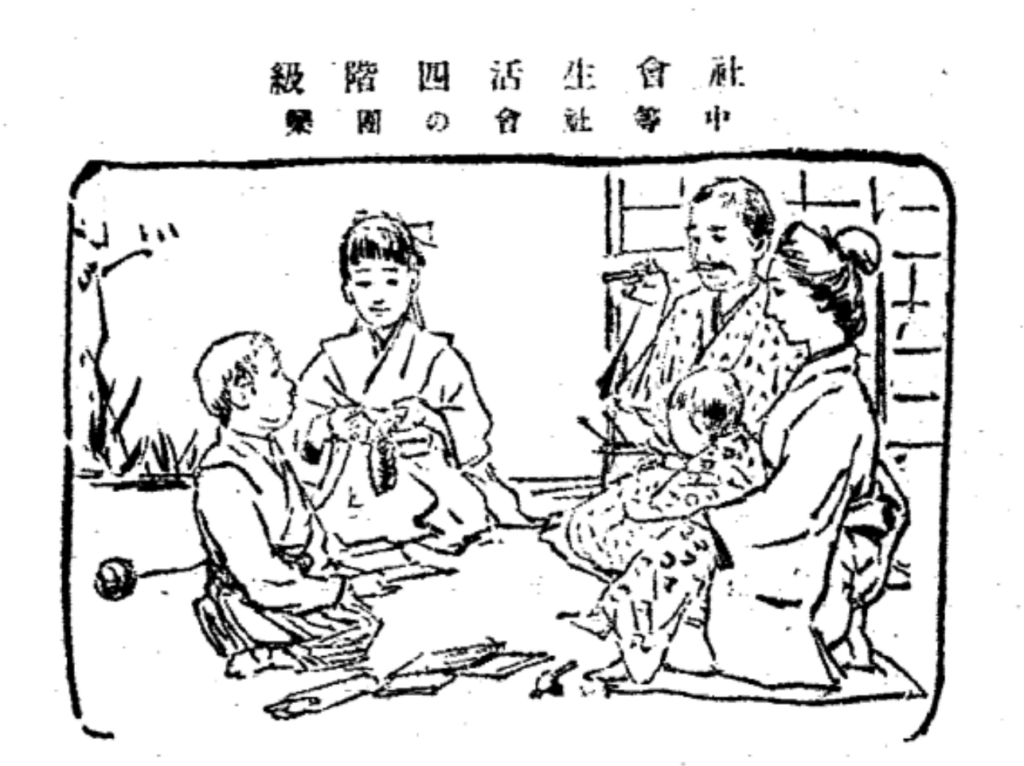
Figure 1. ‘Shakai hyaku seikatsu (One Hundred Walks of Life)’ (1904), Jogaku sekai.
In a mockery of the danran (fig. 2), Kosugi Misei used satirical art styles to express that not all Japanese thought highly of katei values. The image was published in Hōsun, an art magazine created by Morita Tsunetomo, Ishii Hakutei, and Yamamoto Kanae and active from 1907 to 1911. Hōsun sought to promote sōsaku-hanga, the nascent art of sōsaku-hanga, or ‘creative prints’ which viewed print making as a fine art form rather than a purely commercial one, as it had largely been in the Edo period. The magazine featured lithograph, woodblock, and copperplate prints alongside poetry, essays, and reviews. Kosugi’s representation of katei may be a form of ponchi, satirical comic representations which first became popular at the end of the 19th century.4 Stylistically, ponchi is characterized by its indirect depictions of subject matter and the humorous prose which would be written in the margins of the picture. Figure 2 does not show the text which would have been featured in the margins, but Horyo to mushi (A Prisoner of War and a Cricket) (fig. 3), also by Kosugi Misei, provides a template for what the text-to-image ratio might have looked like. In this example, we see how text would accompany simple line drawings on the page by taking up as much, if not more space than the image. Additionally, in ponchi, objects are not drawn directly. Instead, the images act as puzzles with hidden jokes from which the reader must deduce meaning.5 Kosugi’s ponchi drawing also bears a great deal of resemblance to toba-e, a satirical comic style inspired by 12th century printmaking traditions which depicted people in humorous, exaggerated forms.6
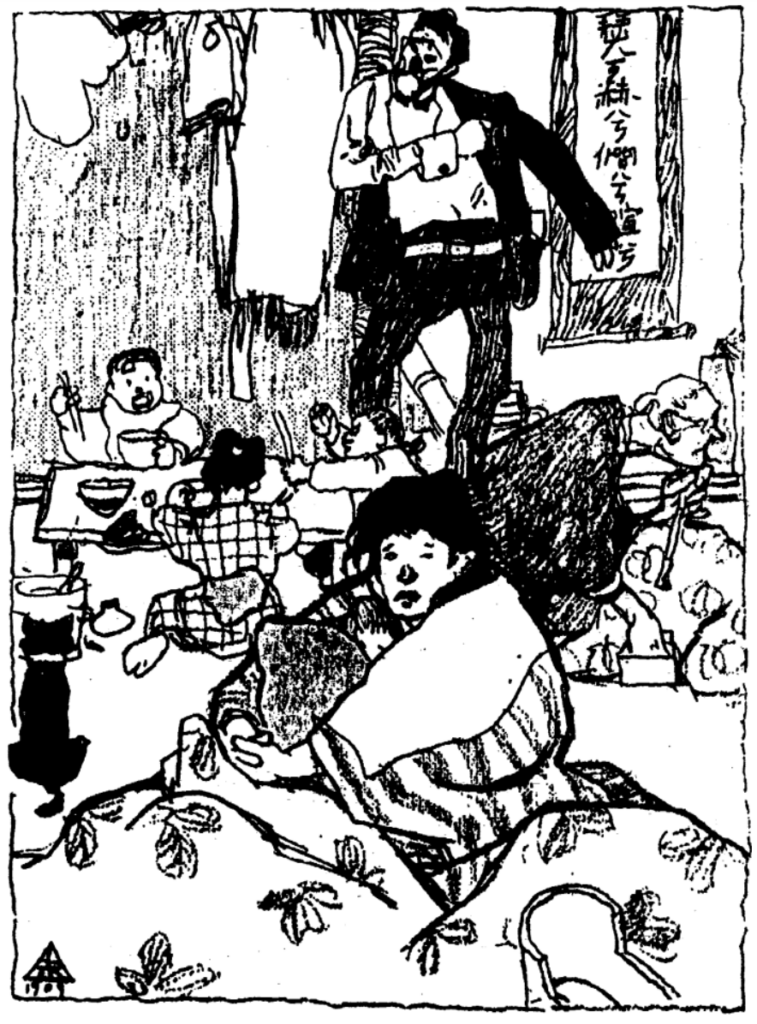
Figure 2. Kosugi Misei, ‘Home (Katei)’ (1909), from Hōsun.
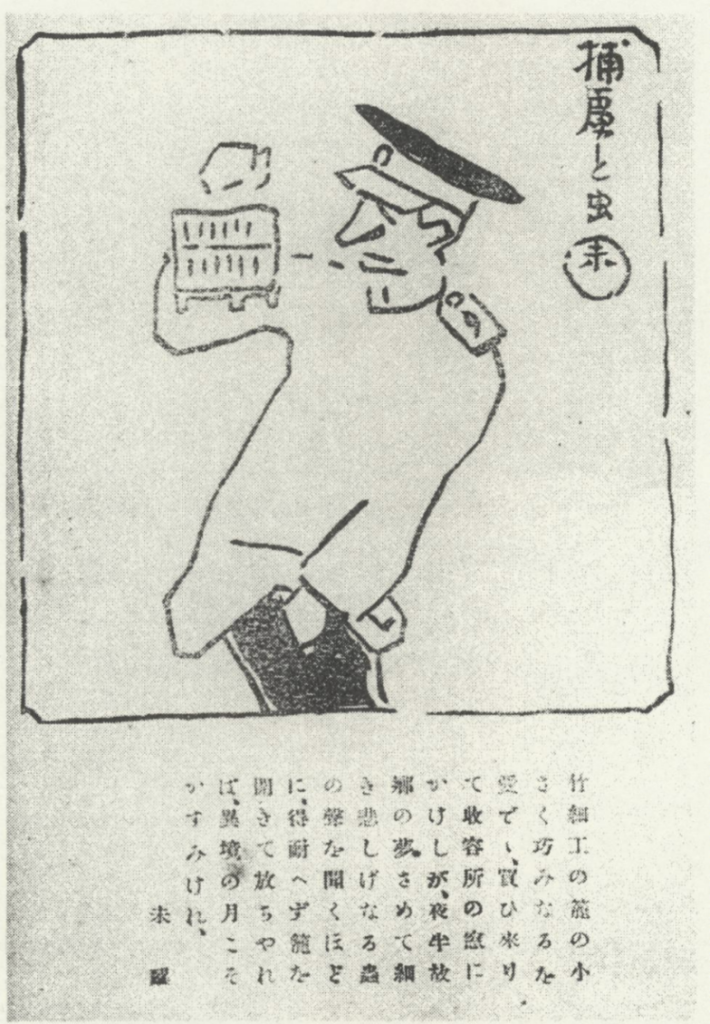
Figure 3. Kosugi Misei , ‘Horyo to mushi (A Prisoner of War and a Cricket) (1907)’, in Manga ichinen.
Kosugi’s satirical katei representation depicts the antithesis of katei values. The danran is inverted, with family members facing away from one another7. The children in the left background appear to have begun eating, but the mother in the foreground has not joined them. The in-law in the right background also dines, but separately from the table, what is intended to be the gathering point for the family. In just these few ways, Kosugi visually communicates how the idealized blueprint of the 20th century Japanese family unit that was broadcast by popular media could be simultaneously disparaged by that same medium.
- Jordan Sand, ‘Domesticating Domesticity’, in House and Home in Modern Japan: Architecture, Domestic Space, and Bourgeois Culture, 1880-1930 (Cambridge, 2005), pp. 21-54. [↩]
- Sand, ‘Domesticating Domesticity’, p. 25. [↩]
- Sand, ‘Domesticating Domesticity’, p. 39. [↩]
- Miyamoto Hirohito and Jennifer Prough, ‘The Formation of an Impure Genre – On the Origins of “Manga”’, Review of Japanese Culture and Society 14 (2002), p. 39. [↩]
- Hirohito and Prough, ‘The Formation of an Impure Genre’, p. 40. [↩]
- Hirohito and Prough, ‘The Formation of an Impure Genre’, p. 47. [↩]
- Sand, ‘Domesticating Domesticity’, p. 52. [↩]