The little globe Shanghai: the independent coexistence of the political powers during the Republican period (1912-1949)

1

Shanghai has been a cosmopolitan city for a very long period. After the First Opium War, the British forces exerted influence over the city’s operations,2 and the signning of the Treaty of Nanking elevated Shanghai to a significant treaty port in China.3 Throughout the Republican era, Shanghai boasted numerous international settlements, attracting a sizable foreign population engaged in trade, migration, or seeking refuge.4 This dynamic transformed Shanghai into a city where diverse cultures, powers, and foreign identities intermingled. Among the various forces and identities present, the police forces emerged as particularly complex institutions, highlighting the intricacies of Shanghai’s societal landscape. In this week’s assigned reading, Frederic Wakeman Jr. posits that this complexity underscores Shanghai’s ties to the imperial network,5 as all four police agencies operating in the city during that time were linked to imperialism or colonialism:

  • The International Settlement’s Shanghai Municipal Police
  • Frenchtown’s Concession Police
  • The Nationalist Garrison Command’s Military Police
  • The Chinese Special Municipality’s Public Safety Bureau

Nevertheless, this blog, in another way intends to discuss the diverse police forces in Shanghai in 1945, based on the texts from one of the volumes of Jingcha Yuekan 警察月刊 published in 1945 in Shanghai, to contend that Shanghai, at least in the aspect of police forces, represented a little globe. Specifically, it was a city showcasing the international coexistence of various countries, rather than solely being a treaty port city within the imperial network.

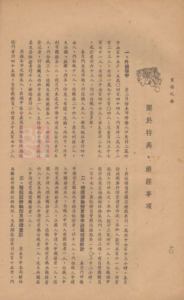
In one of the volumes of Jingcha Yuekan 警察月刊 published in 1945, a text titled Waiji Baojia 外籍保甲 provides a concise overview of the foreign police forces in Shanghai during that year. According to the text, in 1945, there were 26,715 foreign households in Shanghai, including nationalities such as Poland, Spain, Germany, Greece, and White Russia, among others.6 This detailed enumeration highlights the Chinese police’s awareness of the growing presence of foreigners, necessitating specific record-keeping. Furthermore, the text includes information on marriages and departures of foreigners. In February 1945, for instance, one German and one Spanish individual left Shanghai, while ten others became residents due to marriage.6 Additionally, two individuals underwent divorce proceedings.7 These reports indicate that the Chinese Shanghai police force was not only focused on local criminal matters but also actively monitored the living situations of foreigners. Managing the experiences of foreign residents was evidently within the purview of the Chinese Shanghai police forces, reflecting an international exchange of information. At this juncture, the foreign residents were not a manifestation of imperialism but rather constituents of Shanghai as a miniature globe.

However, despite the Chinese police force noticing and recording the presence of foreign groups in Shanghai, it does not imply a managing-and-being-managed relationship between these foreigners and the Chinese police force. Instead, I argue that the primary text reveals Shanghai’s dynamic situation, which rendered it a little globe. While the Chinese police force documented the details of foreign residents, they were not involved in their management. According to the text, foreigners had their own established Baojia Dui 保甲队, responsible for securing of specific groups and conducting defence drills within their settlements. For instance, the text highlights that Jewish people had 45 Baojia 保甲, collectively serving as a police force for 16,713 hours in February.7 Moreover, in the same month, the Jewish police force conducted six air defence drills involving 511 individuals.7 Similarly, White Russians had three Baojia 保甲, serving for 1,032 hours in February.7 Evidently, foreign groups operated under their own orders and regulations regarding policing. At this juncture, the Chinese police force merely acted as record-keepers rather than active participants or managers. Although foreigners were residents of Shanghai under the supervision of the Chinese police force, these foreign groups operated independently of the Chinese police force system. Within Shanghai’s city space, these groups functioned as autonomous institutions. This arrangement contributed to the creation of a little globe in Shanghai that lacked a centralised management.

Frederic Wakeman Jr. argues that Shanghai’s complicated police systems during the time highlighted its role in the imperial network. However, my contention in this blog is that Chinese and foreigners in Shanghai occupied independent statuses individually. Spatially, Shanghai resembled a collection of many small states and nations, with the Chinese lacking dominant status. This situation resulted in Shanghai being characterised as a miniature globe during this era.

  1. “Waiji Baojiao” 外籍保甲, Jingcha Yuekan 警察月刊 1.2 (1945): 20. [↩]
  2. Robert S. Rait, The Life and Campaigns of Hugh First Viscount Gough, Field-Marshal (London, 1903), p. 268. [↩]
  3. ‘The Opium War (or How Hong Kong Began)’, South China Morning Post, 24 July, 2011, <https://www.scmp.com/article/974360/opium-war-or-how-hong-kong-began> [accessed 11 March 2024] [↩]
  4. Frederic Wakeman, ‘Policing Modern Shanghai’, The China Quarterly 115 (September 1988): p. 427, <https://doi.org/10.1017/s0305741000027508> [accessed 11 March 2024] [↩]
  5. Wakeman, ‘Policing Modern Shanghai’, p. 412.] [↩]
  6. “Waiji Baojiao” 外籍保甲, p. 20. [↩] [↩]
  7. Ibid. [↩] [↩] [↩] [↩]

Mystic Chinatown: the preference of Japanese culture at 1915 San Francisco’s World Exposition

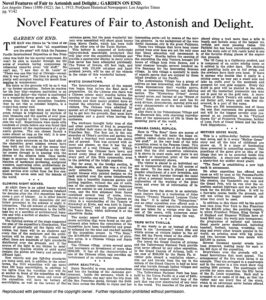
Newspaper Article: Novel Features of Fair to Astonish and Delight ((‘Novel Features of Fair to Astonish and Delight’, Los Angeles Times, January 1915.))
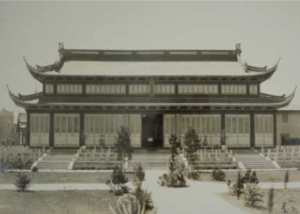
The Panama-Pacific International Exposition (PPIE) of 1915 held in San Francisco showcased diverse national exhibitions, attracting participation from numerous countries, including China and Japan. A 1915 newspaper article, titled Novel Features of Fair to Astonish and Delight published in the Los Angeles Times, highlighted the magnitude of the Chinese representation, describing ‘The Chinese Village’ spread across several acres with an investment exceeding $250,000.1 Also, the article provided insights into the Japanese exhibition, positioning China and Japan within the same narrative. Yet, despite being neighbouring nations in East Asia, the coverage indicates a differential emphasis, implying that Japan’s cultural and traditional elements garnered more attention and exploration compared to China. This observation underscores a Western inclination towards Japanese culture, reflecting broader global dynamics and preferences during the exposition.

When contrasting the introductions to the exhibition halls of China and Japan, the author’s focus on distinct details underscores a clear Western preference. In discussing the Chinese exhibition, emphasis was placed on the logistical aspects and physical layout rather than the thematic content. For instance, the author highlighted practicalities such as the requirement for Chinese visitors and workers to obtain permission and be accompanied by a guard when leaving the enclosure, as well as the presence of a four-foot wall surrounding the grounds and brightly adorned pagodas.2 A comprehensive overview of the exhibition’s contents was absent, with attention directed towards peripheral details. In contrast, the discussion of the Japanese exhibition was characterized by clarity and richness. The author delineated various ‘villages’ within the Japanese display, such as The Australasian Village and the Tehauntepec Village2 , before delving into intricate descriptions of its elements. Captivating features like a colossal Buddha at the entrance, the majestic backdrop of Fujiyama, a sand diviner, dromedaries, and even dancing girls adorning the exhibition streets2  were mentioned. The author concluded by asserting that the Japanese exhibition faithfully reproduced ‘the appearance of life in these interesting parts of the world.’2 Evidently, the introduction of the Japanese exhibition surpassed its Chinese counterpart in detail, cultural richness, and specificity of layout, underscoring a notable discrepancy in Western portrayal.

However, was the Chinese exhibition perceived as dull at this exposition? Did it fail to adequately showcase elements of its own culture? In fact, William Peterson’s chapter on this subject reveals a different narrative. Peterson illustrates that the planners made concerted efforts to showcase Chinese cultural elements, exemplified by the meticulous replication of the ‘Forbidden City’ (Figure 1.). The replicated imperial architecture could demystify the enigmatic realm and signal China’s openness to global engagement.3 Besides, the Chinese exhibition contained a small section titled ‘Underground Chinatown’ featured mannequins engaging in activities such as gambling and opium consumption,4 which caused an immediate response in the local Chinese-language press.5 Despite the detailed efforts to infuse cultural elements at the PPIE, these nuances were absent in the newspaper. While the author mentioned features like replicated city walls built by Chinese workers, the author failed to explore the deeper cultural significance behind these structures, underscoring a broader media ignorance regarding Chinese cultural representation at the exposition.

Figure 1. The replica of Beijing’s ‘Forbidden City’.6
Additionally, while introducing the Chinese exhibition, the author interjected Japanese elements into the Chinese section. Following the mention of Chinese walls, the author swiftly transitioned to describe the nearby Japanese site as a beautiful Japanese garden. In stark contrast to the supposed plain ground of the Chinese exhibition (which was inaccurately depicted), the Japanese site boasted numerous ancient temples, including a replicated Japanese temple of Kinkakuji at Kioto, along with Japanese rocks, trees, shrubs, and sod.1 These details, however, were presented within the context of the ‘Mystic Chinatown’ section.

As the author noted, there was a rivalry for early attention between the Chinese and Japanese exhibitions.2 However, judging by the level of detail provided, it is apparent that the Japanese exhibition garnered more attention within the exposition. In this rivalry, it seemed the Japanese exhibition emerged as the clear winner.


Bibliography

Primary Source

“Novel Features of Fair to Astonish and Delight.” Los Angeles Times. January 1915.

Secondary Source

Peterson, William. Asian self-representation at world’s fairs. Amsterdam: Amsterdam University Press, 2020.

  1. ‘Novel Features of Fair to Astonish and Delight’. [↩] [↩]
  2. Ibid. [↩] [↩] [↩] [↩] [↩]
  3. William Peterson, Asian Self-Representation at World’s Fairs (Amsterdam, 2020), p. 94. [↩]
  4. Peterson, Asian Self-Representation at World’s Fairs, p. 108. [↩]
  5. Ibid., p. 109. [↩]
  6. Ibid., p. 96. [↩]

Five pavilions in Jingshan Park, Beijing: The absence of special items forges the national sentiment and shapes collective historical memory

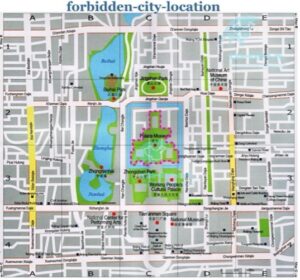
Jingshan Park in Beijing is located next to the Forbidden city. (Figure 1) For many years, this park has been imperial and not opened to the public until 1928. Like many other imperial places, the park was invaded and destroyed when foreign troops entered Beijing in the late imperial period. This blog will refer to a tour guide article published in 2012 on a local Chinese tourism website, to discuss the impact of historical traumas on the park’s architecture, asserting that despite the foreign invasion caused severe architectural destruction, a deliberate decision by the government for not restoring some Buddha statues within the traditional pavilions in Jingshan Park can further cultivate national sentiment. By selectively choosing which historical aspects to restore, the government intends to shape collective memory and crafting a shared narrative that resonates with the broader populace.

Figure 1. Map of Jingshan Park and the Forbidden city
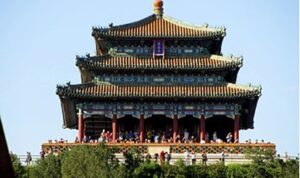
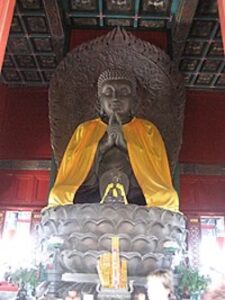
According to the website’s article, Jingshan Park has five traditional pavilions, each housing a copper Buddha statue representing one of the five tastes: sour, bitter, sweet, acrid, and salt.1 Regrettably, during the siege of the international legations in 1900, foreign soldiers removed four of these statues,2 directly compromising the integrity of the five tastes. There was only one statue in Wanchun Pavilion (Figure 2.) being preserved.

Figure 2. Wanchun Pavillion

Although this statue was preserved during the 1900 event, it was completely destroyed during the Cultural Revolution in the 1960s when fervent individuals destroyed all Buddhist-related objects within the park.3 The removal of the first four statues symbolises the traumatic loss of Chinese traditional treasures due to Western powers, while the destruction of the second one mirrors the upheaval within Chinese society during the Cultural Revolution. Notably, the government’s response to these losses diverges. The Buddha statue, destroyed during the Cultural Revolution, was restored in 1998, signifying a commitment to reclaiming historical heritage. However, a proposal by Li Yuling in 2006 to restore the remaining four statues was rejected during the conference.4 This discrepancy in handling restoration projects reflects the government’s selective emphasis on historical narratives. Likely, the website does not mention the destruction of the statue in Wanchun Pavilion during the Cultural Revolution, underscoring the nuanced ways historical narratives are presented.

The historical narratives surrounding Jingshan Park reveal a discernible selectivity on the website, omitting certain facts and focusing on specific aspects. The absence of the four statues connected to the foreign invasion serves as a poignant reminder of a national tragedy inflicted by the West. Their non-restoration perpetuates a historical memory of loss, casting a shadow that lingers with visitors. The enduring pain of losing these traditional artifacts persists, leaving an impact on those who visit the remaining four pavilions. In contrast, the statue in Wanchun Pavilion, tied to internal chaos, underwent restoration in 1998. This act of restoration seeks to efface the traces of its destruction and erase the memory of violent actions carried out by the Chinese themselves. These selective restoration projects reflect the government’s effort to reshape historical narratives selectively. It brings to mind Zheng Wang’s book, Never Forget National Humiliation, where he introduces a concept of the Choseness-Myths-Trauma complex. He suggests that the government strategically select certain historical events to construct a chosen historical memory, invoking national sentiment.5 The revived statue in Wanchun Pavilion, distinct from the four forever-lost statues from the foreign occupation, symbolises the enduring Chinese tradition and spirit despite the challenges posed by Western invasion. It stands as a carefully chosen memorial object, contributing to the construction of a resilient national identity.

In this week’s elective reading on Taiwan park, the author highlights the replacement of Kodama Gentaro and Goto Shinpei’s statues with those of Sun Yat-sen and Chiang Kai-shek, claiming it demonstrates another type of ‘colonial’ occupation and changing political landscapes.6 This blog asserts that beyond the visual impact of statues, the absence of traditional objects in specific spaces can significantly contribute to shaping national sentiment and moulding selective historical memory. It posits that not only do specific historical events construct national sentiment, but the simultaneous presence and absence of exhibit items in historical spaces can also influence historical interpretations, directing the emphasis on sentiment and memory.

Figure 3. The restored Buddha statue in Wanchun Pavilion
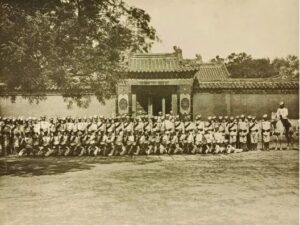
Figure 4. Russian Occupation of Jingshan Park, 1900
 

Bibliography

Primary Sources

‘Jingshan Park’, Travel China Guide, March 2012, < https://www.travelchinaguide.com/attraction/beijing/jingshan.htm> [accessed 29 January 2024].

Secondary Sources

Allen, Joseph R, ‘Taipei Park: Signs of Occupation’, The Journal of Asian Studies 66: 1 (2007), pp. 159–199, <https://doi.org/10.1017/s0021911807000010> [accessed 29 January 2024].

“Jingshan Gongyuan de Wuzuo Tingzi” 景山公园的五座亭子, Beijingshi Renming Zhengfu 北京市人民政府(2017), https://www.beijing.gov.cn/renwen/jrbj/sjc/201703/t20170309_1874497.html.

“Luoshi Huifu Jingshan Wuting Lishiyuanmao Zhengxietian Jiaoliuhui Zaijingjuxing” 落实恢复景山五亭历史原貌政协提案交流会在京举行, Fojiao Zaxian (2006), https://web.archive.org/web/20140106033017/http://news.fjnet.com/jjdt/jjdtnr/200605/t20060524_26414.htm.

Wang, Zheng, Never forget national humiliation: Historical memory in Chinese politics and foreign relations (New York, 2014).

  1. ‘Jingshan Park’, Travel China Guide, March 2012, <https://www.travelchinaguide.com/attraction/beijing/jingshan.htm> [accessed 29 January 2024]. [↩]
  2. ‘Jingshan Park’. [↩]
  3. “Jingshan Gongyuan de Wuzuotingzi” 景山公园的五座亭子, Beijingshi Reming Zhengfu 北京市人民政府(2017), https://www.beijing.gov.cn/renwen/jrbj/sjc/201703/t20170309_1874497.html. [↩]
  4. “Luoshi Huifu Jingshan Wuting Lishiyuanmao Zhengxietian Jiaoliuhui Zaijingjuxing” 落实恢复景山五亭历史原貌政协提案交流会在京举行, Fojiao Zaxian (2006), https://web.archive.org/web/20140106033017/http://news.fjnet.com/jjdt/jjdtnr/200605/t20060524_26414.htm. [↩]
  5. Zheng Wang, Never Forget National Humiliation: Historical Memory in Chinese Politics and Foreign Relations (New York, 2014), p. 39. [↩]
  6. Joseph R. Allen, ‘Taipei Park: Signs of Occupation’, The Journal of Asian Studies 66: 1 (2007), p. 177, <https://doi.org/10.1017/s0021911807000010> [accessed 29 January 2024]. [↩]

The Chinese Tourism Service Limited reinforced Chineseness of the Chinese international students by forming exclusive spatial identity

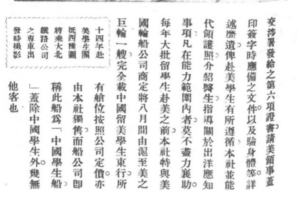
Excerpt 1. the exclusivity of passengers1
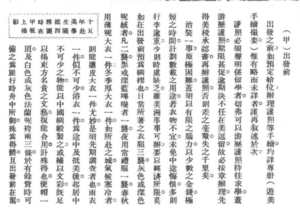
Excerpt 2. The instruction of the dress code2
Yajun Mo, in his chapters, posits that the Chinese Tourism Service Limited (CTS) assumed the responsibility of managing and transporting Chinese international students to the United States in response to the demands of the nationalist government. CTS was tasked with various responsibilities, including finding accommodations, helping international students register for school, managing education funds, and sending report cards to their parents, all aimed at maintaining their ties with ethnic roots in China.3. This played a role in cultivating a nationalist sentiment among international students. However, according to the primary source discussed in this blog, it argues that CTS not only contributed to the construction of nationalist sentiment but also actively promoted the concept of Chineseness by establishing an exclusive spatial identity for Chinese international students. In creating this distinct identity, CTS differentiated Chinese students from foreigners during their journey to the US. Also, CTS provided instructions to international students on how to dress appropriately in the US.

The primary source for this blog is an article published by CTS in 1927 in the magazine 旅行雜誌. The blog presents select critical excerpts from this article to illustrate the key argument.

To promote the idea of Chineseness, CTS set Chinese international students apart from foreigners during their sea journey to the United States. As mentioned in Excerpt 1, CTS arranged an exclusive ship solely for the travel of Chinese international students, avoiding their mingling with other foreign passengers. That is, “本社特與美國輪船公司商定 … 巨輪一艘。完全載中國留美學生東行。… 而船公司即稱此船為“中國留學生船”蓋除中國學生外。幾無他客也。”4 Despite the international nature of the journey, operated by foreign entities, these international students acquired an exclusive spatial identity within the confines of the ship. On the one hand, they engaged with the global community by adopting Western transportation and benefited from international business to facilitate their travels abroad. On the other hand, their activities were restricted to their original social circle. While they could leverage foreign technologies, their interaction with the authentic foreign community was limited, given their exclusive status within the ship. What began as an international journey evolved into a trip without immediate contact with foreigners and with limited participation in foreign cultures.

Concerning lifestyle instructions, CTS played a pivotal role in guiding the dress code for international students. In Excerpt 2, CTS emphasised the importance of bringing traditional Chinese-style clothing that could authentically showcase the Chinese identity within the foreign community, thereby creating exclusivity around the clothes of Chinese students. The authors note, “日常所著之衣物三襲。灰色或深色呢絨者。凡二襲。黑或深藍陽啜者一襲,”5 wherein CTS recommended specific colours for everyday wear, elevating these colours to symbols of Chinese-exclusive clothing. In this foreign space, the chosen colours became distinctive representations of exoticism. Notably, CTS highly recommended the inclusion of clothing made from Chinese silk, intended to “以揚東方名貴之文藝,”5 solidifying the Chinese identity through the choice of materials. In this case, materials became symbolic representations of identity, establishing a standardised image of a Chinese in a foreign environment. From the prescribed colours to the emphasis on Chinese-produced materials, CTS reinforced the Chineseness of these students by instituting a set of lifestyle norms for Chinese international students in American society. While these students studied abroad, immersing themselves in foreign cultures and visiting iconic American sites such as Yellowstone National Park as noted by Mo in his chapter,6 they were simultaneously restrained by the directives of their home country’s agency—CTS. CTS constructed an ideal image of being Chinese in a foreign space, blending the students’ spatial identity with foreign influences and a distinctly Chinese traditional foundation.

In essence, the foreign journey for Chinese international students was not merely an educational pursuit but also a reinforcement of Chineseness. CTS, through its involvement in their study abroad experience, not only provided students with benefits but also underscored their Chinese identity by establishing an exclusive space on the ship. Individually, CTS instructed the students’ lifestyle in the United States, promoting a traditional Chinese dress code in style and material. While these international students benefitted from a foreign education, the journey fortified their identity within the community. Consequently, the tourism experience for Chinese international students carries profound implications for constructing Chineseness within overseas Chinese communities.


Primary Sources

Zhuang Jiuzhu 庄九铸, Xu Zhaofeng 许兆丰, “Zengbie Youmei Xuesheng” 赠别游美学生, 旅行雜誌 (1927): 86–96.

Secondary Sources

Mo, Yajun, Touring china: A history of travel culture, 1912-1949 (Ithaca, 2022).

  1. Zhuang Jiuzhu 庄九铸, Xu Zhaofeng许兆丰 “Zenbie Youmei Xuesheng” 赠别游美学生, Luxing Zazhi 旅行雜誌 (1927): 87. [↩]
  2. Zhuang Jiuzhu and Xu Zhaofeng, ‘Zenbie Youmei Xuesheng’, p. 88. [↩]
  3. Yajun Mo, Touring China: A History of Travel Culture, 1912-1949 (Ithaca, 2022), p. 36. [↩]
  4. Zhuang Jiuzhu and Xu Zhaofeng, ‘Zenbie Youmei Xuesheng’, p. 87. [↩]
  5. Ibid. [↩] [↩]
  6. Mo, Touring China, p. 36. [↩]

The Comparison between the Shanghai’s shantytown and lilong: the presentations of the class stratification

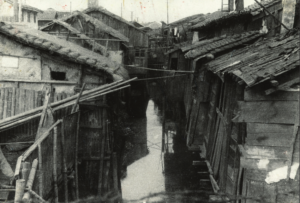
Image 1.1 The shantytown in Shanghai

Image 2.2 Lilong in Shanghai

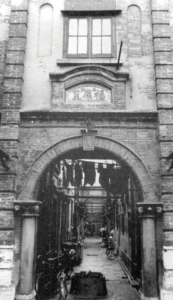
This blog explores the prevailing conditions of Shanghai’s shantytown and lilong between 1930 and 1950. It will explore the demographic composition of residents, the quality of buildings, and the overall living standards, in order to highlight how these contrasting residential areas epitomised the prevailing social hierarchy in Shanghai. The shantytown primarily served as hubs for individuals from the lower strata of society, reflecting their challenging living conditions. Conversely, lilong represented spaces where the social elite and respectable members of society resided, manifesting the progressive strides of the era. These distinctions were tangible reflections of the societal disparities within the hierarchy.

To depict the authentic realities of Shanghai’s shantytowns (Image 1) and lilong (Image 2), this blog draws from Hanchao Lu’s depiction of lilong and Wang Lanhua’s firsthand experiences as a resident of Fangua Lane, a renowned shantytown in 20th-century Shanghai. The visual representations above vividly illustrate the stark contrasts between these prevalent residential areas. The shantytown exhibited a worn-down appearance, while lilong boasted a sense of orderliness and thoughtful design. However, these disparities extended far beyond mere surface appearances.

Primarily, the demographic makeup of residents in these areas was notably distinct. Shanghai experienced a significant influx of migrants after 1930, significantly complicating the city’s demographic landscape. According to Lu, Shanghai’s population surged to over 3 million in 1930, a drastic increase from the approximately 1 million residents in 1900.3 This surge in population affected both the shantytown and lilong, albeit in different ways. The shantytown, such as Fangua Lane, predominantly became sanctuaries for refugees, exemplified by the experiences of Wang Lanhua and her husband. As Denise Ho highlights, the post-1945 civil war brought a significant influx of refugees to Shanghai, resulting in Fangua Lane accommodating between 3,000 to 4,000 shantytown residences inhabited by over 16,000 refugees.4 Wang Lanhua notably referred to these shantytown dwellings as gundilong 滚地龙, the symbolic portrait of working people’s lives in Old China.5 In contrast, lilong experienced an influx of predominantly elite residents, including rich landlords, merchants, literati, bureaucrats, shop assistants, clerks, schoolteachers, and artisans.6 Despite the influx of migrants, social class remained a determining factor in residents’ choice of dwelling, ultimately shaping the demographic landscape of these neighbourhoods.

The contrast between the amenities and facilities in the shantytown and lilong was also stark. The shantytown dwellings were often constructed from random materials, and subject to frequent demolitions. As noted by Wang Lanhua, usually, she would put up a shelter each night and take it down each morning in order to avoid the International Settlement police.7 In sharp contrast, lilong residences boasted sturdy reinforced concrete structures,8 offering greater security and durability, making them less susceptible to easy demolition. This architectural contrast was also reflected in a broader divide in interior facilities. From the 1930s onward, lilong houses underwent a modernisation surge, integrating modern amenities such as sanitary fixtures (bathrooms with a bathtub and flush toilet) and a gas supply for cooking and hot water.8 Additionally, some residences began incorporating garages, indicating the residents’ ownership of private automobiles.9 In contrast, shantytown dwellings lacked modern conveniences and endured harsh conditions. Wang Lanhua’s poignant account indicated that she gave birth to her second child on the mud floor of a gundilong.10 While lilong residents embraced modernisation and its benefits, shantytown inhabitants lived with simplicity and austerity, devoid of such amenities. These differences in material convenience are the practical expression of the class distinction.

The stark disparities between the shantytown and lilong, evident in their demographic composition and housing facilities, underscore a substantial gap between these residential areas. Life in the lilong, without a doubt, epitomised comfort, modernity, and convenience, starkly contrasting the perpetually turbulent, arduous, and austere existence in the shantytown. The demographic composition of the residents is the best evidence of the social stratification, as it directly reflects the eventual flow of Shanghai’s migrant population. Moreover, the contrasting housing amenities in the shantytown highlighted the physical manifestation of the class stratification. Lilong houses were equipped with modern conveniences, a material practice of higher social status. This contrasts with the humble facilities of the shantytown buildings. As the essential residences for Shanghai’s transient population between 1930 and 1950, the shantytown and lilong epitomised the living conditions of different social classes. A comparative analysis of these areas can help to gain a comprehensive insight into the living conditions of different social strata in Shanghai during that period.

  1. Straw huts over stagnant water source: H1-21-8-21, Shanghai Municipal Archive, <https://www.researchgate.net/figure/Straw-Huts-over-Stagnant-Water-Source-H1-21-8-21-Shanghai-Municipal-Archives_fig4_278821830> [accessed November 22, 2023]. [↩]
  2. Hanchao Lu, Beyond the Neon Lights: Everyday Shanghai in the Early Twentieth Century (Berkeley, 2008), p. 147. [↩]
  3. Lu, Beyond the Neon Lights, p. 162 [↩]
  4. Denise Y. Ho, Curating Revolution Politics on Display in Mao’s China (Cambridge, 2018), pp. 65-67. [↩]
  5. Ho, Curating Revolution Politics on Display in Mao’s China, p.65. [↩]
  6. Lu, Beyond the Neon Lights, p. 156. [↩]
  7. Ho, Curating Revolution Politics on Display in Mao’s China, p.79. [↩]
  8. Lu, Beyond the Neon Lights, p. 150. [↩] [↩]
  9. Ibid., p. 151. [↩]
  10. Ho, Curating Revolution Politics on Display in Mao’s China, p.67. [↩]

Cai Fei Lu: Women confined themselves to the domestic space

Figure 1. the manifestation of foot binding

Elizabeth LaCouture’s perspective highlights the central role of women in the domestic space in Republican China’s domestic space, positioning them as subjects of the state and family or ‘jia’.1 Her opinion indicates that in late imperial and early Republican China, women primarily occupied a passive subject in the domestic space. Their significance within the family was often underscored by the public recognition conferred upon them. For example, women brought political recognition to the family when they were bestowed the honor of chaste widows or virtuous women by the imperial state.2 Also, women usually took the responsibility of preparing and placing ritual offerings at the ancestral altar.3 LaCouture’s stance implies that women attained subjecthood within the household through an external acknowledgment or by publicly assuming significant roles in family-related affairs. It was the external forces that made women the subject of the household.

However, this blog seeks to scrutinize LaCouture’s viewpoint and introduce another prevalent practice during that era—foot binding. The blog argues that women actively and independently consolidated their centrality in the domestic space through foot binding. This is contrary to LaCouture’s view. Women are not passive actors in the domestic sphere. Referencing the book Cai Fei Lu, published in the 1930s and compiling contemporary interpretations of foot binding as a social practice, this blog aims to refute the claim that women were confined to the “jia” sphere solely due to external influences. Instead, it asserts that female autonomy played a significant role, challenging the notion that women were merely subject to external factors in shaping their roles within the household.

Cai Fei Lu, compiled by the Republican scholar Yao Lingxi, delves into the history and practical implications of foot binding in Republican China. Considering these two dimensions, it’s reasonable to argue that the widespread practice of foot binding was a result of women women’s autonomous choice.

The book repeatedly narrates a shared sense of the origin of foot binding that was created by an imperial concubine PanFei, “潘妃作俑於一時。”4 She practised foot binding to curry favour with the emperor. The practice of foot binding steadily gained popularity and grew to be regarded as a viable method for women to attract men, “良家婦女乃以為取媚男子之道在是。”5 Even though its historical origin cannot be substantiated, the prevailing social idea depicted in the book suggests that it was motivated by women’s pursuit of beauty, “婦女纏足。初意必以美觀而起。”6 This spontaneous desire requires women to engage in the physical practice of foot binding, seeking to attain the beauty they deemed desirable. Furthermore, foot binding did not only reshape the female feet, but also reconfigure their identity in the domestic realm, or ‘jia’. On the one hand, due to their desire for beauty, which was primarily for getting male attention, their distorted feet became a product of male preference, though they voluntarily bound their feet. They allowed their physical selves to be conceptually linked to male family members. Foot binding, although a female behaviour, was essentially impacted by male consciousness, or what women perceived as male preference. On the other hand, because of the foot binding, women confined themselves in the physical domestic space. Consequently, women’s mobility would significantly reduce, rendering them unable to walk for extended durations and impeding their ability to move freely between the physical domestic space and the external environment. That is, “行動艱苦。”7 Consequently, women assumed a prominent role within the domestic sphere due to their extended presence. The practice of foot binding, therefore, was a choice made by women, became an autonomous necessity, and reshaped their identities and positioning within the domestic realm.

Elizabeth LaCouture argues that women were at a disadvantage when it came to establishing their identity in the domestic space. In late imperial and Republican China, women could only assert their centrality in domestic space through public recognition. However, after analysing the Republican publication Cai Fei Lu, the blog offers an alternative perspective, arguing that women’s limitations in the domestic sphere were not entirely due to external forces. Women’s autonomy drove them to practice foot binding. This act physically constrained their mobility, psychologically tethered their physical form to the preferences of male family members, and consequently shaped women’s central identity within the domestic space.

*Cai Fei Lu: https://taiwanebook.ncl.edu.tw/zh-tw/book/NTUL-9900013372/reader

  1. Elizabeth LaCouture, Dwelling in the World: Family, House, and Home in Tianjin, China, 1860-1960 (New York, 2021), p. 102. [↩]
  2. LaCouture, Dwelling in the World, p. 19. [↩]
  3. Ibid., p. 102. [↩]
  4. Yao Lingxi 姚靈犀, Caifeilu 采菲錄 (Tianjin: Tianjin shidai gongsi, 1936), p. 4. [↩]
  5. Yao Lingxi, Caifeilu, p. 49. [↩]
  6. Ibid., p. 134. [↩]
  7. bid., p. 151. [↩]

The Newspaper Excerpts, HEALTH IN THE TROPICS: the tropic disease and the racial discrimination

Figure 1. The excerpts of newspaper

The study of the tropics was prevalent throughout the previous century when imperial colonisation was still dominant around the globe. Against this backdrop, an article from a local Singaporean newspaper The Straits Echo, titled “Health in the Tropics”, published on 6 February 1914, became the focus of this blog. Focused on the well-being of Europeans residing in the tropics, the article claims that “while the white man individually can exist in the tropics, racially he cannot persist Acclimatisation is not possible.”1 This perspective inherently suggested that the white race and the tropics were mutually exclusive, proposing an inability for integration. Drawing from the insights of the article, the blog contends that the broad study of the tropics of the time was inherently a study of racial distinctions. Given this context, the emergence of the study of tropics served as a vehicle for manifesting and solidifying racial differentiations within these landscapes.

The opening statement of the newspaper article posits that, “Man is the creature of his environment; he is what he is by virtue of his surroundings.”2 It shows the author’s firm belief in the intimate correlation between the environment and the creation, formation, and perpetuation of the human race. The author proceeded to highlight what the Europeans perceived as the most substantial detriment inflicted upon the white race by the tropics – the direct impact on “the function of the nervous system.”3 The author gave many examples to clarify the concrete harm. For example, in India, “The Duke of Wellington never met a good-tempered Englishman.”3 In addition, “it has been written in India that there the European struggles during the first, dwindles and degenerates during the second, and becomes extinct as such, during the third or fourth generation.”4 Such a description of the offspring of the white race bred in the tropics made the incompatibility between the white race and the tropics more tangible. It indicated that particular regions breed distinct racial identities, suggesting that Europeans acclimated to such settings would inevitably succumb to a deteriorating state, transforming into an ailing race. The author’s narrative starkly presented these two entities as entirely mutually exclusive. The prolonged residence of whites in the tropics would result in the erosion of their inherent racial characteristics. The tropical environment, as per the author’s depiction, emerged as a significant threat perilously jeopardizing the continuity of the white race.

This exploration of the incompatibility of the white race with the tropics essentially embodies the European expression of racial distinction. This expression was not limited in Singapore. Similar expressions surfaced in other colonial territories like the French colony of Hanoi in Vietnam and the Dutch colony of Jakarta in Indonesia. In Singapore, Europeans emphasised the eternal damage to the white nervous system caused by the environment of the tropics. In Hanoi, the French colonial government of the time published the French guides on hygiene, which “attempted to systematize and rationalize architecture through the lens of science … (to) reduce the discomfort of living in tropical climates.”5 In Jakarta, “European residents repeatedly tried to escape the ziektenhaard (breeding ground for disease) by continually moving southwards away from the northern old city,”6 and “racialized the previous class based divisions between urban spaces and urban populations,”7 which led directly to the Jakarta’s fragmented modern water supply system. These instances collectively illustrate the European perception of the incongruity between the tropics and the white race. The Europeans intended in their colonies to separate the local populations from the Western settlers, establishing communities that mirrored societal conditions from their home countries. In Singapore, the studies of tropic disease cautioned the white race against prolonged stays in the tropics for a long time. In Hanoi, the white race was required to ensure its safety and purity while differentiating itself from the local race by following the guidelines published by the Europeans. In Jakarta, white people prioritised their water supply needs and built modern water supply systems for their ethnicity.

These examples demonstrate the European’s effort to delineate racial distinctions. The endeavor was driven by the singular aim of safeguarding European own race and ensuring its sustained existence in tropical territories. Whether manifested through a newspaper article with a study highlighting potential harm for Europeans in tropical climates, the publication of French hygiene guidelines in Hanoi, or the establishment of a new water supply system in Jakarta, the primary objective essentially centred on differentiating races of that era. These initiatives were primarily geared toward securing the continuation of European livelihoods rather than conducting comprehensive, inclusive studies encompassing the broader spectrum of racial experiences within these contexts.

  1. ‘Health in the Tropics’, The Straits Echo, Singapore, 2 February 1914, p. 141 https://eresources.nlb.gov.sg/newspapers/digitised/article/straitsechomail19140206-1.2.27?qt=tropic,%20hygiene&q=tropic%20hygiene [accessed 29 October 2023]. [↩]
  2. ‘Health in the Tropics’, p. 141. [↩]
  3. Ibid. [↩] [↩]
  4. Ibid. [↩]
  5. Laura Victoir and Victor Zatsepine, Harbin to Hanoi: The Colonial Built Environment in Asia, 1840 to 1940 (Hongkong, 2013), p. 234. [↩]
  6. Freek Colombijn and Joost Coté, Cars, Conduits, and Kampongs: The Modernization of the Indonesian City, 1920-1960 (2014), p.66. [↩]
  7. Colombijn and Coté, Cars, Conduits, and Kampongs, p.68. [↩]

The excerpts of An Account of the Kingdom of Cabul – the early 19th European perspectives towards the oriental world: a big cabinet of curiosities

When discussing the ideology of Orientalism, one would naturally refer to Edward Said’s explanation of Orientalism proposed in 1978, that is, “the East as its (the West’s) inferior and essentialized ‘other’.”1 Felix Driver similarly claims that in the 18th and 19th centuries, the Europeans considered the oriental world a chaotic place. They should make it an orderly place in the name of enlightenment.2 [2] Both arguments highlight the European perceptions of the inherent inferiority of the oriental world. Nevertheless, this blog will offer an alternative perspective prevalent in the early 19th century and argue that, instead of casting the oriental world into an inferior position, the Europeans viewed it as an undiscovered place – a big cabinet of curiosities that was neutrally observed. Specifically, the Europeans’ perceptions were inconsistent, lacking a unified idea towards the Orient and its inhabitants. The Europeans maintained a neutral attitude towards the oriental world. This big cabinet of curiosities stimulated a sense of novelty and diversity contrary to Driver’s description – a sense of salvation. The blog draws upon excerpts from An Account of the Kingdom of Cabul as examples to illustrate these assertions.

Published in 1815, An Account of the Kingdom of Cabul was finished by Mountstuart Elphinstone, a Scottish diplomat and colonial administrator.3 The book chronicled his journey into the oriental land, which has many of the cultural and topographical hallmarks of “the Orient.”4 His narratives on one of the book’s chapters – Book II, Chapter I: General Account of The Inhabitants of Afghaunistaun highlighted the oriental world’s diverse and multifaceted nature in the early 19th century, rather than perceiving the oriental land as homogenous. The author’s observation of the diversity of the orient world led to a neutral attitude, avoiding the denigrating view often associated with Europeans of that era.

Elphinstone’s portrayal of the oriental world in his book resembled a vast cabinet of curiosities teeming with novelties distinct from Europe. According to David Arnold, Elphinstone introduced the elements such as camels, oases, mirages, date palms, the “Jewish” countenance of girls, which invoked many typical oriental images that established for later writers a rich repertoire of Oriental scenes and emblems.5 Furthermore, he offered unique geographical views on the oriental land. He noted, “he would be amazed at the wide and unfrequented deserts, and the mountains, covered with perennial snow.”6 These novelties had established the foundation of the cabinet of curiosities because they were numerous and surprising. What stands out remarkably was the lack of homogeneity within the oriental realm itself. Elphinstone’s comparative analysis between different parts of the Afghaun land and between the Afghaun land and India were great presentations. In the Afghaun land, he found “it difficult to select those great features, which all possess in common, and which give a marked national character to the whole of the Afghauns.”7 Moveover, in India, he highlighted “every movement originates in the government or its agents, and where the people absolutely go for nothing,” while in the Afghaun, “the control of the government is scarcely felt, and where every man appears to pursue his own inclinations, undirected and unrestrained.”8 Apparently, even within the oriental landscape, a unified set of characteristics remained elusive.

The rich tapestry of novelties and diverse elements within the oriental world contributed significantly to the construction of the cabinet, shaping Elphinstone’s impartial understanding of this intriguing sphere. When discussing the characteristics of the Afghaun, he adeptly balanced admiration for their strengths with an honest acknowledgment of their weaknesses. Positively, he noted, “he would scarce fail to admire their martial and lofty spirit, their hospitality”,9 and “he would admire their strong and active forms, their independence and energy of their character.”10 Negatively, he mentioned, “he would find it difficult to comprehend how a nation could subsist in such disorder; and would pity whose minds were trained by their unhappy situation to fraud and violence, to rapine, deceit, and revenge.”9 Instead of adopting a one-sided stance of praise or denigration, Elphinstone viewed their characteristics through a nuanced lens, offering a balanced narrative. This neutral discourse blended with emotional empathy and rational assessment, created an organic cabinet of curiosities.

Overall, the blog intends to present a view different from the contemporary interpretations of the European understanding of the oriental world. Instead of considering the Orient as the weak, the early 19th-century traveller Mountstuart Elphinstone constructed a big oriental cabinet of curiosities. He showcased the distinguishable landscapes of the oriental land, highlighted the internal variations of this land, and expressed the neutral discourse instead of forming a stereotype of degrading the Orient. The big oriental cabinet of curiosities was therefore established by the land’s novelty and diversity, and the rational assessment of Elphinstone.

  1. David Arnold, The Tropics and Travelling Gaze (2006), p. 119. [↩]
  2. Felix Driver, “Imagining the Tropics: Views and Visions of the Tropical World,” Singapore Journal of Tropical Geography, 25: no. 1 (2004), p. 14. [↩]
  3. Arnold, The Tropics and Travelling Gaze, p. 122. [↩]
  4. Ibid., p. 123. [↩]
  5. Ibid. [↩]
  6. Mountstuart Elphinstone, Account of the Kingdom of Cabul (1815), p. 149. [↩]
  7. Elphinstone, Account of the Kingdom of Cabul, p. 148. [↩]
  8. Elphinstone, Account of the Kingdom of Cabul, p. 150. [↩]
  9. Ibid., p. 149. [↩] [↩]
  10. Ibid., p. 150. [↩]

Map of Old Beijing: The Imperial Authority’s Essence, The Manipulation of Human

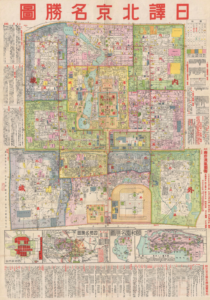
Figure 1. Beijing 1930 Chinese City Map or Plan of Beijing (Peking), China.

The city of Beijing has been the capital of imperial China since the Yuan dynasty. The map shown above was produced in 1930 by the Japanese. It portrayed the old urban structure of the Beijing city. The map consists of several rectangular blocks named 舊紫禁城 (the Forbidden City), 舊皇城 (the Imperial City), 內城 (the Inner City), and 外城 (the Outer City). The Forbidden City and the Imperial City were contained in the Inner City. The textual explanations provided on both sides of the map are about the categories of the marks on the map. Such details contribute to the analysis of the old urban spaces of Beijing. Through a meticulous examination of the map, accompanying the secondary materials in this week’s reading list, the blog posits that the historical urban layout of Beijing expresses a critical essence of the imperial authority: the manipulation of human mobility and activity. The imperial ruler utilised his authoritative power to regulate the mobility of the general populace in Beijing by arranging fixed residences for specific groups, and to restrict human activities by introducing social rules in different areas of the city.

First, the urban blocks of old Beijing required and designed by the imperial government mentioned above resulted in the segregation of different groups of people. For instance, on the map, the green part represents the residential location of famous individuals 著名處所. Most green parts on the map are in the Inner City, with only small parts found in the Outer City. According to Dong Madeleine Yue, the Inner City was the residence quarter of the “Manchu aristocrats and high officials”[1] as well as the “banner men and their families, who were responsible for guarding the palace and defending the capital.”[2] It is evident that the green parts in the Inner City belonged to influential nobility-related figures of the Imperial era. Yet, the residents of the green parts of the Outer city were different, especially in the Qing dynasty (1636-1912). Dong notes, “when the Manchus entered Beijing, they banished Han residents from the Inner City.”[3] It therefore can deduce that the small green parts of the Outer City mostly belonged to well-known Han figures as these people could not live in the Inner City. The ordinary people who did not play an important role in the imperial system were not allowed to be the residents of the Inner City. This division of the residence was not initiated by the ordinary people themselves, but rather imposed by the imperial authority. This resulted in the confinement of the ordinary to certain areas, shaping relatively fixed settlements for different groups of people and making the ordinary keep in captivity like livestock. The imperial administration at this moment manipulated human mobility and controlled the should-be division of people in Beijing by allotting the land to its residents.

Furthermore, the blog claims that the imperial manipulation of the urban design of the Outer and Inner cities contributed to the development and emergence of the theme zones. These organic parts in the urban area combined as an organic whole to support the entire imperial Beijing. The commercial area in the Outer City is a great example. When zooming in the map, it is hard to see the shops and stores directly associated with commercial activities within the Inner City. In contrast, in the Outer City, many shops of different categories are shown, such as 葱店 cong shop, 文宝楼 wenbao building, 纱纸坊 gauze paper shop. It is because that “no permanent businesses, guilds, or forms of entertainment were technically allowed in the Inner City,”[4] according to Dong. This situation was a product of the imperial strategy and manipulation. Dong once depicts the bustle of the Outer City’s business district: “the northern part of the Outer City was the bustling and prosperous commercial center for the imperial capital.”[5] Even if it did not designate the Outer City as an area with prosperous commerce, the arrangement of the Inner City urged development of the business in the Outer city as the Inner City could not “serve the daily needs of its residents,”[6] as Dong notes. The Inner City under the imperial control was a city without a synthetical life. In this case, the Outer City had to develop areas and social occasions to fill in the gaps in the Inner City living areas.

Overall, this blog intends to demonstrate the nature of imperial authority – the control of human mobility and activities. The separated blocks made up by imperial manipulation resulted in the segregation of ordinary people in designated locations. The imperial authority was the decisive agency in this process. As for the limitation of human activities, the urban spaces designed by the imperial government urged the development new areas and social occasions in the Outer City, the commercial area in particular. Such an area was an integral part of the efficiently functioning organic whole. However, the overall logic of constructing this organic whole was determined by the supreme control of the imperial authority, rather than the spontaneous generation of the ordinary people. Therefore, the urban plan of the city of Beijing was a manifestation of capability of the imperial authority rather than the human initiative.

[1] Madeleine Yue Dong, Republican Beijing: The City and Its Histories (Berkeley, 2003), p. 27.

[2] Dong, Republican Beijing, p. 27.

[3] Ibid.

[4] Ibid.

[5] Ibid.

[6] Ibid.