Asia’s Burial Grounds: The Last Bastions of Resistance Against the Will of the State?

The burial ground, throughout the world, has for centuries been considered a sacred place. At the physical level, they provide the setting for laying loved ones to rest peacefully and for paying respects and remembering those who came before us. Throughout history, they can be seen as symbolic sites of power, memory, and identity. Lily Kong and Brenda Yeoh’s The Politics of Landscapes in Singapore: Constructions of ‘Nation’, however, has been a landmark publication analysing their competing role against the will of the ‘modernising state’.1 Using this text as a foundation, this post aims to show that whilst one might expect such personal, spiritual and sacred spaces to contest modernisation and urbanisation, they have offered little resistance, especially in an Asian spatial context.

When studying the physical manifestations of Chinese burial practices and rituals, one is struck by the immensity of tradition, laws and its geomancy. The dead are considered to play an important role in family life, with Chinese custom believing them to have an important role in looking over their ‘earthly descendants’.2 In accordance with feng shui, the Chinese burial space is carefully considered, planned and maintained.3 In China particularly, perhaps more so than in other places, they are sites of familial kinship and loyalty, of home comfort and spirituality and of personal exchange between the living and dead. As Kong and Yeoh have noted the importance of burial site configuration in ensuring ‘benign influences’ are drawn from earth and transmitted to descendants of the dead.4 Any interference with such a custom, would bring risk to the wellbeing of the deceased’s family. With these facts in mind, such sacred sites are widely considered to be immune from external influences and government intervention.

Yet, despite this, such Chinese sites and their stakeholders offered little resistance when modernisation and urbanisation efforts by the Singaporean government commenced in the second half of the 20th century. Such sites, which occupied large areas of physical space, and which many considered to be focusses of disease, proved to be obstacles to expanding townscapes and cityscapes and land acquisition program. This was especially the case with specific regard to Singapore’s relative shortage of land to develop. Whilst some Chinese clans, the YFFK and SHHK sought a level of compensation for their burial grounds being disrupted or moved5, the Singaporean example shows these sacred spaces to have offered little challenge to the will of the state.

To move up the chain of abstraction, it is important to perhaps consider this phenomenon from an alternative, more critical perspective. Whilst Kong and Yeoh note that practices of cremation and the use of columbariums were promoted as a valid and useful alternative to traditional funerary sites, this lack of resistance may also have been a by-product of changing attitudes and perspectives amongst Chinese huangxi themselves. Whilst Kong and Yeoh cite several accounts that highlight the sentimentality in the very beauty, ‘finding’ and ‘activity’ of tending relative’s graves, there is evidence that communities throughout Asia felt less affinity to family and community and instead felt part of a larger, modern and cosmopolitan society. Su Lin Lewis’ Cities in Motion brings to light the rise of ‘globalisation in the public sphere’ and a growing sense of cosmopolitanism throughout Asia.6 Organisations such as the YMCA, YWCA and the Rotary helped foster feelings of community service and international consciousness across Asia. To provide a counter argument to Kong and Yeoh, perhaps communities felt less compelled to engage in the traditions of burial and with ancestral or clan connections and instead felt more kinship to the state.

If one critically unpacks the physical ritual of tending to the dead, such an activity often involves time, offerings and is a practice for entire families or communal groups. However, with modernisation comes displacement, geographical fragmentation and greater restrictions on time. Accompanying the building of new towns comes the relocation of communities and the foundation of new lives, ideas and identities. Affinity to home, albeit not lost, can become more ambiguous and obtruse. Whilst the ritual of visiting and supervising sacred spaces should not be underestimated in the spirituality and comfort it can bring to people, Kong and Yeoh’s analysis reveals the success the Singaporean example had in shaping the material landscape of columbariums to accommodate traditions and still offer meaning for loved one’s of the dead. Indeed, between in 1962, the Mount Vernon Crematorium was performing four cremations per week and by 1995 it was averaging 21 cremations per day.7  Niches could be selected and adjusted to suit the personal preferences of the family, providing an acceptable and more financially viable alternative.8

Whilst this blog has built upon and provided a critique of Kong and Yeoh’s article, further inquiry into the relationship between burial sites, national identity and the state would prove incredibly fruitful. In the contemporary world, disagreements still take place over burial and memorial sites. The removal of George Floyd’s memorial in Minneapolis in 2021 received much criticism with demonstrators protesting that it damaged the city’s collective memory of the incident.9 Such an example proves the power that such sites can have as symbols of resistance, community and identity. Burial grounds have the potential to be places of power, struggle and memory and will continue to provide a fascinating lens through which to study civil autonomy and the will of states.

  1. Lily Kong and Brenda S. A. Yeoh, The Politics of Landscapes in Singapore: Constructions of ‘Nation’, (Syracuse, 2003) [↩]
  2. Wilson, B. D., “Chinese Burial Customs in Hong Kong”, Journal of the Hong Kong Branch of the Royal Asiatic Society 1 (1960), p. 115 [↩]
  3. Michael Paton, Five Classics of Fengshui: Chinese Spiritual Geography in Historical and Environmental Perspective, (2013) [↩]
  4. Lily Kong and Brenda S. A. Yeoh, The Politics of Landscapes in Singapore: Constructions of ‘Nation’, (Syracuse, 2003), p. 53 [↩]
  5. Kong and Yeoh, The Politics of Landscapes in Singapore, p. 65 [↩]
  6. Su Lin Lewis, Cities in Motion, (Cambridge, 2016), p. 120 [↩]
  7. Kong and Yeoh, The Politics of Landscapes in Singapore, p. 61 [↩]
  8. Ibid, p. 72 [↩]
  9. Deena Winter, ‘Minneapolis Removes Memorials and Barricades From ‘George Floyd Square’, (2021), https://www.nytimes.com/2021/06/03/us/george-floyd-memorial-minneapolis.html [↩]
Big-Eared Du: A Mob Boss’ Rise to Power in Shanghai’s Underground World

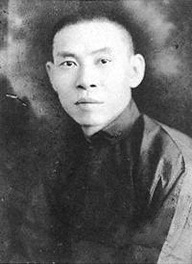
The life of a gangster is never simple or pleasant. Not least the life of the ‘Godfather’ of Shanghai, a city crawling with endless opportunities for ambitious criminals. Du Yuesheng’s life of lawlessness was borne out of a troubled childhood, with the early loss of his parents and his sister being sold into slavery. From an early age, Du grew an appetite for gambling and gaming, an aspect of his personality that Martin claims, ‘instilled in him a certain self-discipline that curbed his natural outbursts of violent temper.’1 This is likely a trait that aided his rise to leadership of the Green Gang, one of the world’s most infamous secret criminal organisations. This blog aims to consider the life of the gangster against the unique backdrop of extraterritoriality and Japanese occupation. Whilst his full story is worthy of a full and extensive biography (see Zhang Jungu and Xu Zhucheng’s accounts), this post will highlight his rise to prominence and maintenance thereof in the labyrinthine political environment and dark and murky spaces of Old Shanghai.

2

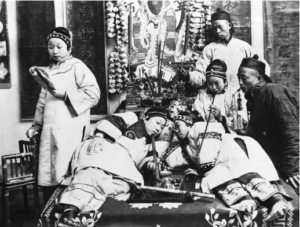
After a childhood of petty hooliganism, theft and mischief, he impressed the then ‘bigshot’ of the Green Gang, Huang Jinrong, whose power derived from his illustrious and efficient career as the leader of the Chinese detective squad in Shanghai’s French Concession. His ability to negotiate and extort from his network of informants and contacts was paramount to his power. Wakeman’s depiction of these detective squads highlights their inescapable association with the criminal underworld.3 Whilst supposedly ‘solving crimes’, they were also assisting their allies in trafficking opium, running brothels, casinos and protection rackets.4 Having impressed Huang, Du swore the oath of brotherhood to the Gang and quickly began to make his impression. Martin notes how his full embracing of secret society values  and rituals and ‘rags to riches’ story helped generate influence of ‘legendary proportions’.5Indeed, power over the Green Gang was his after Huang Jinrong’s arrest in 1924. It is extremely important to note this ‘reputation’, which, comparably to Chicago’s Al Capone won him political clout and influence in elite government circles. His dominance of the opium trade, which remained rife throughout the Nanjing Decade, drew him close to General Chiang Kai Shek, leader of the Republic. Images like the one below, have in many ways come to crystallise the social space of Shanghai as decadent, debauched and rife with vice. The narco-economy was seen as a vital source of income for the Republic, and it is characteristic that Du was put in charge of the ‘Shanghai Opium Suppression Bureau’, which ultimately gave the Green Gang a monopoly of the market and extra income from tax and license fees.6 Such a bureau indeed simply acted as a guise for the government to control and earn more revenue.

7

The spaces Du Yuesheng controlled and operated were spaces of shade and criminality and in a city like Shanghai this made him important to the invading Japanese force in 1937. By 1939, the Japanese had offered Du safe passage and protection to Shanghai (having fled after backing the Kuomintang Army), to mobilise the Green Gang and operate the opium trade on their behalf.8Perhaps in a move out of character, he turned down the opportunity, instead favouring to find his own ways of smuggling opium into Japanese territory. Why he did this is unclear, however it is likely he was still ideologically committed to Chiang and Dai Li and preferred to supply his narcotics to the Nationalists. This puzzling decision is perhaps representative of the complex network of relationships between gangs, their rivals, businesses, municipal councils and invading forces in Shanghai. Indeed, Du himself could not conquer all of Shanghai. The Shanghai Municipal Police were a constant foe in his battle to deal opium legally in the International Settlement.9

A key aspect of Du’s administration of power was his extensive network of secrets and his control over hierarchy. An example of this was his ‘Endurance Club’, which was a smaller collective of individuals with social standing considered useful to Du. Elites such as industrialists, financiers, police and government officials were all brought into a clandestine arrangement which Du administered personally.10The operation of such a club relied on the practice of secrecy. Sworn oaths, rackets and protection payments kept the Endurance Club running. One can imagine the teahouses and mansions such meetings Du would have held and the spatial practices that would have characterised them. A meeting with Big-Eared Du would have been intimidating and daunting. Those to displease him or speake out of turn would have been few and far between.

The remainder of Du’s story, outlined in detail by his biographers, is one of relative anti-climax. After the conclusion of Japanese occupation, he was not welcomed back to Shanghai, bringing an end to his premiership as the City’s mob boss. He appears to have travelled to Taiwan and Hong Kong, but much of this period remains unclear.

A fascinating spatial history of his houses and meeting places is waiting to be written. One suspects it may lack the glitz, glamour and romanticism of his American counterparts; however, his operation was remarkable and had a profound effect on Shanghai’s reputation as the Asian capital of vice.

  1. Brian G. Martin, “The Shanghai Green Gang: Politics and Organized Crime, 1919–1937” (Berkeley, 1996) p. 41 [↩]
  2. Du Yuesheng, c. 1930, https://en.wikipedia.org/wiki/Du_Yuesheng#/media/File:Du_Yuesheng2.jpg [↩]
  3. Frederic Wakeman Jr., “Policing Modern Shanghai”, The China Quarterly, No. 115 (Sep. 1988), p. 415 [↩]
  4. Zou Huilin, “Du, the godfather of Shanghai”, Shanghai Star, (June, 2001), Accessed 7 March 2023, https://web.archive.org/web/20070821130553/http://app1.chinadaily.com.cn/star/2001/0607/cu18-2.html [↩]
  5. Martin, “The Shanghai Green Gang”, p. 40 [↩]
  6. Zheng Yangwen, “Shanghai Vice”, in The Social Life of Opium in China, (Cambridge, 2012), p.191, Frederic Wakeman Jr., The Shanghai Badlands: Wartime Terrorism and Urban Crime 1937-41, (Berkeley, 1996), p.11 [↩]
  7. Opium Den,1932, https://audiovis.nac.gov.pl/obraz/236216/ecf2fad8b7dbbd753701f03be2bbef34/, [↩]
  8. Wakeman Jr., The Shanghai Badlands, p.12 [↩]
  9. Martin, “The Shanghai Green Gang”, p. 180 [↩]
  10. Ibid, p. 181 [↩]

A Haven for High Society: The Shanghai Race Club as a Hub of Socialisation (1862-1951)

The Shanghai Race Club was much more than just a place for horse racing. Founded in 1862, the club quickly became one of the most prominent social and cultural centres in Shanghai, attracting some of the city’s wealthiest and most influential residents. For nearly a century, from 1862 to 1951, the Shanghai Race Club was a hub of socialisation, where attendees could gather to mingle, dine, dance, and enjoy a variety of cultural and sporting events. This blog post will explore the spatial practices of a typical Raceday at Shanghai during this fascinating period in the city’s history. Such a spatial approach provides a unique window into the social and cultural dynamics of Shanghai during this time.

It is the autumn of 1924. It’s Raceday. The day everyone has been waiting for. The crowd in the enclosure is decked out in the finest and most elegant styles of the Art Deco period. Anticipation for the Champions’ Stakes is bubbling, with a sense of electricity and excitement rippling through the air of Old Shanghai. This scene, one of the most famous from the time of Treaty Port China, is a magnificent lens through which to understand social practices and how people, of different classes, genders and ethnicities mingled and interacted.

1

Ning Jennifer Chang’s ‘To See and Be Seen: Horse Racing in Shanghai, 1848–1945’, is a wonderful text that captures that unique element of the typical Raceday in Shanghai. This being that the act of going ‘Racing’ is as much about the spatial practices of the enclosures, the bars and the dining rooms than it is about the running of the horses themselves. The spectacle was a product of the attendees themselves; the way they dressed, behaved and put on a show. Chang’s chapter captures the significance of ‘being seen’, the outward portrayal of a positive, and often opulent and lavish image, that would heighten social status and your perceived position of class. Dressed in ‘divine millinery’ and ‘dainty dresses and lovely ducklings of bonnets’, the ladies attending appear to have been especially concerned with this external image.

James Carter’s brilliant ‘Champions Day: The End of Old Shanghai’ also captures the vibrance of Raceday at Shanghai. He writes that ‘Champions Day was Shanghai: stylish and obscene, bigoted and cosmopolitan, refined and ragtag.’2 This excerpt seizes the juxtapositions that would have been clear on the day. The whole of Shanghai had come to watch; different classes, genders and ethnicities all in the enclosure together, all rushing to the bookies to place a bet, all rushing to the bar to get one more drink. Chang notes that on one occasion in 1878, 20,000 Chinese people attended, a figure amounting to 10% of the total Chinese population of Shanghai.3The enclosure, a relatively small space for watching the races, would have had people huddled closely together, everyone visible to one another and all open to each other’s scrutiny and judgment.

Despite the buzz of the enclosure, elites still had the privilege of private dining and drinking. Owners’ boxes provided a more exclusive space for ‘elaborate meals and freely flowing champagne.’4 Fur coats and the latest fashions were strutted, whilst ever more alcohol was consumed in what must have been a similarly raucous atmosphere. Carter’s book highlights how important the fashion was to the scene of the day. Miss Ing Tang (pictured below) was a fashion designer who made clothes specifically for the Raceday. Her designs and their popularity reveal that ‘the day should be not just about sports but also about the Settlement’s social scene of sophisticated, sometimes, orientalist styles.’5

6

One only has to visit the Cheltenham Festival or Ladies Day at Royal Ascot to understand and grasp the link that racing has with style, grandeur and elegance. It continues to capture the imaginations and offer many the chance to display their class, high-taste and social status. This is confirmed by Chang who writes that ‘Horse racing was not the only thing worth watching. During the two seasonal meetings held each year, the area around the edge of the racecourse became a temporary leisure space, and for those few days, it would be like a Chinese festival or a Western holiday’.7 The Race Club during this era provides another example of Shanghai’s trendsetting style. Although a Western import through the Treaty Port arrangement, the city embraced not only the sport of racing, but also its culture of socialising, gambling and drinking. In concurrence with the cabarets, dance halls and jazz that defined much of the social liberation and moderation of this period, racing and its fashion had a huge influence on the changing cultural landscape of Shanghai.

It is important to note the autonomy that this space provided otherwise constrained groups. Women were arguably the biggest beneficiaries, with the chance to express themselves in high style. Moreover, women from all walks of life were able to attend, with the admission fee being inexpensive. Chang has also expressed the view that ‘Within this space, the most attractive aspect was that men were allowed to watch women without restrictions regardless of whether they were decent women or courtesans from Shanghai’s brothels.’8 Thus, equally, the men in attendance benefited from the female presence, too, with the enclosure offering a unique spatial environment for interaction and courtship.

As it turned out, the smart money in 1924 was on Bonnie Scotland to win the Champions’ Stakes as it ran comfortably home by a few lengths. Not that anyone was paying too much attention. The real show was the effervescent champagne social taking place the other side of the rail. The day out at the Race Club was an archetypal element of Shanghai’s cultural liberation during this period, one which did not discriminate and one which excited the entire city.

  1. https://www.historytoday.com/archive/feature/shanghai-race-club [↩]
  2. James Carter, Champions’ Day: The End of Old Shanghai, (New York, 2020), p. 22 [↩]
  3. Ning Jennifer Chang, ‘To See and Be Seen: Horse Racing in Shanghai, 1848–1945’, in The Habitable City in China: Urban History in the Twentieth Century, (London, 2017), p. 96 [↩]
  4. Carter, Champions’ Day, p. 22 [↩]
  5. Carter, Champions’ Day, p. 86 [↩]
  6. Carter, Champions’ Day, p.86 [↩]
  7. Chang, ‘To See and Be Seen, p. 97 [↩]
  8. Chang, ‘To See and Be Seen, p. 98 [↩]

Forging Soft Power? The Japan-British Exhibition of 1910 and its Consequences for Japan’s Global Status

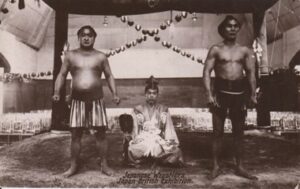
An unwitting visitor to White City, London in 1910 might have received a shock as they turned the corner of Commonwealth Avenue to find themselves faced by flowering rows of cherry blossoms, glistening water fountains, Japanese shrines and half-naked sumo wrestlers approaching their personal space at disturbingly breakneck speed. However, providing they had not been knocked over, with over eight million visitors in attendance across the summer, it should not have taken our unsuspecting guest long to realise they had stumbled across a rather significant exhibition.  That being the Japan-Britain Exhibition of 1910 and the largest international expose of culture, technology and status the Japanese Empire had ever been involved in.

1

Ayako Hotta-Lister has produced a comprehensive summary of the landmark event in her ‘Gateway to the Island of the East’, however, this article is principally concerned with the exhibition’s political objectives and outcomes for the Japanese Empire. By this time, world’s fairs, expositions and exhibitions had become a familiar sight around the world. European and American cities began hosting them frequently from the middle of the 19th century. They became hubs for cultural exchange, global interaction and economic networking. Hotta-Lister has maintained that holding an exhibition ‘became one of the obligatory tasks for a country that had already achieved world power status, as well as for those aspiring to do so’.2 In light of this, and indeed the Anglo-Japanese Alliance signed in 1902, there was seemingly much to be gained and little to be lost by a Japanese Exhibition in London.

Hotta-Lister’s article is a valuable source in understanding the reasoning behind Japan’s desire for an exhibition in 1910. Its objectives, largely instigated by Foreign Minister Komura Jutarō and Katsura Tarō, were ‘principally commercial’.3 Primarily, the two men felt compelled to strengthen trade links, specifically increasing the number of Japanese exports which reached the British Isles.4 Such an exhibition would act as a ‘shop-window’ for Japanese goods. Furthermore, another key objective was to obtain loans from London’s big financiers. At a basic monetary level, the exhibition provided a platform to prove Japan’s transition to modernity and convince creditors that Japan was a ‘good bet’. The opportunity to reinforce the newly formed alliance was also low hanging fruit which the organisers could also not refuse. It is interesting to note that the very name of the exhibition places ‘Japan’ before ‘Britain’, uncommon for this era of British pre-eminence, underlining that the event would take place with the two nations on equal footing.

Ultimately, how successful were the Japanese authorities in fulfilling their objectives in 1910? Firstly, from the point of view of the British, the event was far more popular with visitors than was expected. The attendance was ‘far exceeding the attendance at the Franco-British Exhibition of 1908… one of London’s most successful and popular exhibitions of the decade.’5 Despite this, however, Hotta-Lister’s article reveals that in relation to the Brussels International Exhibition, happening concurrently, the British attitude to the Japan-British event was somewhat ‘lukewarm’.6 Moreover, there was a school of thought amongst the British in certain circles that the event and its exhibits were to an extent uncivilised and unsightly. However, the consensus appears to be that the ‘indifference’ or lack of interest in the exhibition was not widespread amongst the British public and indeed the spectacle was generally enjoyed.

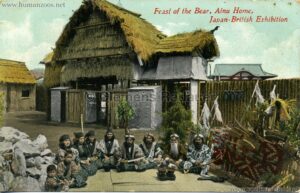
From a Japanese perspective, however, the reactions to the exhibition’s success appear to be more mixed. Whilst Japanese authorities felt it was a top priority to portray an affluent, modern and prosperous image to their British allies, there were many that felt this had not been captured in the exhibits. One such case was the feeling that the village-space that had been constructed was more akin to a poor, rural community than the urban centres which were becoming the centre for modernisation and transformation. The postcard below captures not only the architecture that reveals this, but also the attire and practices of the Japanese participants themselves. This is especially problematic when one considers Timothy Mitchell’s argument that visitors were ‘participant observers’ and active in the scene themselves.7 As such, they would have felt they were ‘there’ in Japan, however the Japan that was depicted was not the modern one they intended to portray.

8

In collaboration with the sense the ‘wrong’ Japan was represented, there also seems to have been a sense in the Japanese newspapers of the time that ‘exoticism’ and ‘orientalist’ imagery had been played up to. Whilst a fundamental aim of the exhibition was to correct misconceptions of Japanese culture and traditions, entertainments such as the Sumo wrestlers, in ‘authentic near-naked splendour’, were seen by many as ‘novelty’ and certain visitors found it offensive and as further evidence of Japan’s ‘backwardness’.9 Japanese commentators found this aspect of the exhibition self-demeaning, rather than image-enhancing.

In conclusion, exhibitions such as the Japan-British of 1910 are clear platforms for the demonstrating of success, modernising and cultural affluence. Whilst the exhibition was widely attended, generated attention and stimulated economic collaboration between the two nations, the general feeling among Japanese stakeholders was that it fell short in creating ‘soft power’ and promoting Japan’s image. It was successful in being educational about Japan’s culture, norms and practices, but appears to have lacked clarity when expressing Japan’s transformation into a world-leading political entity. A missed opportunity? Perhaps. One only has to compare such an exhibition to an extravagant event like Dubai’s Expo 2020 to realise that Japan could perhaps have done more to concentrate its efforts on displaying its status as a big player on the geopolitical stage.

  1. https://i.pinimg.com/originals/ea/dd/3f/eadd3f07ff5f797222f66528adb1527f.jpg [↩]
  2. Ayako Hotta-Lister, The Japan-British Exhibition of 1910: Gateway to the Island Empire of the East, p. 4 (London, 2000) [↩]
  3. Hotta-Lister, The Japan-British Exhibition of 1910, p. 74 [↩]
  4. Ibid [↩]
  5. Ibid, p. 111 [↩]
  6. Ibid, p. 110 [↩]
  7. Timothy Mitchell, ‘The World as Exhibition’ in Comparative Studies in Society and History, 31(2), (1989) p. 231 [↩]
  8. 1910 Japan-British Exhibition – Human Zoos [↩]
  9. Hotta-Lister, The Japan-British Exhibition of 1910, p. 118 [↩]

Festina Lente: The Foundation and Early Years of the Royal Hong Kong Golf Club 1888 – 1920

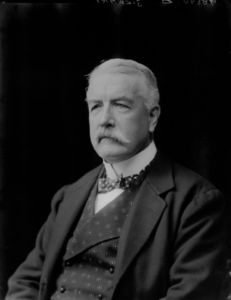
In 1857, on the banks of the Inverclyde River on the west coast of Scotland, a young boy was born who would grow up to be pivotal in the spreading of the Royal and Ancient game of golf to Asia. His name was Gershom Stewart, and the son of Andrew and Margaret would prove pivotal in expanding the game Eastwards. After moving south to the Wirral Peninsula in England and becoming a member of the Royal Liverpool Golf Club at Hoylake, he would take up a role in the East India trade. In 1882, this employment took the young man to Hong Kong. Shortly after, and with a stroke of luck, he encountered the Royal and Sutherland Highlanders, a golfing battalion who had arrived from Ceylon with a desire to ‘keep swinging’. Stewart’s everlasting affinity with Hoylake can be seen in the parallel motifs between the two clubs’ crests.

1   2


In May 1889, Stewart, working at the time for the Hong Kong & Shanghai Bank, put out a public notice in the press of the desire to establish a golf club in Hong Kong. The day after, thirteen men gathered at the Hong Kong Club on Queen’s Road, a vote was held and the Club was born into existence.

 3

The early golfing years of the Club were enjoyed, as with many other sporting societies in Hong Kong during this period, at the Racecourse at Happy Valley. The first ball was hit by James Lowson of Forfar, Scotland, in July 1890. A talented sportsman, Lowson enjoyed plenty of success in club competitions during the early years at Happy Valley. From the few photographs that survive from this period of the Club’s history, the Links, situated in the middle of the racecourse appears to have struggled from overcrowding. With only space for 9 holes, and with the land being shared for a number of different sports, the quality of the fairways and greens suffered. This was exacerbated by flooding issues and the building of a large pond which was designed and dug in as a relief mechanism. This resulted in a concerted effort from the Club to try and find a more suitable plot of golfing land.

Three years passed before a piece of land was found at Deep Water Bay and was designed and converted into a Par-30, 8 hole Links. It was a remarkable turnaround as competitions began to be held at the Bay course later that year in 1893. In 1897, a ‘grand plan’ came to fruition. The unassailable Gershom Stewart, with the help of his good friend Sir William Robinson, Governor of Hong Kong, requested as it was the year of Queen Victoria’s Diamond Jubilee, for Royal Charter. With celebrations all around the world, Royal Status was approved and 1897 marked the birth of The Royal Hong Kong Golf Club.

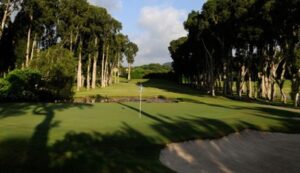
The Club would continue to grow in membership over the following years, with golfing life split between the Links at Happy Valley and at Deep Water Bay. In 1911, the Club looked once again outwards for greater space. Fanling Valley, much further north and close to the Chinese border was decided upon as a suitable location. With land carefully and meticulously allocated in the New Territories, getting approval for building a golf course was not an easy task. The Hon. Edwin Richard Halifax ‘an ally inside the Government’ proved to be a prize asset for the Club for his huge role in broking the deal which saw approval of the course’s building at Fanling in 1911. To this day, the Hong Kong Golf Club plays at both Deep Water Bay and Fanling.

 4

In 1918, during the historic Racing Carnival, disaster struck, and a great fire broke out at the Happy Valley Racecourse. Very sadly many people lost their lives and the Golf Clubhouse was destroyed. To this day, the disaster of 1918 remains one of the toughest days in the Club’s history.

However, the clubhouses and buildings at Deep Water Bay and Fanling are of great interest. As golf clubhouses always are, these buildings became active hubs of social life, and home to stories of golfing successes, blunders, mysteries and tales. Learning more about club life, the personalities, customs and practices would be a tremendously interesting project to undertake. Historians of golf in Asia, and in British colonies more widely, have revealed that a far more ‘liberal’ attitude to female members was taken and indeed there is evidence of this in Hong Kong, too. A ladies Putting Club is known of as early as 1904 and any research into RHKGC’s history should endeavour to learn much more about this.5

  1. https://www.golfweather.com/golf-news/royal-liverpool-to-host-2022-open/2418 [↩]
  2. https://www.asiangolfconstruction.com/projects/hong-kong-golf-club/ [↩]
  3. https://www.npg.org.uk/collections/search/portrait/mw97786/Sir-Gershom-Stewart?LinkID=mp79714&role=sit&rNo=0 [↩]
  4. https://www.golfinhongkong.com/fanling-golf-club-new-course-review/ [↩]
  5. The Hong Kong Golf Club, Along the Fairways of History, (2014) [↩]

Establishing Taihoku: Critical Approaches to the Development of Taipei Under Japanese Colonial Rule 1920-1945

Taipei, on the northern peninsula of Taiwan, has been referred to as a ‘tripartite city’ by Joseph R. Allen, Professor Emeritus at the University of Minnesota.1 Under Japanese occupation, it arguably underwent a third layer of urban developmental influence. The island of Taiwan had been used to foreign influence, for as early as the 17th century, the island had been occupied by the Dutch Empire (known as Dutch Formosa). The island really rose to significance in the late 19th century under the control of the late Qing Dynasty. In 1877, Chinese restrictions on immigration to the island were lifted and Taipei in particular became a focal point for trade, development and activity.

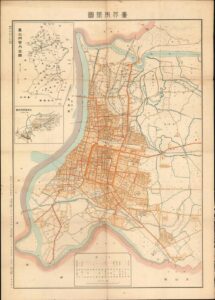
Although Liu Mingchuan, Qing Governor of Taipei until 1891 had implemented several key reforms to Taipei, it was not really until the Japanese colonists arrived that modernity really felt like it was on the horizon. Kodama Gentaro, the Japanese Governor General and Goto Shinpei, a civil administrator were the main architects of Taihoku’s development. Shinpei, who would later go on to serve as director of the South Manchuria Railway and Mayor of Tokyo, had been educated in Germany.2 Allen has alluded to the fact that Shinpei was also heavily influenced by Tokyo. In turn, Tokyo’s development had drawn many ideas from European cities such as Paris. Maps, such as the below from 1932, with ruler straight streets and a clear gridiron structure, really show how Taipei had been influenced by European colonial projects.

3

Taipei, even into the present day, as pointed out by Allen, has often considered itself a multicultural city. Away from Chinese mainland, and outwith the central power structure of the Chinese Communist Party, the city has always had a complex identity. Tan Hung-Jen and Paul Waley’s article ‘Planning Through Procrastination: The Preservation of Taipei’s Cultural Heritage’ discusses Dihua Street in Taipei, containing a number of late imperial edifices and buildings from the Japanese colonial period.4 The municipal government, property owners, stakeholders and citizens have all made an effort in varying ways to preserve these buildings as an important part of Taipei’s cultural identity. Additionally, buildings such as the Sotokofu, the main government building of Taipei and the Guest House (Táiběi Bīnguǎn), located in the city’s central district, were built by the Japanese and show a clear architectural and stylistic link to Europe. These buildings of grandeur, magnificence and opulence are typical of the domineering and grand style of buildings built under colonial and imperial rules. These buildings remain prominent today. The lack of ‘Chinese-ness’, as Allen describes it, can be much attributed to the Japanese era.

When one looks to understand the development of any space, place or spatial entity, one must understand and critically analyse the sources from which they are working. Allen cites the historian John Tagg, who maintains that even the ‘meaning’ from photographic evidence is dependent on the ‘discursive system’ and context within which it was taken.5When working with cartographic materials of Taipei as well, the same level of analysis must be used. For example, Allen’s article outlines the ‘lush’ maps of Taihoku the Japanese produced in the 1930s. Designed not with cartographic accuracy in mind, for they were meant to be understood and widely consumed ‘by women and children’, they show a bustling city, with buses, trains, commerce and activity. Taihoku is depicted as a well-run, prosperous and disciplined city, with all thanks to the Japanese imperial project. One image in particular, showing the city from a ‘bird’s eye’ perspective, looks out towards the sea and displays Mount Fuji standing tall and proud in the distance.6 To what extent are these depictions merely trying to emphasise the reward of colonial possession and desire?

The development of ‘utopian spaces’, especially in the context of colonial expansion, must always be considered carefully. For island cities like Taipei, their cultural identity, and the urban developments that often accompany them are politically contested phenomena. Is the island of Taiwan off the coast of China? Or is it off the coast of Japan? Many of the images that have come to light recently, raised by Allen in his article, have resurfaced only after exhibitions instigated by the Taipei City Cultural Affairs Bureau.7 With relations continuing to be strained between the ROC and the PRC, the nostalgia and romanticism of the many images from the Japanese period must be noted. Although clearly the Japanese prioritised the development of Taihoku, and indeed charted and archived much of their significant progress, one must always seek to understand why images have been constructed and re-presented in certain ways.

  1. Joseph R. Allen, Taipei: City of Displacements (Washington, 2012), p. 31 [↩]
  2.  Louis Frédéric, Japan Encyclopaedia, (Harvard, 2002), p. 6 [↩]
  3. 1932 Murasaki City Plan or Map of Taipei, Taiwan [↩]
  4. Tan Hung-Jen and Paul Waley. “Planning through Procrastination: The Preservation of Taipei’s Cultural Heritage” The Town Planning Review 77, no. 5 (2006), pp. 531–55 [↩]
  5. Allen, Taipei: City of Displacements, p. 33 [↩]
  6. Ibid, p. 39 [↩]
  7. Ibid, p. 17 [↩]

Establishing Urbanism in China’s Interior: Chengdu as an Emerging City

Chengdu, the provincial capital of the Sichuan region, known as the ‘Country of Heaven’ is located over 1,000 miles west of Shanghai. When one looks on a map of China in its entirety, one can really appreciate Chengdu’s distance from the coast and from other centres of urban progression. Dwyer, citing the Chinese poet Du Fu (712-770), notes the isolation Chengdu has always suffered from.1

“How hard the road to Shu is!

It is as hard as the road to heaven.”

Despite this, Kristin Stapleton, Associate Professor of History at the University of Buffalo, has contested and analysed how Chengdu developed as an urban environment post 1895 in her book ‘Civilizing Chengdu: Chinese Urban Reform, 1895–1937’.2  Whilst other Chinese cities of this era, like Shanghai, benefitted from the influence of Western settlers and commercial enterprises on urban space development, for Chengdu, with its situation in the heart of the interior, the situation was more complex. This post, unpacking Stapleton’s work, looks more closely at how Chengdu developed into an urban hub, with a population today of over 20 million.

Stapleton notes that although Chengdu was the cultural and commercial beating heart of the Sichuan region, prior to 1895, urban affairs were left ‘largely to the local officials, and maintenance of public order was their chief if not only concern’.3 Up until 1895, and the ‘New Policies’ which were instituted in the early 20th century, cities were given no real spatial importance in Chinese political discourse and the ways in which they could transform social change were not thoroughly considered. So, what changed and why?

The first flashpoint and catalyst for change in China was the humiliating defeat the nation suffered at the hands of the Japanese in the Sino-Japanese War, culminating in 1895. The harsh terms imposed on China as a result of the defeat, as Stapleton has argued, not only led to a general sense of anger but also a sense that reform was needed urgently.4 The ‘New Policies’ of the late Qing period, Stapleton has argued, ‘transformed Chengdu in remarkable ways’.5  Although the effects of the reforms were intended to be felt widely, in both rural, municipal and urban environments, it was indeed cities that benefitted most. Closer to pockets of political authority and heightened access to resources resulted in provincial capitals such as Chengdu being ‘showcase’ cities for the reforms, whilst other areas were less prioritised. 

As tends to be the case in many cases of urban development in China, the impact of individual local officials can have a large impact. Stapleton in particular focuses on the influences of Zhou Shanpei, a local advisor and official.6  She clearly highlights the five urban changes Zhou himself initiated. Known as the four chang (licensed zone for prostitutes, workhouse for beggars, new theatre and reformed opera and commercial arcade) and one cha (a new police force). Although Stapleton herself attests that Zhou is best remembered for his accomplishments in Chengdu, these changes seem relatively minor in creating a new type of urban space.7  Although he was personally interested in modelling Chengdu on the Tokyo model (which in turn had built on concepts and ideas from Paris and beyond), it is unclear what lasting impact Zhou’s reforms really had. Why was this?

Dwyer has pointed out that even as late as the 1920’s, there was no real network of good quality roads providing a good quality trade network in and around Chengdu. Internal communications, he further points out, simply meant interior cities took far longer to develop like those on the coast or Treaty Ports. Dwyer further cites a 1931 visitor to Chengdu who notes that it was 25-40 years behind Chongqing in ‘material conveniences’.8  Dwyer adds that Chengdu in the 1920’s was still ‘pre-industrial – indeed virtually medieval’.9  One huge limitation on Chengdu’s ability to urbanise in the same way as treaty ports was simply access to foreign money and trade. Not only this, but ideas of how to plan cities was, in many cases, imported directly from the foreign settlers themselves. Although one must carefully note these were often as part of colonial and expansionist projects, many Asian cities have since expanded upon and made the most of the layouts and spatial divisions crafted by international settlers. The Shanghai Bund, still prominent and indeed a main attraction, was initially a space which flourished as part of the greater International Settlement.

To conclude, Stapleton’s article is useful in revealing the context of Chengdu’s changes in the late Qing period. By highlighting the role of Zhou Shanpei, she singles out an individual figure that made a big impact on the city in the light of the ‘New Policies’. However, in comparison to other contemporary Chinese cities, Chengdu appears to be relatively behind and indeed urbanism did not take hold nearly as quickly as it did outwith China’s interior.

  1. D. J. Dwyer, “Chengdu, Sichuan: The Modernisation of a Chinese City”, Geography 71, no. 3 (1986), pp. 216 [↩]
  2. Kristin Stapleton, Civilizing Chengdu: Chinese Urban Reform, 1895–1937, 1st ed., 186, (Harvard, 2000) [↩]
  3. Stapleton, Civilizing Chengdu, p. 2 [↩]
  4. Ibid, p. 49 [↩]
  5. Ibid, p. 74 [↩]
  6. Ibid [↩]
  7. Ibid, p. 75 [↩]
  8. Dwyer, ‘Chengdu, Sichuan’, p. 216 [↩]
  9. Ibid, p. 219 [↩]

I Believe in Shanghai: The Transference of British Identity to Shanghai’s International Settlement

In his work ‘Shanghailanders: The Formation and Identity of the British Settler Community in Shanghai 1843-1937’, Robert Bickers sets out to unpack the ways in which British culture transported to Shanghai in the post ‘unequal treaties’ era.[1] Prior to what has been dubbed as the ‘romanticized golden era of Shanghai in the 1930s’, Bickers’ spatial approach endeavours to fill the historiographical void which examines those British communities which existed at the edge of empire and colonial rule.[2] He makes the case that settler communities such as the ‘Shanghailanders’, which flourished primarily due to the laissez-faire commercialism of the period as opposed to direct colonial rule, have been somewhat ignored by historians of the British Empire. Bickers hopes that his work encourage other historians of Chinese politics to look more closely at the multi-layered identities of settler communities and how these affected foreign relations. His work sits in an expanding school of historiographical thought which examines the European cultural influence on treaty ports and urban environments throughout the world. Eileen Scully’s ‘Prostitution as Privilege: The ‘American Girl’ of Treaty-Port Shanghai, 1860-1937’, is one example which further investigates the impacts of European cultural diffusion on foreign relations, racial divides, social inequality and cityscapes.[3] Despite Bickers and Scully’s work, there is still a lack of scholarship which aims to integrate local Chinese voices into the discussion, or indeed the many other nationalities which comprised the International Settlement in Shanghai. This would be a vast undertaking, with archival material spread out and language barriers to overcome, however one that would be extremely fruitful in gaining understanding of the dynamics of Asian urban landscapes and their relational dynamics.

Shanghailanders, who for the most part were just ordinary people, had to contend with a whole new city, way of life, foreign customs and values and a large cosmopolitan population. Whilst one must appreciate the commercial opportunities offered to them by the colonial enterprise, impossible to find at home in Britain, for many, their new life in the East presented an identity crisis. Bickers highlights how their new environment was ‘grimy, polluted [and] congested’ and having to share their space helped to forge an imagined identity.[4] In his biography of Maurice Tinkler, Bickers alludes to how this helped fuel racial division and the perceived notion that Britishness and whiteness were imagined to be superior.[5] Furthermore, Bickers somewhat entertainingly compares the exoticism of life in Shanghai as to that of Slough. This captures the notion that life was distinguishably British and insular.

One of the key issues Bickers discusses is the founding myth of the Shanghailanders. This is captured in the slogan ‘I Believe in Shanghai’ which suggests that the settlers believed it their duty to make Shanghai the best and most modern city in the world. Whether this is true or not, Bickers argues it was a fundamental aspect of forging and upholding British identity in the treaty port. In reading Bickers’ biography of Maurice Tinkler (an officer in the Shanghai Municipal Police SMP), one is struck by the ‘ordinariness’ of the men who made up the majority of the Shanghailander population. For the most part, men like Tinkler were demobilised working class males. Furthermore, as Bickers points out, these men were often from rural backgrounds, unfamiliar to urban life in grand cityscapes. Playing a frame on the station billiard table was far more likely an enjoyable pastime than integrating and mingling with the indigenous Chinese population.

Finally, on a more spatial note, Jeremy Taylor’s ‘The Bund: Littoral Space of Empire in the Treaty Ports of Asia’, analyses the role of the Bund in portraying and projecting Western ideals upon the city of Shanghai.[6] The very nature of the buildings erected, often art deco or Bauhaus designs, give a sense far more akin to British Manchester than of the exotic Asian Shanghai. This was a place where British identity, notions of power and dominance could be projected clearly. Whilst Taylor comments on the commercial and military aspects of the Bund, which could be explored in much further detail, he brings out the function the Bund played in providing a space of leisure. With open expanses of grass, gardens, trees and benches, the Bund allowed British settlers to relax in the way they were familiar with. In cementing British identity in Shanghai, this aspect of the space and its functions proved of major importance.

[1] Robert Bickers, ‘Shanghailanders: The Formation and Identity of the British Settler Community in Shanghai 1843-1937’, Past & Present, no. 159 (1998), pp. 161–211

[2] Meng Yue, Shanghai and the Edges of Empire, (Minnesota, 2006)

[3] Eileen P. Scully, ‘Prostitution as Privilege: The ‘American Girl’ of Treaty-Port Shanghai, 1860-1937’, The International History Review 20, no. 4 (1998), pp. 855–83

[4] Bickers, ‘Shanghailanders’ p. 193

[5] Robert Bickers, Empire Made Me: An Englishman Adrift in Shanghai, (London, 2004)

[6] Jeremy E. Taylor, ‘The Bund: Littoral Space of Empire in the Treaty Ports of East Asia’, Social History, Vol. 27, No. 2 (May, 2002), pp. 125-142