The Eternal Ways of Wind and Water: How Modern is Western Feng Shui?

In his article “Western Responses to Feng Shui”, James Mills argues that western representations of feng shui act as a mirror for western society, rather than informing us of authentic feng shui practice . Using this theory he claims that modern American conceptions of feng shui reveal the individualistic, commercialised, rootless nature of western society.1 However, this article ultimately falls victim to essentialising Chinese belief systems due to disillusionment with American society. “Traditional” feng shui and the feng shui of the modern west in fact bear surprising similarities, By analysing modern western feng shui, as presented in the magazine “Feng Shui for Modern Living”, we can trace continuity where Mills finds dissonance.
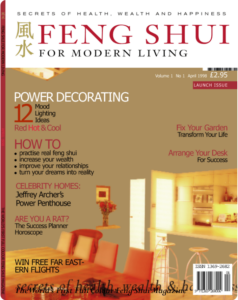
Figure 1: The First Issue of “Feng Shui for Modern Living”

“Feng Shui for Modern Living” was first published in 1998, and, as seen in Figure 1, it claims to be the world’s first full colour magazine on feng shui. As noted by Mills, its pages are predominantly devoted to interior design and the benefits it can have for the individual, with articles such as “12 Mood Lighting Ideas” and “Arrange Your Desk For Success” featuring in the first issue. This, he argues, represents the self-centred nature of western culture. The communal concern for street alignment and settlement layout of traditional feng shui is lost.2 However, feng shui has always been an individualistic pursuit for the common person. Whereas the elites of Chinese society tried to etch cosmic importance into the fabric of cities, common people were always concerned with their personal fortunes. Qi, the force which feng shui was designed to capture was seen as a finite resource, and as a result fostered competition between those who hoped to harness it.3 For example, in cases of parental burial, given each child’s unique cosmological relationship to a potential gravesite, siblings often struggled among themselves to select one which was most auspicious for themselves at the expense of others.4 Feng shui has thus always been an intensely and inherently individual endeavour.

Also missing from the pages of “Feng Shui for Modern Living” is any reference to the siting of tombs, which Mills argues is fundamental to “traditional” feng shui. Burial siting was undeniably an important part of early feng shui. However, Ole Brunn argues that over the course of Chinese history, divination of graves for the dead became less and less orthodox.5 By the 1880s, for the Chinese community in Singapore, burial siting was uncommon. Selecting an ideal burial site was, to a large extent, a privilege of the wealthy. Most had to make do with common graveyards run by Chinese associations, which did not totally disregard cosmological siting but were far less specifically tailored.6 Rather, grave siting took on greater meaning as a strategic discourse of resistance, used to combat British attempts to exert greater control over Chinese Singaporeans. To most of the Chinese community in colonial Singapore, burial feng shui was much more of an ideal used to justify the immunity of certain spaces from colonial interference than an essential practice. To suggest that the exclusion of burial geomancy from western feng shui is a unique omission disregards the plurality of feng shui conceptions over time.

Another of Mills’ critiques is that of over-commercialisation, with western practitioners harnessing the idea of feng shui to sell their services, magazines (such as “Feng Shui for Modern Living”), and correspondence courses.7 According to Mills, the market has been oversaturated and greedy. Yet, feng shui specialists were already omnipresent in Qing times.8 The feng shui market has always been large due to its necessity in nearly all aspects of Chinese life. These practitioners would have demanded fees for their services, and though their base salary may have been comparatively low, they were expected to be hosted lavishly with plenty of good food and drink during the period of their work, which could last for several days or more.9 In addition, Ole Brunn suggests that feng shui was used as a bargaining tool to extort money from foreigners attempting to build infrastructure into China during the 1840s and 50s.10 Overall, there is no reason to romanticise feng shui as an altruistic practice. From its origin, it has been a pragmatically deployed trade and tool.

That is not to say that modern western feng shui is the same as the ancient Chinese practice or that it tells us nothing of our current times. It is, indeed, a unique conception of feng shui born from its context. However, the same is true of feng shui in every time and place, as it is truly an umbrella term which encompasses a diversity of practices and beliefs. We should therefore be cautious of any fixed conception of feng shui at all. Attempting to contrast modern applications of feng shui with a “traditional” alternative is a baseless task, which ultimately leads to the essentialisation of eastern belief systems.

  1. James Mills, ‘Western Responses to Feng Shui’, Middle States Geographer 32:1 (1999), p. 75. [↩]
  2. Ibid, p. 74. [↩]
  3. Ole Brunn, An Introduction to Feng Shui (Cambridge, 2008), p. 63. [↩]
  4. Richard Smith, Fortune-tellers and Philosophers (New York, 1992), p. 164. [↩]
  5. Ole Brunn, An Introduction to Feng Shui (Cambridge, 2008), p. 11. [↩]
  6. Brenda Yeoh, Contesting Space in Colonial Singapore (Singapore, 2003), p. 297. [↩]
  7. James Mills, ‘Western Responses to Feng Shui’, Middle States Geographer 32:1 (1999), p. 74. [↩]
  8. Richard Smith, Fortune-tellers and Philosophers (New York, 1992), p. 132. [↩]
  9. Ibid, p. 155. [↩]
  10. Ole Brunn, An Introduction to Feng Shui (Cambridge, 2008), p. 40. [↩]
Welcome to the Hotel der Nederlanden: Cultural Contact in Anna Forbes’ “Insulinde”

A “contact zone” refers to a space where historically and geographically separated people engage with each other and establish new relationships and identities.1 In the Dutch colonial city of Batavia, a “contact zone” of particular note was the Hotel der Nederlanden, one of the most prominent hotels in the city and often the first port of call for any visiting European. By analysing the representation of the Hotel der Nederlanden in Anna Forbes’ 1887 “Insulinde: Experiences of a Naturalist’s Wife in the Eastern Archipelago “, we can learn about Dutch colonial culture and how its unique hybridity supported discourses of colonial modernisation. By conspicuously adopting certain features of native culture, and placing them in service of western comfort and convenience, colonial Batavian society could claim to be elevating and improving native society.

Co-option of some native ways of life within the Hotel der Nederlanden is apparent in Forbes’ description of guest attire. She is shocked to learn that Dutch ladies wore the native sarong for nearly all of the day besides dinner, rather than a “respectable skirt”.2 Despite her initial reaction, she eventually sees rationality behind these clothes which are “natural in the climate”, even saying the sarong is “really becoming” once you become accustomed to it.3 Given their ready adoption of native dress by the residents of the Hotel der Nederlanden, Batavian society did not seem to outwardly harbour anxieties about “going native”. However, the sarongs worn by European ladies are seen by Forbes to be separate and improved from their native versions, being elevated by costly materials, dainty “lace or embroidery”, or a European dressing jacket.4 Thus, aspects of native culture were appropriated by Europeans who were seen to bring greater aesthetic sophistication to them, impressing the merit of Dutch colonial society upon visitors.

Beyond merely providing a backdrop for this phenomenon, the hotel perpetuated it through its dining experience. Forbes states that, after a fairly standard breakfast of eggs, coffee, and sausages, lunch at the Hotel der Nederlanden presented a fusion of Indonesian and western cuisines. The process of this meal, called the “rijsttafel” or “rice table” by the Dutch, involved guests helping themselves to rice served on an immense platter, spooning curry over it, adding various meats, fritters, vegetables, and condiments (pickles, chutneys, chili), and then mixing it all together.5 Not only did the “rice table” confront the uninitiated with new foods, it was also an unfamiliar ritual. Forbes notes how a family unused to the custom nearly missed out on all the food before her husband intervened.6 What is most clearly demonstrated here is the clear intention of the Hotel der Nederlanden to not imitate the colonial metropole. Rather than relying solely on familiar European dishes and practices, the hotel encouraged visitors to engage heavily with “native” cuisine. Yet, given a Dutch name, prepared by European chefs,7  and served alongside “beefsteaks and fried potatoes”,5 the “rijsttafel” was separated from whatever native roots it might have had. Like the sarongs of the ladies at the Hotel der Nederlanden, it was only a superficial adoption of Indonesian customs, redesigned for European consumption.

Thus, despite these visible areas of cultural hybridity, the Hotel der Nederlanden was still firmly entrenched in colonial hierarchies. One clear example of this is presented in Forbes’ description of the staff, as she notes the amount of male servants, waiters, and valets rushing about the hotel.8 All are said to be referred to as “boy”. Indeed, contemporary travel guides would often include sections on useful vocabulary for hotel life, which are predominantly addressed to the native “boy”.9 This imperious language made clear the implied hierarchy between Europeans and the Javanese. As such, though Javanese concepts, aesthetics, and culture are incorporated into the experience of the hotel, colonial prejudices were still present. Adoption of native attire or cuisine merely served to conceal this, suggesting instead that the Dutch were actively improving upon and modernising Indonesian society.

By analysing the Hotel der Nederlanden as a “contact zone”, we can learn about how Dutch colonial society constructed their identities as modernisers and cultural stewards. The aspects of culture chosen for appropriation and the methods by which they were adapted show that interest in truly accepting native culture was superficial. However, for Anna Forbes and visitors like her, the Hotel der Nederlanden and the wider Dutch East Indies came to embody the proof of the European capacity to advance native cultures.10 Thus, the Hotel der Nederlanden can be seen as a site where cultural contact was leveraged to highlight the beneficial effects Dutch rule had on Indonesian culture.

  1. Mary Louise Pratt, Imperial Eyes: Travel Writing and Transculturization (London, 1992), p. 4. [↩]
  2. Anna Forbes, Insulinde: Experiences of a Naturalist’s Wife in the Eastern Archipelago (London, 1887), p. 8. [↩]
  3. Ibid. [↩]
  4. Anna Forbes, Insulinde: Experiences of a Naturalist’s Wife in the Eastern Archipelago (London, 1887), pp. 8-9. [↩]
  5. Ibid, p. 11. [↩] [↩]
  6. Ibid, p. 12. [↩]
  7. Scott Merrillees, Greetings from Jakarta (Toledo, 2012), p. 80. [↩]
  8. Ibid, p. 7. [↩]
  9. For example: The Official Tourist Bureau, Java, The Wonderland (Batavia, 1900), pp. 4-6. [↩]
  10. Susan Morgan, Place Matters: Gendered Geography in Victorian Women’s Travel Books About Southeast Asia (New Jersey, 1996), p. 71. [↩]

The Women of Bali and the Garden of Java: Touristic Visuals in the Dutch East Indies

The anthropologist Dean MacCannell argues that the tourist embodies the search for authenticity away from our daily lives.1 While modern mass tourism certainly grew more feasible as a result of greater mobility, safety, and disposable income, the demand for it increased due to the alienation inherent in the modern age.2 The Officiele Vereeniging voor Touristenverkeer, translated as the Official Tourist Bureau or OTB, was founded in 1908 to promote international tourism in the Dutch East Indies and did so by tapping into the modern need for perceived authenticity. By analysing visual tourist material produced by the OTB, as well as material produced by colonial transport companies such as KLM and KPM, we can analyse the different discourses which they utilised to capture the tourist’s desire for the authentic.

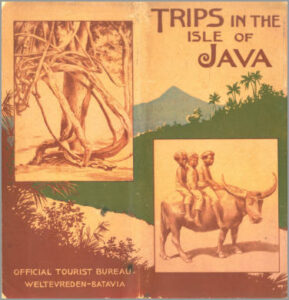
Figure 1: Trips in the Isle of Java, OTB 1909

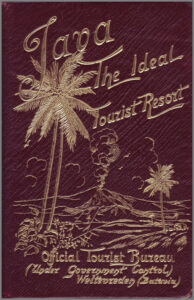
Figure 2: Java: The Ideal Tourist Resort, OTB 1914

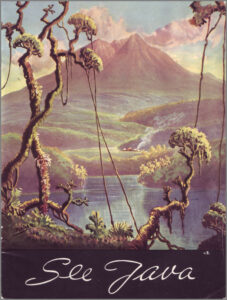
Figure 3: See Java, OTB 1937

Most prominent in the tourist material produced by the OTB for Java is the theme of unspoilt nature. From the earliest publications to the material produced just before World War 2, brochures depicted the same scene of tropical flora set before an imposing volcano in the background.  Even early proposed itineraries were preoccupied with the natural, mandating visits to the Botanical Gardens at Buitenzorg (Bogor), as well as recommending stays at the garden’s mountain branch at Cibodas, or a summit of Mount Gede.3 Nature was authenticity in its purest form. MacCannell describes it as the “original other”, once a uniting fear but in the modern world a source of awe and refreshed perspective.4 Even where evidence of human settlement is seen, as in Figure 3’s lonesome smoke plume, it is sparse and only serves to heighten this sense of awe through comparison between the grand scale of nature and the humble existence of humans. Of course, association between the tropics and vibrant nature was by this point an established trope, built upon the works of Humboldt and other early travel writers who formed the tropics in the western imagination.5 However, in Java, Robert Cribb argues that the theme of unspoilt nature is so prominent because early tourism followed the line of least resistance. It promoted areas where transport and accommodation were most readily available. On Java, these spaces were the colonial hill stations.6 As a result, the authenticity promoted for Java is the nature which would have surrounded the early Dutch colonisers on their retreats to the cool foothills.

Figure 4: OTB

Figure 5: KLM

Figure 6: KPM 1928

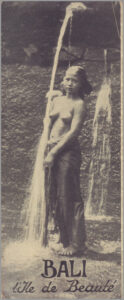
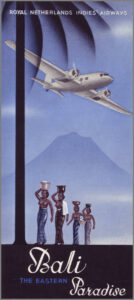
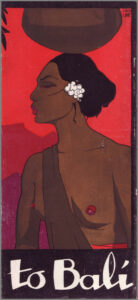
The dominating image for Bali, on the other hand, is the bare-chested woman. The roots of this stereotype derive from western image makers residing in Bali in the early 20th century. Men like Walter Spies and Dr Julius Jacobs, while also giving focus to the island’s culture, built upon pre-existing notions of tropical sensuality to produce an image of a sexually liberal Bali.7 This hybrid depiction of Balinese people, inclined towards sexual overindulgence but culturally richer than other “primitive” tropical races, made the people of Bali an alluring attraction.8 For Europeans and Americans who lived through the rigours of the First World War and the Great Depression respectively, this type of freedom offered an escape from their repressive societies.9 Bali had only been fully annexed by the Dutch in 1908 and so still retained much of its wild and mysterious image. The encouragement of this image by official arms of the Dutch colonial regime points to an attempt to profit off of another form of commercialised authenticity. Rather than awe-inspiring nature taking centre stage, it was interaction with Bali’s people, charming and untouched by modern convention as they were, which proffered the chance to experience the authenticity that was missing from modern western life.

Thus, we can see how the OTB and other arms of the Dutch colonial regime appealed to different aspects of “authenticity” in two parts of their empire: Java and Bali. While Java may have been the tamest, most heavily agriculturally exploited part of the Dutch East Indies, it nevertheless was branded as a paradisiacal, natural garden. This drew in tourists hoping to be refreshed by exposure to nature. In the case of Bali, its people were leveraged to present a promise of simplistic living and moral freedom. The Balinese could be thought to be living in a close to natural state, thus acting as an alluring proxy to access authenticity. Touristic materials can thus help us engage with the international discourses surrounding native landscapes and peoples, as well as telling us about the needs and desires of targeted western audiences.

  1. Dean MacCannell, The Tourist: A New Theory of the Leisure Class (London, 1976). [↩]
  2. Shelley Baranowski et al., ‘Tourism and Empire’, Journal of Tourism History 7:1 (2015), p. 113. [↩]
  3. Robert Cribb, ‘International Tourism in Java, 1900-1930’, South East Asia Research 3:2 (1995), p. 198. [↩]
  4. Dean MacCannell, The Tourist: A New Theory of the Leisure Class (London, 1976), p. 81. [↩]
  5. David Arnold, The Tropics and the Traveling Gaze: India, Landscape, and Science, 1800-1856 (Washington, 2006), p. 113. [↩]
  6. Robert Cribb, ‘International Tourism in Java, 1900-1930’, South East Asia Research 3:2 (1995), p. 202. [↩]
  7. Adrian Vickers, Bali: A Paradise Created (Berkeley, 1989). [↩]
  8. Ibid, p. 127. [↩]
  9. Ibid, p. 142. [↩]

“Bad Perfume and Cheap Pomade”: The Tokyo Dancehall in Yukio Mishima’s Confessions of a Mask

Confessions of a Mask, originally published in 1949, was responsible for launching its author, Yukio Mishima to national fame. The novel follows its narrator, Ko-chan, as he struggles to fit into Imperial Japanese society. However, it is the final scene, set in a Tokyo dancehall during the American occupation, which is of particular spatial interest. As shown by Mackie and Field, novels were an important medium of representation of social spaces in Japan and China respectively.1 By analysing literary representations of the dancehall, we can learn about how they were imagined, not only by the author who described them, but by the wider society for which the novel was written. Though the dancehall presented in Confessions of a Mask is probably not a wholly accurate portrayal of any real establishment, it gives us insight into the connotations such spaces would have had for sections of the Japanese public, and their place within cultural discourse.

What is most apparent in Mishima’s description of the dancehall is its popularity. The intensity of the crowd within is emphasised as “cheek pressed against sweaty cheek” (pg. 198), and people extend their lunchbreaks to dance their fill. Indeed, during the post-war period, Japanese dancehalls were one of the rare sites of prosperity. Articles published in the Nippon Times testified to, and explained, the popularity of social dance spaces, arguing that they allowed ‘‘liberation from rigid wartime restrictions’’ and were representative of the growth of a new ‘‘democratic life”.2 This popularity meant profit. According to the Japan Times in 1948, the average dance hall musician received about 20,000 yen per month, compared to the basic wage of 3,000 yen for most office workers.3 Dancehalls were especially important sites of labour for veterans who had received musical training in the armed forces. Famous musicians such as the singer Oida Toshio, clarinettist Miyama Toshiyuki, and saxophonist Oda Satoru were among those who were able to successfully transition to civilian life.4 As such, Mishima’s bustling dancehall reflects the prominent place dancehalls held in the post-war Japanese zeitgeist, not only in its very use in the final scene of the novel, but in its textual description.

The novel also indicates the demographics and roles one expected to find within a dancehall. The first description of the hall’s interior notes that the crowd mainly consisted of office workers (pg. 198). The emergent figure of the “salaryman”, to which this is most probably referring to, represented the growing group of male white-collar workers who arose in Japan’s urban landscape in the early twentieth century. Their patronage of the dancehall indicates that such spaces were perceived as domains for male consumption. The few women in the scene, such as Ko-chan’s companion Sonoko to whom the dancehall is an unfamiliar space, are either brought there by men or are working hostesses. Mackie’s assertion of dancehalls as contradictory, gendered sites, supplying commodified leisure for men and labour for women, is thus corroborated.5

Lastly, the overt Americanisation of the dancehall reveals the cultural connotations these spaces would have held for Mishima and many others in Japan at the time. Mishima’s dancehall is almost overfilled with western music, Coca-Cola, and Hawai’ian shirts, all hallmarks of American culture. As Mackie argues, the dancehall was a venue where new structures of Euro-American hegemony could be enacted and reproduced.6 In fact, dance halls had been banned during the war but were reopened during the occupation to cater for Allied soldier.7 However, the image presented by Mishima clashes with the Mackie’s claim that while the dancehalls of the 1920s and 30s had been associated with modernity and Western dress, those of the Occupation catered to Allied expectations of exoticism.8 It is at this point we must consider the constructed, fictional nature of the novel as a source. Rather than naturalistically reflecting reality, Mishima’s writing was inevitably swayed by his fears over the loss of Japanese identity, and thus overemphasises the visibility of American culture.9 Such rhetoric is nevertheless useful, as while Occupation Japanese dancehalls may not have been so overtly Americanised as portrayed in Confessions of a Mask, they were certainly associated heavily with the Allied troops to which they owed their reestablishment. This inherent historical association between dancehalls and the Occupation makes it a convincing scene for Mishima to display his cultural concerns.

Mishima’s dancehall is thus a flawed, yet useful, reflection of reality. It seems to accurately capture the clientele and popularity of dancehalls in the post-war period and alludes to their gendered nature. However, his overly Americanised portrayal is more historically problematic. Rather, this segment of the novel can tell us about how social dancing spaces were positioned in the mind of the Japanese public. Post-war dancehalls were inextricably linked with western influence, and represented a new Japan, reborn from the desolation of war but irrevocably changed. Using a novel as a historical source thus lets us analyse how spaces were imagined by the public, providing a subjective perspective into how contemporary people constructed certain spaces in their own minds.

  1. Vera Mackie, ‘Sweat, Perfume, and Tabacco’ in Modern Girls on the Go, eds. Alissa Freedman, Laura Miller, and Christine Yano (2018) and Andrew Field, Shanghai’s Dancing World: Cabaret Culture and Modernity in Old Shanghai, 1919-1954 (2010). [↩]
  2. E. Taylor Atkins, Blue Nippon: Authenticating Jazz in Japan (2001), pg. 187. [↩]
  3. Ibid, pg. 176 [↩]
  4. Ibid. [↩]
  5. Vera Mackie, ‘Sweat, Perfume, and Tabacco’ in Modern Girls on the Go, eds. Alissa Freedman, Laura Miller, and Christine Yano (2018), pg. 74. [↩]
  6. Ibid, pg. 82. [↩]
  7. Ibid, pg. 79. [↩]
  8. Ibid. [↩]
  9. Damian Flanagan, Yukio Mishima (2014), pg. 8. [↩]

The Garden of Ten Thousand Animals: Beijing’s First Public Park

In 1906, a delegation of court officials returned to Beijing from Germany with a host of exotic animals. The lions, tigers, zebras, and elephants they brought back were placed on imperial land, and thus the Garden of Ten Thousand Animals, or Wanshangyuen, was born. Two years later, it would open to the public, charging sixteen coppers for adults and eight for children.1 While this was an unprecedented space in China, similar zoological parks had been present in Asia since the mid-nineteenth century. The first was established in Batavia in 1864 and another followed soon after in Singapore in 1875.2 However, though they were superficially similar spaces to the Wanshengyuen, Beijing’s zoological park took on extra cultural meaning due to the historical context it arose in. While the Singapore and Batavia zoos existed within a colonial framework and thus served to perpetuate the existing colonial regime, the Wanshengyuan was used as a tool to herald a new urban age for Beijing.

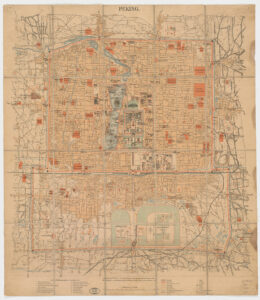
Figure 1: Map of Beijing 19033

The Wanshengyuan was located just outside the walls to the Inner City, built on land which had previously held two imperial temples and their gardens. This space is visible in Figure 1 in the top left corner, labelled “Garten der Wohltätigkeit”. Since the fourteenth century, the city of Beijing had followed strict spatial delineations, with concentric walled segments dividing people by class and status.  The Forbidden City was the home of the emperors: the centre of Beijing and, metaphorically, the universe. Here, open spaces were prevalent, in the gardens and courtyards of temples and palaces. As one moved outwards into the Imperial City, which housed high ranking imperial officers, the Inner City, occupied by bannermen and other officials, and finally the Outer city, the availability of open space gradually decreased.4 Open space thus was a marker of status and inextricably linked to the imperial house. The foundation of the Wanshengyuan and the creation of a public space on formerly imperial and temple grounds, was radical. Much like the Singapore zoo, it attracted non-elite members of society to marvel at its animals.5 However, in Beijing this held extra weight, due to the pre-existing norms and connotations of open space. Though most visitors were of the middle class, it was still a significant reshuffling of the status quo.6

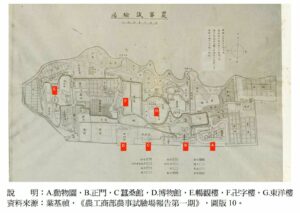
Figure 2: The Experimental Agricultural Complex7

As Mingzheng Shi suggests, the Wanshangyuen was a spatial representation of the growth of the public sphere in early republican China.8 Prior to the nineteenth century menageries had been the sole purview of rulers and the wealthy. They were private celebrations of the control exercised by the privileged over the natural world. Animals in Beijing’s menageries were often used in imperial rituals such as the Royal Ploughing Ceremony or the Spring and and Autumn Royal Hunting Ceremonies.9 A zoological park open to the public, however, had different connotations. It was a message that a government could provide for its citizens, an image the early republican Chinese government wished to pursue.10 Much like the zoo in Batavia and Singapore, the Wanshengyuen was attached to a Botanical Garden and various research facilities. In Figure 2 we can see the complex in which the Wanshengyuen (A) was housed, as well as various experimental agriculture beds, a museum (D), and sericulture hall (C). However, unlike the colonial institutions, the Wanshengyuen inherently appealed to the common citizen given its novel place in Beijing’s spatial culture. Thus, the Wanshengyuen could be connected to a wider project of research intended to improve the lives of all citizens, unlike the zoos in Batavia and Singapore which were seen more as colonial tools.

The Wanshengyuan is an interesting case study into the ways parks could be used by governments in different Asian contexts. While the zoological gardens of Singapore were certainly seen by the public as a symbol of modernity, as they bemoaned the absence of such a symbol in their city once it had been closed, that was never its purpose for the colonial government.11 Rather it was an extension of the botanical gardens projection of colonial control and power, self-aggrandizing rather than communally uplifting. The Wanshengyuen, on the other hand, was used by the early republican government to show that they were abandoning the exclusionist policies of the past and emphasising public welfare.10 As such, though the Wanshengyuen was perhaps spatially similar to previous zoological parks in Asia, it was in fact a culturally distinct entity.

  1. Mingzheng Shi, “From Imperial Gardens to Public Parks: The Transformation of Urban Space in Early Twentieth-Century Beijing”, Modern China 24:3 (1998), p. 229. [↩]
  2. Timothy Barnard, Nature’s Colony (Singapore, 2016), p. 85. [↩]
  3. Peking – Contagion – CURIOSity Digital Collections (harvard.edu) [↩]
  4. Mingzheng Shi, “From Imperial Gardens to Public Parks: The Transformation of Urban Space in Early Twentieth-Century Beijing”, Modern China 24:3 (1998), p. 220. [↩]
  5. Timothy Barnard, Nature’s Colony (Singapore, 2016), p. 96. [↩]
  6. Mingzheng Shi, “From Imperial Gardens to Public Parks: The Transformation of Urban Space in Early Twentieth-Century Beijing”, Modern China 24:3 (1998), p. 250. [↩]
  7. Xin Shixue, “From Imperial Menageries to Public Zoological Garden: Captive Wild Animals at the Qing Court”, New History 29:1 (2018), p. 24. [↩]
  8. Mingzheng Shi, “From Imperial Gardens to Public Parks: The Transformation of Urban Space in Early Twentieth-Century Beijing”, Modern China 24:3 (1998). [↩]
  9. Xin Shixue, “From Imperial Menageries to Public Zoological Garden: Captive Wild Animals at the Qing Court”, New History 29:1 (2018). [↩]
  10. Mingzheng Shi, “From Imperial Gardens to Public Parks: The Transformation of Urban Space in Early Twentieth-Century Beijing”, Modern China 24:3 (1998), p. 233. [↩] [↩]
  11. Timothy Barnard, Nature’s Colony (Singapore, 2016), p. 111. [↩]

Mass Media Domesticity: Comparing Ling Long and Shufu no Tomo

The early twentieth century saw rising literacy and expanding commercial popular presses in China and Japan. As such , the interwar period ushered in a boom in women’s magazines. These publications targeted female issues and became guides for household management and taste. However, the approaches to domestic control espoused by Chinese and Japanese counterparts differed. By comparing the contents of Shufu no Tomo and Ling Long, we can see the diversity of domestic revolutions occurring in China and Japan in the interwar period.

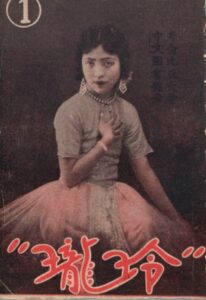
Shufu no Tomo, commonly translated as Housewife’s Companion, was first published in 1917, and by 1925 was the most popular Japanese women’s magazine, selling over a million copies a month.1 Its pages contained articles concerning budgeting, housekeeping, fashion, and dance. Ling Long, meaning elegant and fine, was published in Shanghai between 1931 and 1937.  It contained tips on how to raise children, outlined typical household duties, and covered Hollywood films and pop-culture.2 At about five by four inches in dimension, it became popular as an accessory just as much as a publication. Zhang Ailing claims, “every female student had an issue of Ling long magazine in hand during the 1930s”.3

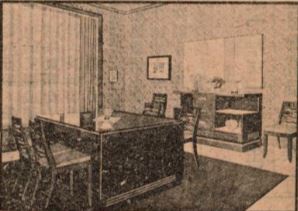
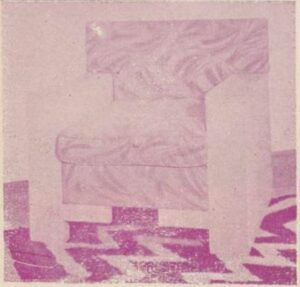
A notable difference between the two are the types of advertisement featured in each. Sand notes that the items advertised in Shufu no Tomo were overwhelmingly small, personal items such as medicines and cosmetic products. There were rare instances of kitchen appliances being advertised. However, there is a complete lack of furniture.4 Instead, there was a focus on what Japanese women could make themselves to spruce up the home.  For instance, the edition published in June 1926 encouraged women to sew their own curtains to adorn cabinets and windows during the summer time.5 In contrast, Ling Long contained advertisements for furniture in almost every edition.

Advertisement for dining room furniture, Ling Long Issue 1

Advertisement for a chair, Ling Long Issue 40

Advertisements such as these promised the transformation of the home into a site of happiness through purchase of furniture. They were positioned as objects of desire, and purchasing them ensured entrance and acceptance into the leisure class.6 Apparent is the discrepancy in the intended audience of the two magazines. The readers of Shufu no Tomo evidently were presumed to have less purchasing power than their Shanghai counterparts. While Ling Long encouraged the creation of a comfortable middle class through consumerism, Shufu no Tomo emphasised thrift available to all classes of society. Perhaps this is systematic of Ling Long’s more elite urban readership, but it also shows the differing approaches to creation of domestic spaces. The fact that the latter half of all early Ling Long editions was dedicated to the consumption of Hollywood culture emphasises how Shanghai women were more deeply entrenched in global economic networks, which spilled over into the methods by which they shaped their homes.

Instead of promoting the control of domestic space through the exercise of economic power, Shufu no Tomo encouraged a more hands on involvement throughout the process of making homes. In a volume about middle class housing published by the women’s magazine, readers are warned to hire young architects instead of old carpenters as they will be more sympathetic towards desires for western style housing. Whereas the old carpenter would associate such style with schools, post offices, and other public buildings, the architect will be more open minded about implementing western building practices in the home.7 Indeed, one author in the November 1921 edition of Shufu no Tomo stated, “we have left the era of living for the house and must now progress into the era of building houses for living”.8 From this and other articles critiquing and promotion of certain architectural trends, we can see that readers of Shufu no Tomo were envisioned as having a significant role in the design and construction of homes. Japanese interwar women could partake in this traditionally masculine sphere in order to have greater input on the fundamental formation of their domestic spaces.

In addition, Shufu no Tomo encouraged readers to take up newly rationalised domestic practices. While the kitchen is a notably absent space in Ling Long, as cooking was seen to be the responsibility of servants,9 the kitchen took on new significance for Japanese women in the interwar period as domestic work came to be seen through a scientific lens.10 Household work came to be seen as an important part of promoting a family’s wellbeing and efficiency,. Taught in new Japanese Women’s Higher Schools, knowledge was then further disseminated by publications such as Shufu no Tomo. The kitchen thus became a site for Japanese women to utilise their knowledge of nutrition and hygiene to support their families, and exercise domestic power.

The types of domestic control espoused in Shufu no Tomo and Ling Long are thus divergent. While Shufu no Tomo promotes the domestic shaping through the practice of daily chores, handcrafted decoration, and architectural input, Ling Long promotes the consumption of prebuilt domestic styles, with agency being found in choices of consumption. By buying sets of furniture and emulating homes seen in Ling Long, Shanghai women were participating in a more global creation of middle class domesticity, borrowing from and performing for western audiences. These conflicting representations of domestic control presented in Ling Long and Shufu no Tomo illuminate the different ways in which interwar Asian women were able to exercise agency within the domestic spaces.

  1. Jordan Sand, House and Home in Modern Japan (Cambridge, 2003), p. 163. [↩]
  2. Louise Edwards, “The Shanghai Modern Woman’s American Dreams”, Pacific Historical Review 81:4 (2012), p. 574. [↩]
  3. Elizabeth La Couture, Dwelling in the World (New York, 2021), p. 194. [↩]
  4. Jordan Sand, House and Home in Modern Japan (Cambridge, 2003), p. 346. [↩]
  5. Ibid, p. 347. [↩]
  6. Elizabeth La Couture, Dwelling in the World (New York, 2021), p. 203. [↩]
  7. Jordan Sand, House and Home in Modern Japan (Cambridge, 2003), p. 275. [↩]
  8. Ibid, p. 317. [↩]
  9. Elizabeth La Couture, Dwelling in the World (New York, 2021), p. 211. [↩]
  10. Jordan Sand, House and Home in Modern Japan (Cambridge, 2003), p. 94. [↩]

Arnoldi in Buitenzorg: V. M. Arnoldi’s 1909 Notes on the Buitenzorg Botanical Gardens

Vladimir Arnoldi - WikipediaIn 1909, Russian botanist Vladimir Mitrofanovich Arnoldi visited the Buitenzorg Botanical Gardens. Though he was primarily concerned with the contributions of the gardens to botanical knowledge and rarely commented directly on politics, we can see in his account the footprint of the Dutch colonial project.1 In his praise of the Dutch garden Director, Melchor Trueb, his dealings with the Indonesian staff, and his awe at the aesthetic force of gardens layout, we can observe how Dutch colonial oppression was articulated within the space of the Buitenzorg Botanical Gardens.

Apparent in Arnoldi’s notes is his occupation as a scientist and his resultant veneration of the garden’s organisation which privileged scientific knowledge. As he describes it, the gardens are run by “European chiefs”, that is Dutch botanists, whose orders are followed by “a large staff of small Malay employees”.2  During the early decades of the twentieth century, colonial officials began to pivot the justification of Dutch colonialism in the direction of scientific merit. By creating a space in the Buitenzorg Botanical Gardens which was dominated by scientists pursuing pure science, unpolluted by economic motives, the Dutch colonial project could be seen to have merit and value for the wider world.3 However, the subordination of native people to the whims of the Dutch showcased here holds vestiges of the earlier “civilizing mission”, which intended to Europeanise, and thus modernise, native Asian cultures. Arnoldi himself echoes this kind of sentiment, hoping that in a decade “yesterday’s cannibals and savages [will pass] into a semi-cultural state”.4 Here, the enforcement of Dutch control over native people for the research and cultivation of their own native flora is epitome of the “civilizing mission”. Though Arnoldi sees this as the idyllic prioritisation of scientific knowledge, it is in reality the prioritisation of European knowledge.

This oppression is further revealed by Arnoldi’s comments on staff salaries. According to his notes, most ordinary native workers receive between eight and ten guilders a month, while even the most experienced of them, “a very intelligent person who knows not only native, but also the Latin names of plants” , earned sixty guilders a month. In comparison, the lowest wages for European workers is quoted as two hundred guilders monthly.5 Though this is presented with some indignation by Arnoldi, he falls victim to minimising the contribution of native people himself, as he marvels at the transformative impact Professor Treub oversaw during his directorship, stating that the improvement of the gardens into one of the finest Botanical centres of the world was wholly due to “the work of his hands, his energy”.6 Evidently the work of native people in the running and improvement of the gardens was not recognised in any meaningful way by Arnoldi or the management. As a result they are subordinated in a fashion consistent across the Dutch East Indies, such as in the countless rubber plantations spawned from the gardens at Buitenzorg7, or in the cities of colonial Indonesia with their strict racial zoning.8

Of the garden itself, Arnoldi notes its structured, monumentality. He describes an alley of Canarium trees,  noting how their “large spreading crowns closely adjoin each other with their branches, forming an almost closed canopy”.9 It is a striking visual image and a feat of landscape design, allowing us to see the control the Dutch exerted over nature. This reflects the role of nature in the expression of Dutch power in town  planning, as noted by  Colombijn and Cote, who emphasise the importance of ordered nature as a means to engender order in native populations.10 Savitsky also notes the resemblance of the trees’ description to the description of the governor general’s palace, which was adjoined to the gardens. It is described by Arnoldi as “an elegant white building with a slender colonnade”.11  Thus colonial, neo-classical style architecture can be seen to have been forced upon Indonesian nature, echoing and amplifying the prestige of the colonial government. The proximity of the palace to the gardens, essentially being intertwined,  only strengthens this connection. In this way, the physical design of the garden rearticulated the supremacy of the Dutch Empire.

The snapshot of the Buitenzorg Botanical Gardens in 1909 provided by Professor Arnoldi is a useful one in examining how colonial power was expressed within the bounds of the gardens. Evidently, the Dutch “civilizing mission” was built into the very fabric of the gardens, from its physical layout to its employment and organisational structures. The Buitenzorg Botanical Gardens can therefore be seen to be a physical representation of the the Dutch subjugation of native peoples, their cultures, and natural resources.

  1. E. E. Savitsky, “Botanical Gardens as Colonial Institutions”, Novaya i Novejshaya Istoriya 63:6 (2019), p. 55. [↩]
  2. Ibid, p. 56. [↩]
  3. Andrew Goss, “Decent Colonialism? Pure Science and Colonial Ideology in the Netherlands East Indies”, Journal of Southeast Asian Studies 40:1 (2009). [↩]
  4. E. E. Savitsky, “Botanical Gardens as Colonial Institutions”, Novaya i Novejshaya Istoriya 63:6 (2019), p. 50. [↩]
  5. Ibid, p. 53. [↩]
  6. Ibid, p. 55. [↩]
  7. P. T. Bauer, The Rubber Industry (London, 1948) [↩]
  8. E. E. Savitsky, “Botanical Gardens as Colonial Institutions”, Novaya i Novejshaya Istoriya 63:6 (2019), p. 56. [↩]
  9. Ibid, p. 57. [↩]
  10. Freek Colombijn and Joost Cote, ‘Modernization of the Indonesian City, 1920-1960’ in Cars, Conduits, and Kampongs, eds. Freek Colombijn and Joost Cote (Boston, 2015), p. 3. [↩]
  11. E. E. Savitsky, “Botanical Gardens as Colonial Institutions”, Novaya i Novejshaya Istoriya 63:6 (2019), p. 57. [↩]

Frans Post: Painting Tropics for a European Market

Frans Post, a 17th century Dutch painter, travelled to Brazil in 1636 as a part of the colonial Governor’s entourage. His mission was to visually record the fauna, flora, and environment of Brazil.1 He returned to the Netherlands in 1644, having only completed 6 paintings. The majority of his work came afterwards, as he produced over a hundred more paintings of Brazil throughout the rest of his career. However, as Stepan notes, the character of his post-Brazil work differs greatly from the work produced while living there.2 By comparing works from each period, we can see the construction of an imaginary tropics in action.

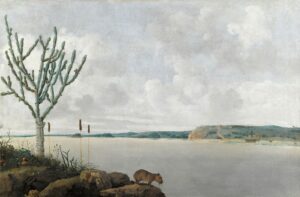
The Old Portuguese Forte dos Reis Magos, or Fort Ceulen, at the Mouth of the Rio Grande, by Frans Post 1638

The Rio São Francisco and Fort Maurits, with a Capybara in the Foreground, by Frans Post 1639

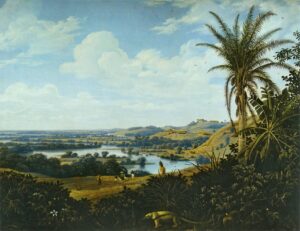
Both produced during his time in Brazil, these two paintings share characteristics common to Post’s early work. Firstly they share a muted colour palette, both dominated by a grey, cloudy sky. The water which is featured prominently in both paintings is similarly coloured. Secondly, they focus on identifiable, real locations. The presence of forts and identifiable physical features lends these paintings a sense of grounded reality. There is little of what David Arnold would call “tropicality”, the construction of the tropics in the western mind as an “other” based on depictions in literature and art, as there is no juxtaposition with “normal” temperate lands.3 Here, Brazil is represented not dissimilarly to how contemporary landscapes of Europe would be. Post’s early paintings appear to honestly depict the landscape and life of colonial Brazil, fulfilling his mission in the New World.

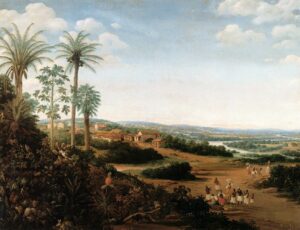
The Home of a “Labrador” in Brazil, by Frans Post 1650-55

Brazilian landscape with anteater, by Frans Post 1649

Considering these works painted after Post arrived back in Europe, a shift in tone is obvious. The sky is no longer oppressive and grey, but blue and expansive. This feeling of space is also aided by situating the viewpoint high up as to reveal the landscape sprawling before the viewer. In addition, the locality of the paintings becomes more ambiguous. Post’s post- Brazil work almost unanimously depicts generic scenes of Brazil, rather than real locations. A third noticeable difference is the increase of flora in the painting foregrounds, as palms and ferns replace the waterways which took precedent in Post’s earlier work. “Tropicality” had clearly taken a toll on the authenticity of Post’s work, as values commonly associated by with the tropics by the seventeenth century European masses seep into the artwork and take on an exaggerated form.

The clear, blue skies firstly evoke sun and heat, characteristics which had been linked to the tropics since Hippocrates.4 The real Brazil has a number of different biomes and climates which are not represented by Post, who instead chooses to essentialize Brazilian weather to conform with commonly held perceptions. In conjunction with the sprawling landscapes, however, the paintings gain a double meaning, as they emphasize the openness of the tropical world. In the seventeenth century mind therefore, the tropics took on a promise  of adventure and reward, with wide horizons of endless opportunity. The depiction of endless empty land can be argued to be an invitation for conquest of it, or the claiming of a monetary or political fortune. The tropics can thus be seen to have had an allure of potentiality in Post’s time.

The greater presence of foliage in the latter paintings speaks to the expectations of fertility and abundance in the tropics. Dense underbrush and towering megafauna were clearly already quintessential images associated with tropical landscapes. Compared to the restrained representations of foliage in The Rio São Francisco and Fort Maurits, with a Capybara in the Foreground, these examples seem to over exaggerate the presence of plants in the Brazilian landscape, playing to these expectation of fertility rather than honestly depicting floral specimens. There is also a reliance on the image of the palm tree, which had become an icon of the tropics, over any other type of flora across Post’s later work. He had clearly departed from his original aim of accurately capturing Brazilian life, and sought instead to create landscapes which were expected of Brazil. Alongside the new focus on non-specific scenes of Brazil, this can be taken as evidence of Post’s new commitment to an imaginary Brazil.

It is unclear whether the stark differences in Post’s paintings from his stay in Brazil and after should be attributed to the market for which he was painting, the effects of popular tropical conceptions on his own memories of Brazil, or a combination of factors. Regardless, a comparison between these two periods of his work clearly demonstrates the work of popular discourse and imagining on representations of the tropics in seventeenth century Europe.

  1. Frans Post (about 1612 – 1680) | National Gallery, London [↩]
  2. Nancy Leys Stepan, Picturing Tropical Nature (London, 2001), p. 19. [↩]
  3. David Arnold, The Tropics and the Traveling Gaze: India, Landscape, and Science, 1800-1856 (Seattle, 2006) [↩]
  4. Hippocrates,  Airs, Waters, Places [↩]

The Koningsplein: Urban Planning and Beautification in 1930s Jakarta

The 1930s saw a push by the Dutch colonial government of Indonesia to “modernise” the the country’s urban spaces. In 1934 a Town Planning Commission was established with the aim of developing urban planning regulations and guiding redevelopment. It presented its findings in 1938, advocating for the replacement of ad hoc urban development with a more centralised, methodological approach. They felt this would produce “harmonious” towns which would surely become reflected in the character of its inhabitants.1

Source: IBT Locale Techniek (1937:  p. 161)2

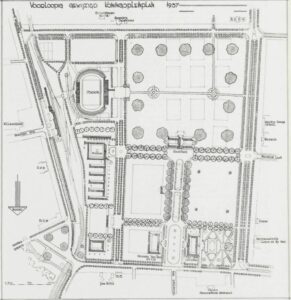
This 1937 plan for renovation to the Koningsplein, modern day Merdeka Square in central Jakarta, can be seen as symptomatic of the new philosophies of city planning sweeping Dutch Indonesia during this period. The plans centre on the town hall, placed amongst open green squares, at the junction of two boulevards. A stadium is situated in the south-east quadrant of the square and other notable buildings are visible along the edges, such as the Java Hotel and the Governor General’s palace.

One aspect of this plan which is immediately obvious is the desired beautification of the Koningsplein. The tree-lined avenues and inclusion of an intricate gardens in the north-western section of the square attest to the fact that this space was intended to inspire appreciation for the natural. Thomas Karsten, a prominent urban planner at the time, advocated for the inclusion of nature within the city, as long as it was carefully zoned and remained within its bounds.3

Colombijn and Cote argue that the reason for this attention to natural beauty is that urban beauty was intrinsically linked with the quest for order and control in colonial spaces.4 Order and organisation were seen as beautiful and beauty was believed to engender civility among citizens. The embodiment of this philosophy in the Koningsplein plan can be seen in the manicured lawns and geometrically divided sectors of the square. Ordered natural beauty within the square was intended to inspire an ordered society around it.

This approach to city planning echoes the City Beautiful movement, a philosophy which came to prominence in North America in the late 19th and early 20th centuries. Although the application of the City Beautiful movement necessarily differed by context, Peter Hall argues that its core tenant was the use of architecture and planning as theatre. As part of this movement, investment in urban beautification became a way to signal different values to a cities inhabitants and influence them in a positive fashion.5

The influence of the City Beautiful movement can be seen here, not only with the structured nature of the square, but also in the intended grandeur of the Town Hall and the Stadium. By placing these buildings in the middle of the square, surrounded by open space, they become the focal points of the space. Thus, the plan attempts to inspire respect and admiration for these symbols of Dutch government and modernity and, by extension, legitimise the colonial government.

Due to the Japanese invasion of Indonesia and the advent of World War II, these plans, along with many others, were never enacted . After the conclusion of the war and the Indonesian Independence movement, the Koningsplein was renamed Merdan Merdeka, or “Independence Square”. It was then redesigned and now consists of four diagonal streets radiating out from a new central National Monument.

The history of Merdeka Square and the Koningsplein is an interesting study in the shifting values of urban spaces. Once a key symbol of colonial aspirations for “modernisation” and order, it has since transformed into one of the country’s most visible monuments to independence. However, it has remained a tool of the government throughout, a way for regimes to articulate their priorities and values to the masses.  As such, though the specific values it transmits may have shifted, it can be seen to still embody the early 20th century philosophies of urban planning as theatre.

  1. Pauline van Roosmalen, ‘Netherlands Indies Town Planning: An Agent of Modernization (1905-1957)’ in Cars, Conduits, and Kampongs, eds. Freek Colombijn and Joost Cote (Boston, 2015), p. 98. [↩]
  2. view (colonialarchitecture.eu) [↩]
  3. Freek Colombijn and Joost Cote, ‘Modernization of the Indonesian City, 1920-1960’ in Cars, Conduits, and Kampongs, eds. Freek Colombijn and Joost Cote (Boston, 2015), p. 3. [↩]
  4. Ibid. [↩]
  5. Peter Hall, Cities of Tomorrow: An Intellectual History of Urban Planning and Design since 1880 (2014), p. 236. [↩]