The Miniature of Shanghai: Case Study of Ward Road Gaol in the early twentieth century

Ward Road Gaol, also known as Tilanqiao prison, locates in the Hongkou district of Shanghai. It was one of the first modern prisons in China. Ward Road Gaol was proposed by Shanghai Municipal Council in order to complement Shanghai Municipal Police so that SMP could have charge of the post-conviction treatment of all offenders without relying on others.1 The other motivation for building this new prison is that it was “in the interest of civilization so that China might learn that punishment can be effectual without the employment of barbarous methods which are in vogue throughout the Empire.”, said the British Mixed Court Assessor.2 It was a means to show the advanced prison system of the West and a step to modernise Shanghai. Therefore, Ward Road Gaol differed from the conventional jails in the late Qing period. It was designed and operated by British and Singaporeans, modelling on the structure of western prisons and management systems. However, the motivation of showing the power and advantage of modernization did not get the expected results of the British bureaucrats located in Shanghai. The gaol had experienced failure of administration, problems of mistreatment of prisoners and conflict between the regulations of Chinese and western laws. The gaol shared a similar destiny with Shanghai itself, the transplanted western modernization projects and ideas, and the local reaction and chaos created by this imposed modernity. This blog will explore Ward Road Gaol as a miniature of Shanghai in the early twentieth century.
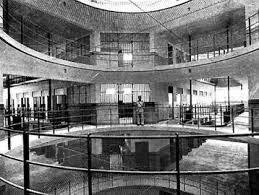
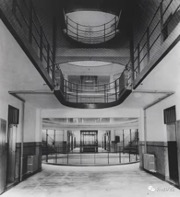
Figure 1

Figure 2: (source: Waitanyixi)

The intended establishment of modernity of Ward Road Goal was revealed by its architectural construction and administrative system. The building of the prison was in the shape of a cruciform, the intersecting point of the cruciform is the only source of natural light. Figures 1 and 2 also show that this architectural design enabled warders to monitor prisoners from different levels. The spatial arrangement of Ward Road Gaol is what Bentham called a “panopticon”. As Foucault argues, the panopticon’s main function is to monitor the behaviour of prisoners. It is a non-violent way to discipline prisoners.3 The principle of using a panopticon as a disciplining method is different from the principal method used to manage prisoners in a conventional Chinese prison. A traditional Chinese gaol emphasized the application of cruel physical punishment as a deterrent to prisoners. Torturing their bodies was believed to be an efficient means to punish people who are charged with guilt.4 Though Ward Road Gaol aimed to become a modern and ‘civilized’ gaol in China, violence towards convicts was not rare. The discipline was still vigorous. There were medical reports on the assaults of warders on the prisoners. The cause of this situation may be approached from two aspects.

For Chinese warders, treating prisoners violently could be an inheritance from the traditional prison management method. Since Ward Road Gaol was one of the very first modern prisons in China. It was hard to change the long-lived persistent habits. The other cause of it could be the existence of racial hierarchy in Shanghai as a mixed-ethnicity international settlement. Isabelle Jackson observed that violence towards local people was common in the Shanghai police system among Sikh policemen, who were considered to have a higher status than local Chinese. Indians were also hired as warders in Ward Road Gaol by the British.5  According to one of the prisoners’ complaints, Indian warders were called, and allegedly gave more than ten slaps and a punch to a Chinese prisoner who gave his diet to one of his fellows.6

This hierarchical power dynamic did not only exist between prisoners and warders, but also among prisoners themselves. Prisoners of different nationalities could receive different treatments. Extraterritorial prisoners enjoyed more privilege than non-extraterritorial prisoners such as Russian, German and Polish. Similar to what happened to the Shanghai police system that there was more than one force operated in this city, prisoners could be regulated and sentenced by different courts and laws, but sometimes be held in the same prison. Extraterritorial prisoners were allowed to have meetings with their family and friends, their families could send food and letters to them at least once a month. However, non-extraterritorial prisoners did not receive equal treatment, thus non-extraterritorial prisoners somehow turned into “white slaves”.7  The mixture of different legal regulations and the identity of prisoners catalyzed the reshaping of the hierarchy which was different from the world outside of the prison. These hierarchies in prisons also reflect the hierarchy of the whole city.

Therefore, the small and isolated world in Ward Road Goal reflected the contemporary situation in Shanghai, such as the difficulty of adapting western practices to an eastern context, the new racial hierarchy among people of different ethnicities, and the chaos of jurisdiction and confusion created by extraterritoriality. In addition, there was a strike that took place in Ward Road Gaol led by the Indian warders, which matches what Jackson has mentioned that there was a rising of nationalism among the Indians who worked in Shanghai. The intention of building a modern prison in China companies with the defects of modernization of prison and of Shanghai as a city.

Nowadays, Ward Road Gaol is more frequently seen as a symbol of the strong will and firm faith held by activists, intelligent and patriots who were arrested and contained in the prison through the propagandization of the media and the government, and a representation of elite, since it is now used to contain people who committed financial crimes. Also, it is now listed in the urban planning schedule, waiting to be removed, in order to build a new cultural park at its original site.

  1. Frank Dikötter, Crime, Punishment, and the Prison in Modern China (New York: Columbia University Press, 2002), p. 308. [↩]
  2. Ibid, p.308. [↩]
  3. Michel Foucault, Discipline and Punishment, part 4. [↩]
  4. Li Wenbing, Zhongguogudaijianyushi, p. 148-149. [↩]
  5. Isabella Jackson, “The Raj on Nanjing Road: Sikh Policemen in Treaty-Port Shanghai,” Modern Asian Studies 46, no. 06 (November 2012), p. 1690-1691. [↩]
  6. Frank Dikötter, Crime, Punishment, and the Prison in Modern China, p. 318. [↩]
  7. Ibid, p. 322. [↩]

Towards hyperreality, a tendency to conceptualize: the development of department stores in Japan from pre-war to post-war period

The original purpose of starting a department store was to enable consumers to purchase their demanded goods in one place.1 Then the appearance of department stores made consumption and purchase more convenient for the more and more condensed and urbanized society. During the process when the department store was adapting to Japanese society, the function of department stores exceeded the original one. Rather than solely advertising and selling consumer goods, they also sell lifestyle, culture and a sense of belonging to certain classes and groups. Therefore, Japanese departments are very keen on creating their own brand culture for their consumers. To sum up, Japanese department stores sell certain concepts to their customers. Through investigating the media of advertisements used by different department stores, a tendency of supplying and consuming concepts and cultures of the department stores could be observed. Moreover, it is not just a postwar phenomenon in Japan, but also significant in the prewar period. Starting in the prewar period, it reaches a peak in the 1970s and 1980s. Exceeding the sale of material goods, department stores gradually are made into hyper-real space.

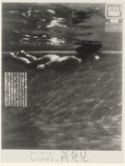
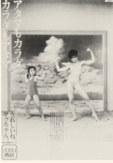
In Ueno’s case study of the Seibu department store, she offers three advertising posters designed by the Seibu department store. Neither of them displays specific goods or brands. They are composed of photographic portraits of people and a short slogan. The explanation for this kind of design is that these poster does not serve the purpose of selling specific goods, but rather aim to sell a concept to customers. Themes used by Seibu included ‘research for one’s self’, ‘women staging themselves’ and ‘My Own Expression’. When people buy certain customer goods from Seibu, they are not just buying the good, but also consuming one of the concepts and lifestyle printed in these posters. In order to better help their customer to construct a lifestyle of their own Seibu’s business plan of constructing specialized merchandise includes all kinds of goods, such as sports goods, interior furnishing and so on.2 They almost covered all aspects of one’s daily life. Therefore, Seibu department stores had a mature system of advertising and selling. In this system, the customers consume more than just material goods, they could also enjoy a sense of satisfaction and superiority when they feel that they have demonstrated and affirmed their personality or certain social identity while purchasing. Moreover, not only the action of purchasing could affirm make conspicuous of one’s identity and self-awareness, but which department store one chooses to go shopping in is also a way to show one’s choice of lifestyle.

Then the department store became a hyperreal space. According to Jean Baudrillard, a hyperreal is generated by models of a real without origin or reality. In contemporary society, the signs of the real substitute the real.3 Based on this theory, Osawa Masachi argues that the urban heart of Tokyo, places such as Shibuya and Ginza could be seen as hyperreal space created by the investment of capitalist groups. In these spaces, people define their personal interest and taste through the consumption of the fruits of hyperreality, which helped them to be recognized or develop a sense of belonging to an ideology or certain group. Osawa defines this generation of people as ‘shinjinrui’ or new people.4  Referring to the case study of Seibu, the culture and themes created by Seibu had these effects. For example, the theme ‘My Own Expression’ would help customers to recognize themselves as someone who seek their true self and active expression of the true self, which is a different ideology and concept of life from the interwar period when people chose to identify themselves as a member of a mass or collective.

((‘Mitsukoshi Opening Up’, https://bodiesandstructures.org/bodies-and-structures-2/mitsukoshi-opening-up?path=in-the-pages-of-mitsukoshi [accessed 12.2.2023].))

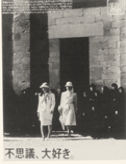
The precedent of this phenomenon could be traced back to the prewar Mitsukoshi department store. Similar to Seibu, Mitsukoshi also published its own magazines as a means to advertise its brand and goods. Compared to the posters of Seibu, the magazines edited by Mitsukoshi contained more specific information and display of material goods. However, there were still some sections in the magazine which were not directly related to the marketing of goods. The first example is a traditional section of the journal: the special feature of spotlighting daughters (reijo) of the local elite.5  These featured articles offer detailed descriptions of the honoured daughter’s lifestyle, personal interests and tastes and used them as a way to sell a type of lifestyle to the prospective customers of the department store. Their elite background and traditionally admired hobbies would attract other people to imitate the lifestyles of reijos. The second example is the spatial arrangement of the department and its decoration, especially the Mitsukoshi department store. It has an intentional imitation of western-style department stores.  The traditional Japanese stores do not involve the movement of customers. There would be only one counter, and the customer speaks to the salesperson who would find the item for the customer and show it to him or her behind the counter. Then the customer only needs to wait. Mitsukoshi adopted a spatial arrangement of western department stores which allows customers to move around the stores and its architectural and decoration styles was also westernized. These traces of imitation of the West targeted upper-middle-class customers. This intentionally made the western environment serve the upper-middle-class people’s mental need to experience the modernity imported from the West. Additionally, the discipline in the department store shows its exclusivity to other groups of people. Therefore, the spatial arrangement, decorations and atmosphere created in the Mitsukoshi department store created a space where people from certain classes can affirm their identity and have a taste of western modernity.

Moreover, the creation of hyperreal space and selling concepts does not only have an influence on customers. They attracted prospective female workers to the department store as well. The typical case is the elevator girls. Laura Miller, the author of “Elevator Girls Moving in and Out of the Box”, argues that the uniform, training accepted by the employees and script used by the elevator girls gave these female workers chance to participate in the middle-class imagination.6

In the future, this tendency of conceptualization of goods may even continue and accelerate, as now Mitsukoshi’s app could even provide people with a virtual shopping experience online. Without actually being present in the department store, customers could use their avatars to shop in the 3D setting of the stores. Beyond material goods, there is an inevitable tendency of consuming and selling signs and concepts to fulfil the demand of consumers in Japan.

  1. Ueno Chizuko, “Seibu Department Store and Image Marketing – Japanese Consumerism in the Postwar Period” in Kerrie L. MacPherson ed. Asian Department Stores, p.342. [↩]
  2. Ibid, p. 326. [↩]
  3. Jean Baudrillard, Simulacra and Simulation, trans. Sheila Faria Glaser, p. 1-2. [↩]
  4. Osawa Masachi, Kyokou No Jidai No Hate, p. 47-48. [↩]
  5. ‘Locating Reijo’, https://bodiesandstructures.org/bodies-and-structures-2/locating-reijo?path=peopling-the-place-of-mitsukoshi [accessed 12.2.2023]. [↩]
  6. Laura Miller, ‘Elevator Girls Moving In and Out of the Box’ in ed. Freedman, Modern Girls on the Go: Gender, Mobility, and Labor in Japan, p.65. [↩]

Hallucination of Feminism: The Representation of Hostesses’ life in 1930s Shanghai

“At first, Guizhen was in the public school of Zhabei. When she was fourteen years old, she was about to graduate, however, due to some reason, she dropped out of school. From then on, she was unemployed and stayed at home. When she was sixteen years old, Shenxianshijie promoted feminism and also admired her name, and hired her to be a waitress.” 1

— Xiao Yan, “Kuaile Shijie”.

The above paragraph is quoted from a story published in Kuaile shijie (Happy World) which was a newspaper established in Shanghai in 1927. The story is about two waitresses Wu Guizhen and He Zhenbao who worked for Shenxian Shijie, a cabaret. In the story of Wu, the author mentions that she was hired because Shenxian Shijie promoted feminism. Also, after she started to work for the cabaret, Wu was able to make twenty five yuan a month, in addition to the amount of tip she earned is the double of the fixed salary. Therefore, the whole family of Wu relied on her income.2 The way the author phrased the life story of Wu implies the existence of feminist elements in her choice of work and the cabaret. However, the real life of the hostesses and waitresses may suggest the opposite. This newly appeared gender dynamic due to the appearance of a new gender interaction brought by cabarets and dance halls between males and females created a hallucination of the rise of feminism in Shanghai in the 1930s. This new gender dynamic could be viewed as a new extended form of the traditional male and female power dynamic outside of the domestic sphere, and the existence of the element of feminism which Kuaile shijie observed in the life stories of these two waitresses is questionable.

One of the reasons why there was considered to be a rising trend of feminism in Shanghai was because of the appearance and popularisation of cabarets and dance halls which created more job opportunities for women and a new form of gender relation which did not exist in China before the 1920s. The former is not hard to understand, just like the author of Kuaile shijie described that the whole family of Wu relied on her income, which somehow won women a more important status in their family. This new economic advantage of women also seems to lift the social status of women in the early half of the twentieth century in Shanghai. The latter requires more explanation. Dance halls and cabarets created a space where males and females could establish an intimate relationship without the intervention of senior family members which is unprecedented in Chinese society. The dance halls and cabarets were different from conventional prostitution and brothels. Hostesses and waitresses had more publicity and fame. Then when men went to cabaret, they did not simply seek sexual consumption. As Andrew Field argued in his book Shanghai’s Dancing World, male patrons sometimes do not aim for sexual activity while ‘courting’ a hostess. They use many ways, including treating her to dinner, taking her out to a show, or buying her gifts, to establish a relationship with the hostess.3 On a superficially level, it seems that a famous and influential hostess gained the power which could attract men to please her and somehow reversed the conventional gender structure of society.

This new gender relation brought by the appearance of the cabaret created the impression that feminism was rising and developing in Shanghai. However, it did not dismantle the traditional gender dynamic, because it did not change the underlying unequalness between males and females. The courting practices in a dancehall or a cabaret of a male patron did not imply a superior status of women but rather more explicitly reveal the demand of men to share a consensual experience shared among male patrons that facilitated a male-male relationship in contrast to heterosexual bond.4 Ueno Chizuko expressed a similar point in her book Misogyny that a man, by imitating other males’ sexual desires, becomes the subject in a heterosexual relationship. Having a sexual relationship with females is a way to imitate other males’ sexual desires and a way to be accepted by the group of the male gender.5  Then the practice of courting and ‘winning’ a waitress is a pass for males to enter the world of masculinity.

This demand for affirming one’s masculinity may originate from the fast development and urbanisation of Shanghai as a city that represents modernity where people come together in greater numbers than ever before. City destroyed the traditional social structure and hierarchy of ancient China, in which society was made up of many units of families. Without this traditional familial structure, men lacked the confirmation of traditional masculinity because they no longer played the role of the head of the family. In cities, a new power dynamic is constructed. These institutions were not family-centred, such as administrative institutions, gangs, and large enterprises, in these places, men automatically lost their given superior status in their own families, and the dominant positions were controlled by a limited number of men who might be considered to be the most capable, and in the case of Shanghai by westerners. Therefore, the cabaret and dancehall became a new place to either conspicuously show one’s masculinity or seek reconfirmation of it. Then the underlying narrative of the gender dynamic in a cabaret still objectifies women. The feminism which Shenxianshijie claimed to promote does not exist.

  1. Kuaile Shijie, 1927. 02. 22, p. 3. [↩]
  2. Ibid, p.3 [↩]
  3. Andrew Field, Shanghai’s Dancing World: Cabaret Culture and Modernity in Old Shanghai, 1919-1954 (2010), p. 128. [↩]
  4. Ibid,p. 128. [↩]
  5. Ueno Chizuko, Misogyny (2015, SanLian). [↩]

The Paradox of exhibiting indigenous culture: Ainu people in the 1910 Japan-British Exhibition

“The exhibition persuades people that the world is divided into two fundamental realms – the representation and the origin, the exhibit and the external reality, the text and the world.”1

—- Timothy Mitchell

According to Timothy Mitchell’s “The World as Exhibition”, the world in the exhibition is a distinct realm from reality. This phenomenon does not only exist in a metaphorical sense but also occurs literally in real life. In the 1910 Japan-British Exhibition, in order to recreate a vivid and realistic experience for the visitors, many minorities from native Japan and from Japanese colonies were asked to participate in this joint exhibition. They were Formosans, Sumo wrestlers and Ainus.2 Among them, Ainus had a distinct situation from the other two. Compared to Sumo wrestlers, the Ainu people were more distant from the mainstream Japanese culture, led by Yamato Japanese people. Compared to Formosans, Ainus are not from the colonies of Japan, they are also native Japanese people. The territory of Ainu had been under the control of Yamato Japanese for a very long time since the Tokugawa period.

As David Howell states that the traditional way of living of Ainus was inevitably disrupted by the intrusion of the modern lifestyle promoted and popularised in the Meiji period. For example, In the mid-1880s, officials in Sapporo and Nemuro prefectures attempted to turn Ainu into farmers and then integrated them into the general Japanese population.3 Homogenization of the Ainu people was a part of constructing Japan as a modern state. Hence, until 1910, Ainus had been going through this process of assimilation for about thirty years. In contrast to what happened in the homeland, the indigenous people in oversea exhibitions always appeared with strong indigenous characteristics. There was a paradox that existed between the foreign diplomatic and the domestic policy, which targeted the indigenous people. The presence of Ainus in the Japan-British exhibition was a typical case and example of this paradox. In the case of the Ainu people in the foreign exhibition, this paradox created by the contradiction between the foreign and domestic policy of Japan reveals the ambition of Japan to claim its new status as a rising imperial power which had the potential to rival western countries in the international arena and its eagerness and rashness to do so in the early twentieth century. 

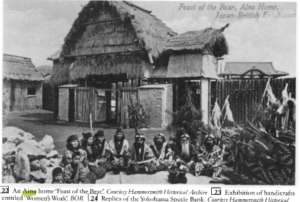
Figure 1: Postcard of Japan-British Exhibition

Ainu people are the indigenous people of Hokkaido, southern Sakhalin, and Kuril Island. They had a very intimate relationship with the general Japanese population but were also able to maintain their own uniqueness. Figure one is the postcard printed for the Japan-British Exhibition. In this postcard, there was a group of Ainus sitting in front of a traditional Ainu house. All of them wore traditional costumes, including robes and headbands. It was not the first time that Ainus were sent to participate in an exhibition. They also participated in the St Louis exhibition in 1904.4 According to the photo on the postcard, it could be observed that Ainu’s cultural and daily life characteristics were magnified and condensed in this scene. The construction of the hut and the dress of the Ainus people were all representative symbols of Ainu. According to the word of John Batchelor’s words quoted by Hotta-Lister, an Ainu man in the exhibition warmly introduced visitors to their customs and traditions.5 However, it was only under the condition that John Batchelor was able to translate Japanese for the other visitors, thus the main purpose of having native people was to create a visual effect for the audience, rather than hiring them as guides. The point was that the visitors could actually see and observe them with their own eyes, to educate themselves about Ainu customs and traditions. It is very similar to what Timothy Mitchel has found in the writings of Arabic writers in Paris. The enhancement of Ainu elements in the exhibition seems to contradict the domestic policy of Japan towards Ainus which aimed to integrate them into the general Japanese population.

The paradox caused a debate on the exhibition of the Ainu people in foreign countries. Hotta-Lister mentioned that this 1910 exhibition aimed to show Britain that Japan is a powerful nation which is worthy of making allies with and to clear the misunderstanding the public had on Japan.6 The exhibition of Ainu should be used as evidence of Japan’s backwardness so that visitors could have an object of reference to the new modern and advanced Japan.7  The magnified traditional Ainu elements in the exhibition could prove this point. However, the domestic reaction to this joint exhibition criticized that the presence of these backward races did not send a positive message about the Japanese empire to the general visitors. One word used by Hotta-Lister to describe the feeling experienced by the other Japanese is “embarrassment”.8 The reaction of the British was also not positive. The exhibition of indigenous people brings out the question of human rights and the debate on racism.9 Then the exhibition of native and indigenous culture became an awkward existence at these fairs. On the one hand, they could not represent the ‘authentic’ appearance of Japan; and on the other hand, its existence does not work in the way which people thought it would. In Mutsu Hirokichi’s article written to introduce the exhibition, the exhibition of Ainu was not even mentioned once.

Following the theory of Mitchell, the paradox that existed in the exhibition of the indigenous culture of the Ainu people could be explained that the world of the Ainu people in the exhibition is a different reality from that of in Japan. The paradox also exists on an abstract level that the world exhibited is contradictory to the world in the reality. As mentioned above, Ainus were going through the process of assimilation with the general Japanese population, and in the narrative of John Batchelor, the Ainu man who was explaining their tradition to them could speak Japanese fluently, thus Ainus who were part of the exhibition may not continue or follow their traditions as the exhibition shown. The life they exhibited to the general visitor was a created reality, specifically for the purpose of exhibiting.10 The exhibition also generalized the actual life of the Ainu people in Japan, ignoring the fact that there were many subdivisions of the Ainu people and each of them led different lifestyles. Both in real life and the exhibition, the customs, traditions, and everyday life of Ainu are reshaped. Ainu culture and people presented in the exhibition are intended exoticism, a world of representation, designed to justify the imperial mission of Japan and its power as a rival colonist. The domestic policy of assimilation also serves the purpose of consolidating imperial rule. These contradictions and the logic behind the exhibition of Ainu which can’t stand scrutiny reveal the eagerness of the Japanese empire to demonstrate its equal status with the other western countries.

  1. Timothy Mitchell. ‘The World as Exhibition’. Comparative Studies in Society and History 31, no. 2 (April 1989), p. 233. [↩]
  2. Ibid, p. 229. [↩]
  3. David L. Howell, ‘Making “Useful Citizens” of Ainu Subjects in Early Twentieth-Century Japan’, The Journal of Asian Studies, 63.1 (2004), pp. 6-7 [↩]
  4. Hotta-Lister, A. The Japan-British Exhibition of 1910: Gateway to the Island Empire of the East. 1 edition. Richmond: Routledge, 1999, p.117. [↩]
  5. Ibid, p.144. [↩]
  6. Ibid, pp. 110-111. [↩]
  7. Ibid, p. 142. [↩]
  8. Ibid, p. 143. [↩]
  9. Ibid, p. 133. [↩]
  10. Ibid, p. 144. [↩]

The extended domestic space: the construction of nursing homes in pre-war Japanese society

Foucault’s The Birth of Clinic and Discipline and Punish triggered criticism and reflection on the institutions such as hospitals and mental asylum. The architectural design and administrative formats in these places were criticized for restricting and stripping the basic dignity of human beings. It is a similar case for nursing homes.

The history of the nursing home can be traced to the construction of poorhouses in England in the seventeenth century. It was specifically designed to contain and care for the marginal social collectives since, at that time, hospitals started to exclude the obstetrical, indigent, and insane patient, as well as lepers and children.1 Nursing homes originated from hospitals, which explains why their later construction and design adopted the structure of hospitals. The position of nursing homes in society is similar to hospitals as well. According to Roger Luckhurst’s chapter on prison, asylum and hospital in his work on Corridors, these places possess the characteristic of alienation, isolating from the social and familial environment.2 However, nursing homes in Japan in the pre-war time showed opposite attributes. They tended to recreate the domestic space for the aged through architectural construction and the arrangement of daily activities. In my long essay, I plan to focus on this unique characteristic of the nursing home in Japan.

The motivation for developing social institutions in Japan was similar to that of other Western countries (which is to take care of the life of the elderly), but the existence of nursing homes could be viewed as an exceptionally unusual case in East Asian countries which respected Confucianism as the dominant guideline for social behaviour and hierarchy. Taking care of the elders and seniors is the responsibility of the younger generations in a family. In Mika Toba’s report on the biographies of residents in a nursing home in pre-war Japan, we could know that most of them were people who either did not have a child or lost their child before coming to old age.  This sometimes even became a condition for the people who wanted to apply for residence in a nursing home. The Tokyo nursing home, which I mainly focused on, had a hut called “Family hut” (家庭寮). It was explicitly built for elderly people who still had family members of the same generation to live together. The set-up of the rooms in the family hut was intentionally designed in the same way as typical Japanese houses, “the structure of the hut only changes a little compared to a normal house. At the middle of the tatami room, there is a hibachi”.3 Not only was the physical construction made to be more similar to a traditional Japanese house, but the timetable arrangement also contained the intention to recreate everyday life regardless of following the concept of ‘nursing home’. Most of the hours in a day were designated to devote to housework. The timetable of the nursing home also aimed to give the aged as much freedom as possible. As long as the residents do not have a serious health issue, they have the freedom to go out.

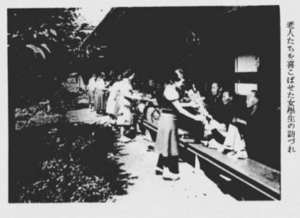
Figure 1: the residents in the Tokyo nursing home receiving gifts from female students (caption on the left side: the visit of the female students delights elderly people)

Unlike the alienating nature of the hospital and mental asylum, the nursing home in Japan was closely connected with society. The Tokyo nursing home held regular visiting activities. In its anniversary book, there is a picture (figure 1) showing young students sending elderly people gifts. The arrangement of student visiting could be seen as compensation for the childless life of those elderly people. Since a Confucianist society operates on family units, these childless old people were seen as the social marginals included in the relief law enacted in 1932. The Japanese welfare system was established based on a family-like society. Nursing homes did not merely operate as shelters or medical supporting institutions for the elderly people in need, but instead as substitutions of a family for them.

Examining the domesticity in nursing homes on a broader scale, the development of the nursing home in Japan also marked the attempt of contemporary Japanese to explore an alternative way of Asian modernization instead of following the trajectory of the West. The first nursing home established in Japan was called St. Hilda nursing home and was operated by a Christian group in Japan. After the promotion of the Meiji emperor to support the people who needed social welfare in 1868, the number of nursing homes increased, and many of them were run by local religious groups, especially Pure Land Buddhism. The process of making the nursing home more like a domestic space reflects the attempt to seek an alternative path for the modernization of Japan on a social and domestic level. There is a relationship between the construction of the nursing home and the building of a modern Asian society based on the tenet of benevolence and Confucianism. Just like Jordan Sand argues that there was the dissolution of tradition and emphasis on domestic life, and the occurrence of this turn of dwelling and domestic spaces in the late Meiji and early Taisho period when Japan fully participated in global imperial competition was not just a coincidence.4

  1. Renée Rose Shield, Uneasy Endings: Daily Life in an American Nursing Home, Uneasy Endings (Cornell University Press, 2018), p.30-31. [↩]
  2. Roger Luckhurst, Corridors : Passages of Modernity (London: Reaktion Books, 2019), p.190. [↩]
  3. 東京養老院, ‘養老 : 東京養老院概要’ (東京養老院, 1938), p.76-77. [↩]
  4. Jordan Sand, House and Home in Modern Japan: Reforming Everyday Life 1880-1930 (Cambridge, Mass.; London: Harvard University Press, 2005), p. 4-5. [↩]

Cities as the frontier of propaganda: the creation of utopian/ dystopian space in Dalian in 1950s

Cities in Northeast China were critical locations for the industrial construction in the FFYP (the first five-year plan). Liaoning province was even called “the son of the republic”. As Liu Yishi demonstrates in his article, FAW became the icon of FFYP.1 Besides these physical constructions taking place in the Northeast of China, the construction of industrial cities also included the construction of propaganda and ideologies.  Propagandizing the spirit of revolution or revolutionary work was an important task for city planning. By referring to Bakhtin’s carnival sense of the world, I will demonstrate that the political propagandization comprised the carnivalization of public space, which led to the creation of dystopian space in China, especially during the period of Cultural Revolution.

In Liu Yishi’s Competing Visions of Modern, he quotes an article from Dongbei Ribao, a daily newspaper founded in 1945. It presents statistics on industrial production in the Northeast.2 With further investigation into this daily newspaper, one interesting phenomenon could be observed: the spiritual construction of citizens and industrial/ urban construction were treated equally in the socialist construction process in the Northeast. Many columns were devoted to explaining the importance of individual behaviour in maintaining sanitation and being a diligent worker in state-own enterprises. More on that, there were also patriotic education and lectures on the Party’s fundamental guiding principles.

Instead of only printing promotions in newspapers, cities were used as the media to spread these ideas. Two articles published in Dong Bei Daily Newspaper (Dong Bei Ribao) on 27 August 1950 discuss the importance of using the city as the centre to connect villages due to ‘its significant political influence on villages’ and how to exploit the function of cities in real life.  One article further explained that if a problem could be solved or figured out in the city, then surrounding villages could receive the same information so that problems would be solved thoroughly.3 The other article provided readers with eight specific methods which could be used in the propagandization work in Dalian. I will quote two of them here:

“Street radio – Radio is the best tool for propagandization/publicization in the city, it has great efficiency. Especially at the location where people gather, such as the shopping mall. Turning on the speaker, playing a CD first, attracting the attention of the masses, then giving a speech, but the speech needs to be concise and short, with incitation. Because people on the street are very mobile, some people leave, some people will come, and some will return. The speech could be repeated several times.”

“Festooned vehicle – using the festooned vehicles (big scooters or automobiles), hanging slogans around them, decorating them with beautiful flags, parading around. First, drumming attracts the public’s attention, then letting the publicist give speeches. After the speech, a short drama and peepshow could be following section.”3

The mutual characteristics could be derived: 1) the emphasis on the public space like streets and shopping malls; 2) the entertaining element in the process of propagandization, such as the short drama and the CD playing; 3) the political propagandization was hosted in a similar way to the celebration of festivals. These spatial practices match with Bakhtin’s carnival world, which includes the following characteristics: familiar and free interaction with people, eccentricity, carnivalistic mesalliance, and profanation.4  The gathering of a significant number of people in public locations blurs individual differences and makes ideas given by the speaker universal and applicable to all. Social hierarchy is eliminated. Everyone could be a part of the event. Public spaces also enable the occurrence of interaction and communication. The masses could react directly to the one giving the speech and communicate with many audiences surrounding them. However, this interaction is one-way since the audience cannot offer sophisticated and critical comments to the publicist. The only reaction they can give is either to cheer or to leave.

The addition of entertainment makes the masses subconsciously link political ideas and activities to drama, music and plays. Political propagandization is carried out in a format similar to operas and dramas. The request to use short, concise, and provocative language has a similar function to lines written by the playwriter to provoke the audience’s emotions so that they will experience the same feelings synchronously. Entertainment and the selection of public spaces where people’s everyday lives are carried out remind me of Zhang Jingsheng’s aesthetic society. In his Mei de shehui zuzhifa, Zhang proposed that music should be amplified and could be heard around the city, a subconscious form of education as people went about their daily routines.5 The political propagandization through radio and festooned vehicles are like Zhang’s music, played in the background of people’s everyday life, affecting them subconsciously. As L.A. Rocha states at the end of his article on Zhang’s urban theories, the aim of his utopian city was to reproduce the same minds and the same bodies.6 His aesthetics were basically authoritarian through and through.7 The underlying authoritarianism and the attempt to unify people’s minds could also be found in the propagandization work in Dalian.

This reshaping of public space later became the embryonic form of denunciation rally during the Cultural revolution from 1966 to 1976. While the core of this format of propagandization remained the same, the content upgraded from education of patriotism and internationalism to the public execution and criticism of people. Political propagandization was conceived as a kind of public performance. Public spaces become theatres and playgrounds. The seriousness was lost under that scenario, causing collective violence  more likely to happen. The utopian space, which could have been constructed if the masses learned from these teachings, transforms into a dystopian space where dehumanized activities and fearful behaviours take place, just like the performance of grotesque roles in carnivals if the political propagandization work is carried out in a carnivalized manner.

  1. Liu, Yishi. “Competing Visions of the Modern: Urban Transformation and Social Change of Changchun, 1932-1957.” Ph.D., University of California, Berkeley, 2011, p.117. [↩]
  2. Ibid, p.111. [↩]
  3. Dongbei Ribao, 27. August 1950. [↩] [↩]
  4. “Carnivalesque” in Wikipedia, https://en.wikipedia.org/wiki/Carnivalesque [Accessed 15.10.2022]. [↩]
  5. Leon Antonio Rocha, ‘A Utopian Garden City: Zhang Jingsheng’s “Beautiful Beijing”’, in The Habitable City in China: Urban History in the Twentieth Century, 2017, p.155. [↩]
  6. Ibid, p.157. [↩]
  7. Ibid, p.156. [↩]

Confucianism and urban planning in Changchun as the capital city of Manchukuo 1932-1937

When Zeng Guofan, the famous scholar and leader of the Hunan Army in the late Qing period, successfully took back Nanjing from the Taiping Heavenly Kingdom, one of the most prioritised tasks in his reconstruction plan was to build Confucian temples.1 Interestingly, Japanese colonialists’ naming of the newly constructed areas and its promotion of Confucian shrines and rituals of worshipping Confucius happened about sixty years later in Changchun coincidentally echoes with Zeng’s plan in Nanjing. In this blog, I will argue that Confucianism profoundly integrates with urban construction in Changchun, the capital city of Manchukuo, due to the reason that Confucianism is important to prove one’s legitimacy of ruling in China. It could consolidate the rule and is an essential alternative for the Japanese to construct a utopia in the urban spaces in Asia. Also, I want to address an exceptional characteristic possessed by Confucian temples, a form of unity in Lefebvre’s space of triad theory. The perceived, conceived space, perceived space and the space practised in a Confucian shrine reach a harmonious unification. This is one of the reasons why Confucian temples were preferred by a regime to build to consolidate its rule.


https://www.davidrumsey.com/luna/servlet/detail/RUMSEY~8~1~328360~90096829?qvq=q%3A%3D%22Manshu%CC%84koku%20Kokumuin%20Kokuto%20Kensetsukyoku%22%3Bsort%3APub_List_No_InitialSort%2CPub_Date%2CPub_List_No%2CSeries_No%3Blc%3ARUMSEY~8~1&mi=1&trs=2

In order to find the trace of Confucianism in Changchun, I found a map with a detailed construction plan of Changchun. It was published in 1936 in Xinjing, another name for Changchun. As shown in the map, the names of the locations in the city centre were excerpted from Confucian classics. For example, Anmin street got its name from “Shuntian anmin” which means following the will of Heaven and bringing peace to the people.2

Since Confucianism was the most fundamental ideology for the rulers of China, it forms the most fundamental part of China’s social and administrative systems. In pre-modern China, to enter the administrative system, one must learn the classical text of Confucianism and then takes the civil examination to become a government official. On the social aspect, Confucianism assigns everyone who lives in the society a role to fulfil, like Confucius’s famous saying, “There is government when the prince is prince, and the minister is minister; when the father is father, and the son is the son.” Confucianism is the foundation for the order of society and the nation.

In the early 1930s, establishing order and control in Changchun was one of the most critical tasks for Guandong Army and the Manchukuo government after the Manchurian incident, and therefore Confucianism came to the front stage of Changchun. By looking into the historical context, we could know that in 1932, Japan was urgent to prove its legitimacy in China. In the North China Herald, published on 7 September 1932, there was an article with the title “Expedition to Manchukuo?” that reported the claim made by the Chinese government in Nanjing to take back Manchuria and the gathering of Soviet troops near the border of Manchukuo.3

In this map, these names excerpted from Confucian classics are particularly marked out, but buildings and locations such as the Ministry of Culture and Education and State Council were left out. They were only written in the columns printed beside this map. Actually, these government institutions were either located around Datong square or along Shuntian streets. The map tended to explicitly emphasise these public facilities, which were named after Confucianist ideology. The integration of Confucianism in the urban construction of Changchun entrusted Manchukuo and the Manchukuo government’s wishes that Manchukuo could become a prosperous and harmonious modern state under the teaching of Confucianism without following the trajectory of the west. Ironically, the order in Manchukuo, specifically in Changchun, was still maintained by Guandong Army.4

The other significance of the map is that it missed marking the location of Confucian shrines in Changchun. The most prominent Confucian shrine in Changchun is located near The Entertainment Place (歡樂地) on the map. Though many landmarks were named after Confucian classics, the map still overlooked one of the most critical things in practising Confucianism. It confirms what Yishi Liu argues in his article that from 1937 Confucian worshipping gradually lost its status in Manchukuo, as the Ministry of Culture and Education, which was in charge of worshipping Confucius, was reduced to a bureau and merged into the Ministry of Civil affairs.5 The promoted ritual of worshipping became the worshipping of Amaterasu. However, back in 1932, the ritual of worshipping Confucian was advocated by the first Prime Minister of Manchukuo Zhen Xiaoxu and supported by Guangdong Army, the true authority in Manchukuo.6 There was a trend of deterioration of the popularity of Confucianism in Changchun in the late 1930s when the Japanese gradually started to gain a more stable position in Northern China.

Finally, I want to argue that Confucian shrines are a space where the perceived, the conceived, and the practices could reach harmony without creating any unpredicted situation or function. Confucian shrines are built for worshipping Confucius; besides the rituals hosted by government officials or even the emperor, sometimes normal people could also go to the shrine for the same purpose. With thousand years of teaching Confucianism, the meaning of space and its ideology behind space became monolithic. An example of the construction in Changchun which created huge differences between the practices of the space and the space conceived is the National Founding University (Kendai) in Changchun, which was built as a pan-Asianist institution to breed the leader of future generations who would lead the revival of East Asia. But this eventually resulted in disillusionment amongst the best educated and highly expected people toward the nation-founding ideals, and some even turned themselves against the Japanese.7 Many secret anti-Japan activities were active in Kendai, such as the forbidden-book reading association. Compared to Kendai, Confucian shrines were a very ‘stable’ space with less probability of cultivating dangerous thinking or activities against Japanese colonial authorities. Confucian shrines, for hundreds of years, only had one straightforward function: to worship Confucius. With their close connection with the ruling class, and under the supervision of Guangdong Army8, it could be seen as a unified space of perceived, conceived and practised as a tool for the consolidation of the regime.

  1. Wooldridge, Chuck. City of Virtues: Nanjing in an Age of Utopian Visions (2015) Ch 4 “Zeng Guofan’s Construction of a Ritual Center, 1864-72”, p. 118. [↩]
  2. Liu, Yishi. “Competing Visions of the Modern: Urban Transformation and Social Change of Changchun, 1932-1957.” Ph.D., University of California, Berkeley, 2011, p.103 [↩]
  3. “Expedition to Manchukuo,” The North-China Herald, September 7, 1932. [↩]
  4. Liu, Yishi. “Competing Visions of the Modern”, p. 62. [↩]
  5. Ibid, p.73. [↩]
  6. Ibid, p.69. [↩]
  7. Liu, Yishi. “Competing Visions of the Modern”, p.24-25. [↩]
  8. Ibid, p.69-70. [↩]

Translation or interpretation? Comparison between Lefebvre’s The Production of Space in English and in Chinese

A universal understanding of translation is that the translated text can never be one hundred per cent accurate. It is even more complicated to translate theories which are abstract and ambiguous. Scholars could produce different results of translation based on their own interpretations. Therefore, it is inevitable that the translator’s interpretation will affect the translated text. Their choices of phrases and the formation of sentences could reflect their understanding of the original text. I will compare the English-translated edition of Lefebvre’s famous work The Production of Space with its Chinese-translated edition and argue that the choice of words, phrases, and terms can reflect the development of studies on Lefebvre and the interpretation and the translator’s own understanding of the original text.

The first Chinese translation of The Production of Space was published in 2021. As the translator himself said in the preface that translating The Production of Space into Chinese was a difficult task, and many versions of translation in different languages were referred to.1 From the date signed at the end of the preface, we could know that the first draft of the preface was created in 2014, and its final edition was finished in 2021. It could be assumed that the translator spent approximately seven years translating this work. The English version was first published in 1991. There is a thirty-year gap between these two publications. The time gap affects the choice of words of the translators. One point worth noticing is that in the introduction chapter, Chinese translators use the term ‘trialectics’ (三元空间辩证法) to address Lefebvre’s theory of space triad. This term is never mentioned in the English translation because it only appeared until 1996 in an article written by geographer and urbanist Edward Soja on the theory of Lefebvre. Due to the late publication time and the evolution of research on Lefebvre, Chinese translators had more resources and published works about Lefebvre for reference. They could gain more knowledge and methodologies, which were developed in the past thirty years, to interpret Lefebvre.

No matter how many new terms the Chinese version adopts from the later research about Lefebvre, there is not much assistance for Chinese translators on the translation of the most fundamental concepts in Lefebvre’s theory . The choice of the word in Chinese could create huge differences. One of the critical terms of Lefebvre’s spatial theory is the title of the book “the production of space”. This term reveals his adaptation of Marx’s mode of production. Lefevbre claims that “space is a product”.2 In the Chinese version, ‘production’ is translated as Shengchan 生产(it literally means ‘production’, more frequently used to address industrial production, production in factories. )rather than Chansheng (also has the meaning ‘production’ but can indicate a broader range of production. If we look up the word ‘production’ in a French dictionary, its meaning in French and English is highly similar to each other. They can both indicate the meaning of Shengchan and Chansheng in Chinese. The possible explanation for this choice could be that choosing Shengchan over Chansheng demonstrates an emphasis on the Marxist influence in Lefebvre’s theory. As mentioned above, Lefebvre’s space theory has an inseparable connection with Marx’s mode of production. Marx’s production theory is translated as Shengchan in Chinese since Marx’s production does not have multiple potential meanings. It only indicates the activities of using resources to produce or make, and its meaning is closer to Shengchan than Chansheng. Shengchan guarantees the consistency of translated academic terms and is more suitable to the Marxian context in The Production of Space. Therefore, when more than one choice were displayed in front of the translators, they chose Shengchan. Also, due to the vital status of Marxian theory in China, the translator might be inclined to deliberately use Shengchan to make the Marxian influence more conspicuous to the readers.

Besides the title, differences between English and Chinses translations are also caused by different strategies of translation for the key terms. The most prominent case is the translation of the spatial triad. Their Chinese translation would cause more confusion to some extent. Representational space is translated as Biaozhengxing Kongjian 表征性空间, Xiangzhengxing Kongjian 象征性空间, Biaoxiangxing Kongjian 表象型空间 and Zaixianxing Kongjian 再现性空间. They are all translations of ‘representational space’. I will focus on the comparison between Biaozheng xing 表征性 and Zaixian xing 再现性 here. The translation of “representation” is a constant debate in Chinese academia. The phrase Zaixian appeared far earlier than Biaozheng in the discourse of translating ‘representation’. However, the use of Biaozheng gradually became more frequent than Zaixian.3  In the case of Chinese The Production of Space, the translators choose to use both of these two words, sacrificing consistency. The translators change the translated term according to the context. These two words could lead to divergence in interpreting Lefebvre’s representational space. Biaozheng indicates the embodiment of the complex symbolism of this concept; Zaixian, a traditional way of translating ‘representation’, could help a Chinese researcher to instantly refer it to the English or French word ‘representation’. In addition, Biaozheng, compared to Zaixian, is a term more frequently used in scientific disciplines. They have distinct academic contexts. Therefore, when a translator deliberately chooses one of them in the context of The Production of Space, the choice must be made based on his or her interpretation of the context.

The comparison between the English and Chinese translations of The Production of Space does not only indicate a linguistic difference between the two languages. Translation could reflect more information, such as the development of Lefebvre’s research over thirty years, debates on translation in Chinese academia and the unconscious emphasis on certain concepts. All of them could reveal the different academic interests and mindsets of the two academia. Sometimes a translated book could be read as more than just a translation, but also as an interpretative piece of the original one.

  1. Henri Lefebvre, The Production of Space, trans. Liu Huaiyu (The Commercial Press, 2021), p.xxi. [↩]
  2. Henri Lefebvre, The Production of Space, trans. Donald Nicholson-Smith (Oxford: Basil Blackwell Ltd, 1991), p.26 [↩]
  3. Yi Heng, Zhao, ‘Biaozheng or Zaixian? The distinction of concepts needs to be resolved immediately’, https://www.sohu.com/a/198947364_652768 {Accessed 30.9.2022}. [↩]