The Chinese of Colonial Burma

Yi Li’s Chinese in Colonial Burma is an excellent evaluation of the uniqueness of the Chinese communities in Rangoon when compared to other Chinese communities across South East Asia and offers a foundation from which more in depth histories of these communities can be studied. However, a fundamental issue with this history is the absence of the Burmese in the lives of Rangoon’s Chinese. Rather, Yi Li focuses on how the Chinese developed their own individual communities in Rangoon instead of how these communities fitted into the pluralistic social system of the colony.


This absence becomes apparent when in the latter half of the book, focusing on the history of Rangoon, there are fewer than a dozen direct references to how the Chinese interacted with other communities in the town, and they are generally not positive. These include: the bullying of a schoolboy being stereotyped by his classmates; moneylending and pawning to other communities; being the victims of Burmese dacoity; selling opium to other communities; clashing politically with other communities in local government; and by participating in race riots.[1] Essentially, the Chinese in this book are not treated as a part of the community of Rangoon, but rather as one of the communities existing in separation, and often in opposition, to each other.

Fundamentally, Yi Li constructs the importance of the history of these communities as existing in their relationship to colonialism, rather than in their interactions between one another. For instance, the importance of the mercantile reputation of the Chinese was that it placed them in ‘a layer that separated the colonizer and the colonized.’[2] Pairing this with the absence of the Burmese, the experience of the Chinese in Rangoon is mostly depicted as being dependent on interactions with the British. However, while the author lacked the opportunity to include Burmese language sources in their history, there are still ways in which these differing communities’ interactions with one another in the town can be captured through English language sources.[3]

For instance, Yi Li could have expanded on smaller case studies to explore the arguments they make about the Chinese Rangoon colonial experience, and these smaller constituent units’ interactions could then be expanded to include other communities, such as with their discussion on Cantonese woodworkers. While Yi Li emphasises the potential role of Chinese carpenters as agents for the colonial government, and this is evidenced in my own research on the reliance which the colonial government had on their skills to build government buildings such as the lunatic asylum’s dead house in 1880 (their refusal to do so resulting in its construction in brick) and even as late as 1913 when the colony’s wooden road building still almost exclusively employed Chinese labourers, there was a lot more that could be learnt about the Rangoon experience from the representation of these workers in British sources.[4] For instance, when historic laws requiring that newly constructed abodes had to be done so with brick finally began being enforced, the poor quality of the masonry work in the Chinese quarter was blamed on Chinese maliciousness to work around the regulations.[5] However, maps of the town suggest that the Chinese areas of the town had historically fewer brick buildings than other sections, such as the Muslim quarter North East of China Street, and the fact that the British predominantly chose to employ Indian workers led by British engineers for bricklaying work would suggest that this Chinese community, with its legacy of talented carpenters, would produce masonry of a lower quality than in the rest of the town.[6] However, British officials seized on this as an example of Chinese vice and the buildings’ owners were punished, which shows how the historical experience of the carpenters could have been used to further a conversation of how the depiction of Chinese morality by the colonialists impacted the lives of the community.

Although, while this historical moment demonstrates how Yi Li could have broached the other subjects dealt with in this book through a closer examination of this particular economic community, this still only deals with the interactions of the Chinese with the colonial. Instead, the English language sources indicate a number of times in which these workers interacted with the other communities of Rangoon. For instance, due to their expertise in woodworking and their access to transnational tropical wood markets, Chinese carpenters held a monopoly on the production of gharry carriages.[7] How the Chinese craftsmen negotiated the prices of these carriages with the drivers who belonged to other communities not only had a significant impact on the livelihoods of these two types of workers, but also affected the spatio-temporal experience of the town. In 1907-1908, the cost pressures of gharry-driving were worsening as not only were they having to pay for new licenses but the scarcity of the seasonal wood used to construct them was increasing. Accordingly, fares began increasing, and this was part of the process that had encouraged the replacement of gharries with rickshaws, although the rickshaws were imported from abroad, presumably since they were not historically native to Rangoon.[8] So here is an example of how the exploration of this one aspect of the Chinese community can be linked to a wider story of Rangoon which is shared by all of its inhabitants. Gharries became too expensive to make and run, and so not only were they replaced by a cheaper form of transportation, but this put the Chinese gharry makers and the gharry drivers from other communities at financial risk, demonstrating the delicate economic ecosystem which encompassed all the town’s communities.

Indeed, such analysis on the interconnection between the Chinese carpenters and the wider transportation economy of the town could lead to alternative perspective on the community’s history. For instance, while Yi Li uses the account of one Chinese columnist to explain that the Chinese community’s attacks against Chinese rickshaw drivers was due to their desire to self-construct an image of a Chinese merchant character, it could instead be more likely that the introduction of the rickshaws came at a very sensitive time when the Chinese community were losing business due to the importation of foreign-made rickshaws.[9] Additionally, such explorations could be taken further as this was not just an economic story, because the switch to rickshaws over gharries would have had a fundamental effect on how everyone in the town experienced its spatio-temporal aspects, as a rickshaw alters the hierarchies of who can and cannot afford private transportation, it also effects the experience of riding as well as the hierarchies between those being transported and the transporter or the people walking in the streets. Such notions are also suggested by Noel Singer who wrote a much more general history of the town.[10] Therefore, such analysis can reveal not only how the Chinese inhabited this space, but also helped form its nature while being a part of it along with the town’s other communities.


However, this is just an example of how the use of English language sources can unveil much more about how different cultural communities interact with one another in a space beyond their interactions with the colonial. By focusing at greater length on the smaller cases of those within a community, such as Cantonese carpenters, Yi Li could have written a history that emphasised how these people’s lived experiences were not just located in Burma, but were also the products of its interconnected society. However, if Yi Li’s aim was to examine the construction of a Chinese community in isolation from the interactions which different members of this community had with the wider town, then it still serves as an excellent history.

[1] Yi Li, Chinese in Colonial Burma: A Migrant Community in a Multiethnic State (London, 2017), 127, 135, 156, 158, 199-205, 206.

[2] Ibid., 111.

[3] Ibid., 12.

[4] Report on the Rangoon Lunatic Asylum for the Year 1880 (Rangoon, 1881), 1; Appendix to the Report of the Public Works Department Reorganization Committee: Vol. III (Calcutta, 1917), 3.

[5] Report on the Working of the Rangoon Municipality for the Year 1909-10, (Rangoon, 1910), 16.

[6] Plan of the Town and Suburbs of Rangoon (London, British Library, Cartographic Items Maps I.S.136), map by F. L. Seaton (Calcutta, 1880), 5.

[7] Report on the Working of the Rangoon Municipality for the Year 1907-08 (Rangoon, 1908), 14.

[8] “Rickshaws in Rangoon”, Eastern Daily Mail and Straits Morning Advertiser, Singapore (7/11/1907), 3, <https://eresources.nlb.gov.sg/newspapers/Digitised/Article/easterndaily19071107-1.2.24?ST=1&AT=search&k=rangoon%20tram&QT=rangoon,tram&oref=article> [accessed: 24/02/22].

[9] Li, Chinese in Colonial Burma, 138.

[10] Noel F. Singer, Old Rangoon: City of the Shwedagon (Stirling, 1995), 137.
Manifesting Liminality: Why Walls?


How do we separate the unified to create division? For Georg Simmel, this began with the mental, whereby the perception of unity or division served to provide operational definitions for human activity, writing that ‘whether… connectedness or… separation is felt to be what was naturally ordained and the respective alternative is felt to be our task, is something that can guide all our activity.’[1] This understanding of human action being the result of either a push for division or fight for inclusion can help to enlighten our approach to underline some of the spatial driving forces of history.


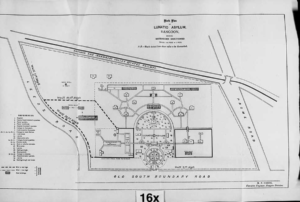
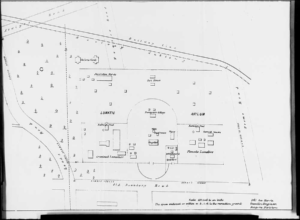
For instance, one of the first governmental institutions established by the British in the colony of Rangoon was a lunatic asylum, which the British intended to be a place to exclude the colonially classified neurodivergent from society. To reify such a conception of separation, one of the first requests from the asylum’s superintendents in their annual reports to the Burmese government was for the construction of a wall around the currently unenclosed compound for the asylum’s civil inmates.[2] The wall’s desired effect of separating between the compound’s “inside” and “outside” was represented in the superintendent’s report a few years later[3]:

However, despite the existence of the wall as a delineation between “inside” and “outside” within the minds of the asylum’s planners, there was already a recognition that this illusion was being troubled in reality.

The attempt to nominate the asylum as an exclusionary space had failed since the authorities’ response to the superintendent’s initial request for a wall was the cheaper alternative of planting a bamboo hedge around the asylum’s perimeter.[4] By 1882, the superintendent raised the issue again as the bamboo was failing ‘to protect the patients from the gaze and impertinent curiosity of visitors and from… their presence.’[5] This posed an issue for the superintendent as he could not rigidly impose the labour routines, the moral education, and strict diets that the asylum’s staff believed were necessary to manage or cure the patients’ mental illnesses, since relatives from the town offered alternative sources for, or distractions from, all of these.[6] As family members continued to visit their relatives within the asylum despite the presence of the bamboo, the more significant issue of increasing numbers of escapes from the asylum led to renewed requests to improve the compound’s security, the existing lack thereof being reflected by a change in mapped representations of the asylum featuring a dashed rather than solid line around the civil compound[7]:

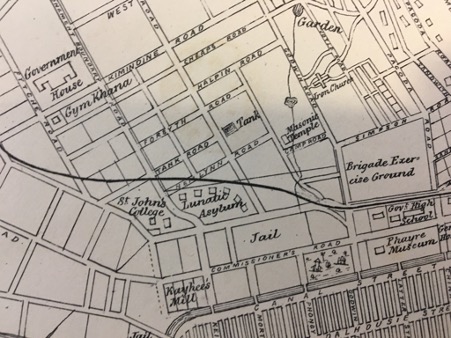
What is perhaps more notable is the representation of the asylum by J. C. Clancey from his visit to the town which depicts the asylum as a loose collection of buildings, as opposed to the clearly segregated space of the Rangoon Central Jail sitting opposite[8]:

What this map suggests is that the physical presence of a wall greatly influenced the perception of the purpose for its liminality as existing in the minds of the people walking by the institution; the jail is separated by a wall and the concept of a person’s criminality is understood to warrant their exclusion, while a person’s perceived neurodivergence does not necessitate their exclusion, especially if this is supposedly facilitated by a bamboo hedge.


This is not to say that the construction of a wall would have altered how the people of Rangoon viewed neurodivergence overnight, but when the British did commit greater effort into making this an exclusionary institution, the effects on the differences between the town and the asylum’s inmates increased. This intensification was seen in 1929 when the inmates were moved to the town’s new mental hospital, as the asylum was renamed, at Tadagale where barbed wire fencing surrounded the entire compound.[9] Before this movement, while the medical approaches to treating various mental illness had changed to variable degrees and the issue of overcrowding had resulted in a growing proportion of the hospital’s population being criminal, there were still few reported incidents of escapees or released patients causing harm to the wider population. However, the new institution, with its more defined liminality and distance from the town’s general population, allowed for a greater securitisation of the inmates’ bodies and facilitated their increased subjection to new medical regimes. In comparison to the previous relative lack of violence enacted on the population of the town considered to be neuroconforming by the hospital’s inmates, when Fielding Hall issued an order to release the hospital’s population after a false alarm of a Japanese invasion, the town experienced repeated acts of violence and destruction as the British authorities lost all control over the activities of the released inmates.[10] What the causes of this destruction were deserves greater analysis, but the increased violence of the inmates on those not considered neurodivergent after the transition from the old asylum to the new hospital’s more exclusionary space is worth investigating.


This blog posting is not meant to present a complete history. However, it shows that Simmel’s suggestion of liminality as a driver for action and a framework for mentalities could provide us with new ways of viewing the effects of such liminality on historical events. As the history of Rangoon’s lunatic asylum suggests, rather than just dismissing the violence enacted after Fielding Hall’s actions as being the result of “madness”, it would be better to explain how this “madness” was constructed, what it meant, and how it became violent, with one possible explanation to all of these questions being the creation of exclusion through the erection of a wall by the British.

[1] Georg Simmel, Simmel on Culture: Selected Writings, (eds.) David Frisby & Mike Featherstone (London, 1997), 171.

[2] Report on the Rangoon Lunatic Asylum for the Year 1878 (Rangoon, 1879), 1.

[3] The Report on the Rangoon Lunatic Asylum for the Year 1882 (Rangoon, 1883).

[4] Report on the Rangoon Lunatic Asylum for the Year 1880 (Rangoon, 1881), 2.

[5] The Report on the Rangoon Lunatic Asylum for the Year 1882, 2.

[6] Ibid.

[7] Report on the Rangoon Lunatic Asylum for the Year 1893 (Rangoon, 1894).

[8] J. C. Clancey, Aid to Land-Surveying (Calcutta, 1882).

[9] Note on the Mental Hospitals in Burma for the Year 1929 (Rangoon, 1930), 1.

[10] Noel F. Singer, Old Rangoon: City of the Shwedagon (Stirling, 1995), 207.

Shwedagon: A site for Burmese nationalism, but a product of transnationalism.

‘Then, a golden mystery upheaved itself on the horizon – a beautiful winking wonder that blazed in the sun, of a shape that was neither Muslim dome nor Hindu temple spire… Under what new god, thought I, are we irrepressible English sitting now?’[1]


These words and their following remarks, written by Rudyard Kipling regarding his three-day visit to Rangoon, emphasise the role which the Shwedagon Pagoda played in the mind of the European in defining the Burmese and their landscape. Such a defining role is reflected in the prominence which the pagoda tends to take in the town’s postcards which I have seen, but the importance of the pagoda in defining Rangoon was not just a European construction but was also held by the Burmese themselves. For instance, it was at the Shwedagon that the rebellious students at Rangoon University set up a counter higher educational institution, simultaneously protesting the attempts by the British colonial government to impose imperialist ideas onto Burmese education and also their military occupation of this prominent Burmese symbol.[2]


However, reading Arthur Waldron’s “The Problem of the Great Wall of China”, his use of alternative historical narratives to question both the European construction and nationalist adoption of such architectural symbols influenced me to take another look at the history of the Shwedagon.[3] It is the South Entrance to the complex that intrigued me because it undertook such vast changes in appearance over the course of British rule, transforming from a traditional gate structure in the 1850s to a much more expressive representation of Mount Neru with a tower covered by a façade of nat figures and flanked either side by chinthes in the 1890s.[4] In the modern day, this sense of movement and life in the structure has been replaced by a more ordered and geometric representation of the pagoda’s mandala.[5] My readings following up on this matter have suggested that the dramatic changes to this entrance over its lifetime reflects more than just the changing nature of Burmese architecture or the political impact of British colonial rule.


Instead, an alternative explanation for this evolution was the introduction of the Shwedagon into a wider transnational culture of Buddhist architecture under British rule as more pilgrims from South and East Asia were able to travel, and donate, to the pagoda. It is this transnational nature that has granted the pagoda UNESCO World Heritage status, but the development of the South Entrance is a physical manifestation of this.[6] As Elizabeth Howard-Moore argues, the architecture of the south entrance, as well as the rest of the pagoda, diverged from the original traditional Burmese style as it began to reflect wider Buddhist architectural styles, the introduction of the chinthes and the Bengali roofing between the 1850s-1890s being a part of this new artistic input.[7] Such a narrative of this site cannot be found in Burmese or British sources at the time, as both of them claim that the Shwedagon represented the Burmese people in one way or another, but it is only through analysing the photographs of structures such as the south entrance that allows us to see that a more complicated history of cultural input is at play here, and by identifying the transnational nature of the site’s architecture we can start to look at other transnational connections between Burma and the rest of the Buddhist world.

[1] Rudyard Kipling, From Sea to Sea: Letters of Travel (New York, 1899; 2010), <https://www.gutenberg.org/files/32977/32977-h/32977-h.htm> [accessed: 27/02/22], 203.

[2] Carol Ann Boshier, Mapping Cultural Nationalism: The Scholars of the Burma Research Society, 1910-1935 (Copenhagen, 2018), 233-234.

[3] Arthur N. Waldron, “The Problem of the Great Wall of China”, Harvard Journal of Asiatic Studies, 43: 2 (1983), 643-663.

[4] “Shwedagon, South Entrance”, Yangon Time Machine, <https://www.yangontimemachine.com/en/index?id=6&art=shwe_south> [accessed: 27/02/22].

[5] Ibid.

[6] “Shwedagon Pagoda on Singuttara Hill”, UNESCO, <https://whc.unesco.org/en/tentativelists/6367/> [accessed: 27/02/22].

[7] Elizabeth Howard-Moore, “Patronage and Place: The Shwedagon in Times of Change”, Buddhism Across Asia: Networks of Material, Intellectual and Cultural Exchange, Vol. 1, ed. Tansen Sen (Singapore, 2014), 386.

Ticket to Ride: Where is Rangoon?

The emphasis of a space’s represented centre reveals how the author of that representation creates a hierarchisation of certain spatial practices in governmental discourses, although these discourses may be normative and fail to reflect the reality of the cityscape. However, the effect which this can have on an urban environment can be explored through Ash Amin and Nigel Thrift’s concept of the distanciated economy, where ‘work on urban economies has been framed in terms of points, lines and boundaries… cities have been seen as entities that can be cut up into centres and peripheries,’[1] and while their argument was to deconstruct the ways in which some urban cities are defined against others, this can equally be applied to how an individual city’s areas are defined against one another.


In the case of Rangoon, one of the most cited histories of the town from the colonial period, B. R. Pearn’s A History of Rangoon, was commissioned by the town’s municipal authorities and mostly relied upon municipal reports and first-hand testimonies from members of the municipal establishment to construct its history.[2] Due to this, the way in which Pearn’s history approaches matters of public transport emphasises the role in which the municipal authorities’ intended for it to fulfil. This end goal was for the town’s public transport networks to link areas of industrial production to suburbs further afield in order to depopulate the centre, the overcrowding of which was impeding the flow of traffic and worsening disease spread.[3] Due to this, the actions of the suburban in Pearn’s history have already become peripheral to the town’s economic centre and such a representation of the town’s history creates an operational definition which reinforces the municipal authorities’ actions: that the town is primarily a space for economic production,  which suburbanisation would help intensify, and the town’s inhabitants are economic units that can be rationalised for these ends. This can be understood by Pearn’s suggestion that the public transport networks were consistent failures because their establishment did not decentralise the town’s labour pool away from their places of production.[4] Such portrayals of the town’s history were ultimately designed to build up to Pearn’s justification of the municipal authorities’ exceptional expenditure of over Rs. 14,000,000 in creating this idealised delineation between the suburban and spaces of economic production at the end of his critique of the towns’ transport networks.[5]

However, what is missing from Pearn’s history of Rangoon’s transport networks are the circles of social activity that existed outside of the intended suburbanising effect. For instance, when the town’s tramlines were extended to the Burmese village of Kemmendine, the services saw a massive increase in usage from 3,433,540 annual passengers to 6,026,915, despite the fact that it is highly unlikely that many of the Burmese in Kemmendine worked in the town’s industrial sectors since they were based in the furthest and least accessible quarters from Kemmendine.[6] Indeed, the purpose of the trams were to decentralise the Indian workers living around the industrial centre, not to bring in new workers from further afield. Instead, the trams enabled new transportation options for other socio-cultural activities, such as the pilgrimage to the Shwedagon Pagoda, as suggested by representations such as a postcard of the pagoda line’s terminus depicting a tram being filled with Buddhist monks.[7] Similarly, the Burmese were also brought closer to their spaces of socio-cultural interaction by the trams with their extension to the newly established racecourse in Kyaikkasan and Kandawgale’s Burma Athletic Association playing fields, which saw the lines experience great popularity when events were being held in that area.[8] Additionally, the significance which the trams held for the suburban Burmese was emphasised by the fact that in death it was the wealthy Burmese and the Buddhist monks who used the tramway’s funeral service, carrying their bodies through their communities to be celebrated in public before alighting at the cemetery.[9] On the one hand, this was good business on the part of the tram company to tailor their services around the needs of the already suburban population who were most likely to use the trams’ services, but simultaneously this undermined the political objectives of the municipal authorities as these people were not using the trams to further the town’s economic functions, but rather used them to create new spaces for cultural interaction outside of the town’s centre.


The use of sources such as Pearn’s history reveals where the planner’s gaze saw the focal points of Rangoon. However, by reading between the lines of sources such as postcards, newspaper clippings, or the frustrated language of municipal reports, all productions of the colonialist, the actual centres of activity which created the experience of the cityscape for those who inhabited it can be unveiled.

[1] Ash Amin & Nigel Thrift, Cities: Reimagining the Urban (Cambridge, 2002), 51.

[2] B. R. Pearn, A History of Rangoon (Rangoon, 1939).

[3] Ibid., 278-282.

[4] Ibid.

[5] Ibid., 282.

[6] Report on the Working of the Rangoon Municipality for the Year 1907-1908 (Rangoon, 1908), 20.

[7] Tilman Frasch, “Tracks in the City: Technology, Mobility and Society in Colonial Rangoon and Singapore”, Modern Asian Studies, 46: 1 (2012), 106.

[8] Ibid.; Pearn, A History of Rangoon, 281.

[9] Frasch, “Tracks in the City”, 107; “New Departure in Burmese Funerals”, Straits Echo, Singapore (26/04/1907), 5, <https://eresources.nlb.gov.sg/newspapers/Digitised/Article/straitsecho19070426-1.2.23?ST=1&AT=search&k=rangoon%20tram&QT=rangoon,tram&oref=article> [accessed: 20/02/22].

Ditching Hegel: The Phenomenology of “Slum” Spirit

The professionalisation and academisation of advocacy for slum communities has furthered a construction of an abstract conceptualisation of the “slum” where the agency of the slum-dweller is dependent upon the nature of their representation by academics and professionals, making the navigation between these representations in an attempt to write a history more difficult. This begins by how academia tends to rationalise phenomena in order to fit it within a structuralist system of understanding the world, as it is through this system of comprehension that allows the academy to connect disassociated events together and justify the construction of such ideas by feeding them into wider metanarratives. A lot of the inspiration behind this method of knowledge construction comes from Hegel’s Phenomenology of Spirit in which Hegel described the origin of knowledge as coming from the distance between an object’s essence, its being in-itself, and the acknowledgement of that object by an agent’s consciousness, this acknowledgement creating a second object, that of the being-for-consciousness.[1] Therefore, since knowledge is created by individual consciousnesses, Hegel argued that the movement from knowledge to truth comes in the mediation between an individual’s original notion regarding an object and another individual’s antithetical notion, with the eventual coalescing around a common universal notion that overcomes both notions’ limitations.[2] It is during this explanation of how knowledge is created that Hegel likens the process to a social struggle, inspiring the understanding of the actions of social agents during historical events as being the result of those individuals self-perceiving their existence as a part of a dialectical struggle.[3]


However, this understanding of historical forces can lead to the disassociation of the historical individual from being an agent during historical events, instead relying on wider metanarratives as drivers of history. This can lead to the oversimplification of the motives of agents, as Marc Askew argues exists in the historiography surrounding slums which represents slum-dwellers as participating in wider struggles against the state and capital for the historians’ normative advocacy purposes.[4] The issue that arises from this is that the increasing abstraction of the historical agent as participating within wider struggles makes the historian’s representation of the original object, the potential primary sources offered by that agent, an obfuscation of differing narratives of the objects. For instance, in Shu Mei Huang and Hyun Kyung Lee’s representation of the eviction of residents from Huaguang, the authors argue that recording the heritages of this community can help create wider geographies of responsibility which would reconceptualise the usage of state power.[5] The authors achieve this argument in a number of ways, including by connecting the symbols of national identity displayed by residents to the histories of their ancestors, by recording the viewpoints of those gathered at a student protest against the state’s seemingly arbitrary measures to achieve eviction, and the likening of the plight of the residents of Huaguang to those of residents in other slums which have experienced eviction.[6] However, these generalisations of this community’s history fail to take into account the viewpoint of the individual, instead grouping the heritages represented in the book as part of a wider discourse of the push-and-pull between collective remembering and state power, which may explain why the authors fail to explain the community’s failure to effectively organise against the eviction of individuals.[7]

While this can be seen as an example of one of Askew’s points, that normative academic work on slums tend to highlight notions of communitarianism over the reality of individual responsibility, a more pressing question as to how this community’s heritage can actually function as a platform from which academia can create a geography of responsibility is raised when reading how other sources have represented the individual agents within this community.[8] For instance, how Cheng Wei-hui, one of the community’s leaders, has been represented in the Taipei Times offers an alternative view of the residents as failing to view the actions of the state as constituting part of a wider governmentality of arbitrariness. In one article, she is said to have complained that the government destroyed several dormitory units without warning because ‘it was rude that the work took place without prior warning,’[9] the emphasis being on the failure to communicate the impending action to the residents rather than on the actual policy of destruction itself. In another article, Cheng Wei-hui is quoted as saying ‘I was taught to love my country, but I didn’t know the country I loved was like this,’ adding that ‘it gives money to big corporations and condemns us people to death,’[10] which implies that the issue is not the state’s power in enacting eviction but with the misplacement of government policies on the side of capital, again failing to criticise that the state has this ability to employ its legal and security apparatuses to enforce eviction. While these two articles do link Cheng Wei-hui’s quotations to wider critiques of the government’s policies, none of these critiques are explicitly attributed to Cheng Wei-hui, which would suggest that she does not personally frame herself as existing in a dialectical contest against the punitive state. Instead, these perspectives are implied to be the views of the author, which again feeds into Askew’s perspective on the generalisation of slum politics as robbing the individuals living within them of their agency in describing social phenomena from their own perspectives.


What both the Taipei Times’ articles and Huang and Lee’s narrative on Huaguang offer are normative positions regarding state power, but both of them fail to explicitly highlight a moment in which the individuals involved in these events perceived themselves as participating in a slum-communitarianism/state-authority dialectical struggle. It is the abstraction of these events as existing within such a paradigm that turns the agent of the slum-dweller into an object to be represented, and if academia is to serve as a normative force to direct future social development through the representation of knowledge, it would be better to accurately record the histories of the individuals in these communities from their perspectives, perspectives which these two sources currently obfuscate through their framing of them within a wider abstract metanarrative. Askew argued for the deconstruction of how these communities are represented, and so maybe it would serve best to abandon the dialectical construction of these people through the creation of a common “heritage”, and instead ask who the slum-dweller is as an exception to these generalisations, how do they live, and how do they identify themselves and the world around them. This would serve to produce articles which could be considered to better represent the historical nature of the primary sources which they use.

[1] G. W. F. Hegel, Phenomenology of Spirit, trans. A. V. Miller (Germany, 1807; 1977), 55.

[2] Ibid., 80-86.

[3] Ibid., 111-119.

[4] Marc Askew, “Genealogy of the Slum”, Bangkok: Place, Practice & Representation (Abingdon, 2002), 139-169.

[5] Shu-Mei Huang & Hyun Kyung Lee, “Disarticulation and Eradication of Dissonant Place in Replicating Roppongi Hills in Taipei”, Heritage, Memory, and Punishment: Remembering Colonial Prisons in East Asia (Abingdon, 2020), 132-146.

[6] Ibid., 135-138.

[7] Ibid., 138.

[8] Askew, Bangkok, 144-145; Ibid., 141.

[9] Rich Chang, “Demolition Work at Taipei’s Huaguang Community Begins”, Taipei Times (24/02/2013), 3, <http://www.taipeitimes.com/News/taiwan/archives/2013/02/24/2003555616> [accessed: 13/02/22].

[10] Ho Yi, “Refugees ‘Squatting’ on a Gold Mine”, Taipei Times (03/07/2013), 12, <http://www.taipeitimes.com/News/feat/archives/2013/07/03/2003566212> [accessed: 13/02/22].

From Conquering Nature to Conquering Humans: Rangoon’s Response to the Plague.

Mary Sutphen argued in 1997 in favour of David Arnold’s position that germ theory did not affect the primacy of environmental determinism in the European doctor’s view of aetiology.[1] However, Sutphen’s article underplays the impact which bacteriologists’ linkage between plague and rats had upon municipal public health policy considerations. Sutphen is right to place colonial responses to bacteriology within the context of tropicality, but just because this new form of empiricism contributed to this hegemonic discourse rather than undermined it is not an indicator that such developments failed to make an historical impact. Indeed, there is a whole wealth of literature that highlights the role which the plague outbreaks of the 1890s and onwards had on the decisions that municipal authorities took in the name of public health, whether they be in road construction or the architecture of houses.[2]


In the case of Rangoon, Sutphen’s argument that, rather than diminishing the emphasis of environmental determinism, new biomedical knowledge had shifted its focus from natural miasmas to the insanitary conditions of cities’ slums is evidenced in the town’s Municipal Committee reports. It is no surprise that the committee’s first reported encounter with the plague in 1899 was accompanied in the same year’s report with a lengthy request for funds to perform land reclamation of the town’s suburb with the highest mortality rates, Lanmadaw, as it was only through improvement of the land that they believed disease rates could be reduced.[3] Not a single mention of rats appears in this report. However, when the plague finally did strike Rangoon in 1905, the destruction of rats was noted as one of the immediate measures to combat the epidemic, with requests for funds in order to change the sewer systems and to demolish the insanitary abodes of the town.[4] This same report does also bring up the need to reclaim the land of Lanmadaw, but this time the language had changed, without a reference to how the swampy soil contributed to the spread of disease as they had done in 1899, instead the necessity for reclaiming this land was entirely for the purpose of constructing new properties to offset the town’s rising house prices.[5] This shift in emphasis between the two reports would suggest that, as Sutphen argued, colonial authorities accepted the scientific link between rats and plague that bacteriology had made possible as the natural environment of these communities were no longer considered the main factor in disease spread, but rather the nature in which people lived. As the committee’s health officer reported:

‘the epidemic seems never to have been more severe in the… undrained and badly conserved quarters of Lanmadaw… than in the “Pucca Area,” which is better provided with… surface drains… but where the houses are often… four storeys in height, the lighting and ventilation very imperfect, and where over-crowding upon area attains its maximum… The only conditions common to all the infected dwellings were their general dirtiness and the absence of adequate light and ventilation, and the prevalence of rats in the vicinity.’[6]

However, Sutphen’s assertion that this ‘did not require colonial officials to change any of the routines they had used to control disease in the past’[7] was absolutely not the case in Rangoon, and the effects of this discursive shift bore itself out in drastically new approaches to municipal policy. For instance, in 1899 the committee sought to improve the drainage and infrastructure of the less urbanised sections of Rangoon, with the first response for prevention being the quarantining of ships from infected ports under the Venice Convention; there was little intention of changing how people living in these areas conducted themselves or organised their households.[8] Whereas, in the years following the 1905 report, with the blame for the plague’s spread being placed upon those dirty households attracting rats which the health officer had described, the committee started requesting designers to present examples of new ‘model houses for the poorer classes.’[9] With this, the rate of forced evictions increased as an amendment to the Burma Municipal Act of 1898 allowed for greater numbers of lower ranking officials’ signatures to count as providing sufficient authorisation for the demolition of buildings, a reflection of the increasing workload the rate of these demolitions were creating for the higher authorities in the effort to construct more free-standing masonry structures.[10] Finally, it is with the efforts to totally redesign the barracks provided by private businesses for their hired coolies that showed the extremity with which the plague had affected municipal policy, the 1910 report reading:

‘the want of power to control the laying out of private estates is a serious danger to the proper development of the town. The Committee is not eager to apply for these powers, but unless they are obtained and exercised or unless private owners exercise more liberality and foresight in the laying out of their estates… the health of the inhabitants of East Rangoon and other improved quarters will be imperilled by the existence of undrained, illventilated and grossly over crowded buslees which would put the slums of Liverpool to the blush.’[11]

A sentiment which was reflected across South Asia, with Robert Home directly linking the plague outbreaks to the development of new town planning techniques by taking a broader view of the discourses of colonial policy, a view which takes the impact of such developments into greater account than Sutphen’s focus on the immediate medical responses to such events.[12]


Therefore, it is clear that the link between rats and incidences of plague that bacteriology made possible greatly impacted the nature of municipal policy. The shift from theories that natural miasmas caused plague to plague being the result of human insanitary practices meant that local governments sought to exercise a new governmentality of biopower that increased controls over how indigenous people occupied domestic spaces. While it is important to note, to Sutphen’s credit, that the goals of colonialism existed similarly either side of the change from humanity needing to conquer nature to survive, to humanity needing to conquer humans to survive as both discourses sought to exploit foreign resources, the significance of this change lies in how the latter allowed the state to justify intensifying the regimentation of people’s lives. It is this change in policy that is absent in Sutphen’s article.

[1] Mary P. Sutphen, “Not What, but Where: Bubonic Plague and the Reception of Germ Theories in Hong Kong and Calcutta, 1894-1897”, Journal of the History of Medicine, Vol. 52 (1997), 81-113.

[2] Robert Home, Of Planting and Planning: The Making of British Colonial Cities (Abingdon, 1997; 2013), 149-199; Michel Sugarman, “Reclaiming Rangoon: (Post-)Imperial Urbanism and Poverty, 1920-1962”, Modern Asian Studies, 52: 6 (2018), 1856-1887.

[3] Report on the Working of the Rangoon Municipality, for the Year 1898-99 (Rangoon, 1899), 18-19.

[4] Report on the Working of the Rangoon Municipality for the Year 1905-06 (Rangoon, 1906), 11-12.

[5] Ibid., 10.

[6] Ibid., 12.

[7] Sutphen, “Not What, but Where”, 112.

[8] Report on the Working of the Rangoon Municipality, for the Year 1898-99, 29.

[9] Report on the Working of the Rangoon Municipality for the Year 1907-08 (Rangoon, 1908), 21.

[10] Report on the Working of the Rangoon Municipality for the Year 1909-10 (Rangoon, 1910), 14.

[11] Ibid., 16.

[12] Home, Of Planting and Planning, 149-199.

The Presentation of Control, and the Reality of Resistance, in British Rangoon

I wish to construct a multi-layered spatial history of resistances to British rule in Rangoon from the late 19th Century, to the early 20th Century, using the Insane Asylum/Mental Hospital of Rangoon as a narrative tool and microcosm of wider themes, ultimately answering the question of “how, where, and when did the presentation and implementation of colonial institutions of control in British Rangoon fail to enforce the intended spatial practices upon local people”. I hope that this focus on such a small space, and identifying the similar themes of resistance in response to British rule that it shared with other spaces within this larger imagined landscape (that of “Rangoon”), can provide for a perspective of colonial rule that does not look at the effectiveness or ineffectiveness, or the “good” or “bad” outcomes of colonial policies, but rather looks towards undermining the concept that the physical presence of colonial institutions and structures within a space automatically meant control of such a space. In this regard, I have heavily drawn inspiration from Michel de Certeau’s descriptions of individual agency in the face of spatialised and physicalised representations of systems of control.[1] The people of Rangoon had their own agency, and they did not act in the way that the colonialists conceptualised they would do, and therefore we should not assume that they did so when attempting to write a non-colonialist history contextualising this space.

That being said, I face the immediately obvious issue that I cannot read any of the languages which these people spoke other than English. However, I don’t presume to ever be able to write a history which understands or accurately represents the thoughts, feelings, and perspectives that these people held, and to do so would be to undermine the fact that they are so separate from myself. Instead, I can reclaim a particular narrative of theirs by analysing colonialist sources to see how the colonialists conceptualised the space and spatial practices of Rangoon, and then to read between-the-lines to understand where this failed to truly affect itself upon the people of Rangoon; that is a narrative of resistance. For instance, I can read from reports how different patients responded to their treatment within the Insane Asylum/Mental Hospital, and how the local populace undermined its intended role within the colonial conceptualisation of this space, and this allows me to understand where and when colonial control failed. This is a way of presenting the subaltern without presuming to know them.

I also believe that the Insane Asylum/Mental Hospital provides a perfect example of a point in time and space where colonial ideas interacted with local ideas of mental health, and how each one responded to the other is fascinating and indicative of wider themes. Such an analysis has already been done excellently by Jonathan Saha who has explored the institution in various ways to explain British colonial attitudes towards the insane, to describe medicine not as a tool of the state but as a set of state practices which were accepted, rejected, and modified as each individual context called for it, and also to explore the relationship between the human and non-human in conceptualisations of these spaces.[2] However, I want my project to be less of an anatomy of British medical practices in colonial settings, which would require knowledge and skills that I do not possess, and more about the recurrent assertions of local culture against alien ideas that happen throughout this over half a century of history. For this, I plan to use: governmental reports and maps, to understand the development of these spaces and the colonial conceptions of them; newspapers, to understand the bourgeois conceptualisations of this space and how they inhabited it; construction and engineering papers which apply to this space, in order to understand how the physical representations of these institutions were meant to impose themselves upon this space; and various governmental manuals, to understand the state practices which were meant to be enacted within this space.[3] Throughout these sources, as well as many others, there are details and anecdotes of the day-to-day resistances practiced, sometimes unwittingly, by the people living their day-to-day, and how the representations of colonial institutions of control failed to induce the intended spatial practices upon those living within this space.

[1] Michel de Certeau, “Walking in the City”, The Practice of Everyday Life, (Berkeley, 2011), 91-110.

[2] Jonathan Saha, “’Uncivilized Practitioners’: Medical Subordinates, Medico-Legal Evidence and Misconduct in Colonial Burma, 1875-1907”, South East Asia Research, 20: 3 (2012), 423-443; Jonathan Saha, “Madness and the Making of a Colonial Order in Burma”, Modern Asia Studies, 47: 2 (2013),  406-435.

[3] I have accessed multiple sources of each of these listed types, but to provide one specific example of this last type: F. Rath Carreck, Handbook for the Use of Nurses and Attendants of Lunatic Asylums in India & Burma, (Madras, 1910).

The Failure of Coercion: Controlling women’s bodies in Rangoon

In the space of British Rangoon, the administrative capital of British Burma, attempts to control women’s bodies began to falter as they were imposed increasingly at the women’s inconvenience. This particular imposition applies specifically to “prostitution”.

As a part of the British attempt to reduce the prevalence of venereal disease infections amongst their military forces, the Contagious Diseases Act required colonial administrations to register all female “prostitutes”, collect a licensing fee from them, and subject them to regular medical inspections. However, this system of surveillance and control struggled to ever record an accurate number of the women performing sexual acts as a part of a material exchange for a number of reasons, those including: an assertion of cultural practices against the attempted imposition of British conceptions of femininity; and an active rejection of British medical responses to the presence of venereal disease. Both of these responses are acts of resistance, and they fundamentally undermined British efforts to control women’s bodies in this space in order to allow their colonial agents safer sexual gratification.

The British, and more broadly Western, conceptions of domesticity, familial exclusivity, and feminine biological roles were, and are, not, as stressed so heavily in Jordan Sand’s House and Home in Modern Japan, permanent social structures.[1] That sex in the home should be tied to broader spatial practices of familial exclusivity and reproduction, and that the ties of marriage should restrict a woman’s sexual freedom, are presumptions made by the British colonial authorities which quickly became understood as not being so universal. When attempting to define what form of material exchange deserved the label of “prostitution” in Rangoon, the British authorities realised that the cultural relativity of these conceptions of sex meant that they could not control nor cajole the Burmese women into conformity. As the 1875 annual report for the lock-hospitals in the wider Pegu region suggests:

‘There is no doubt a number of women in Rangoon, who, if not prostitutes, are next door to it. These are chiefly, if not entirely, among Burmans, and it is always a question of some difficulty whether any individual of this class should be registered or not. The existence of this class is a part of the Burmese social structure, and any harsh dealing with its members, so long as they keep within certain limits, would produce an outcry. What I mean is, that there are many women who lead loose lives, and have three or four lovers a-piece, who support them. Their neighbours recognize the situation with but a modified disapproval, until the women fall a stage lower. It is then that we interfere; but it is not always an easy matter to decide, in sympathy with the popular sentiment, when a woman has overstepped the line, and in such cases the order to register is generally vehemently opposed.’[2]

These were not women in a brothel working for a fee, unlike the British provision of prostitutes for their colonial agents, but these were women with specific and publicly known arrangements with certain people, and the communal protection that they received in defence of this culturally acceptable practice allowed them to resist any definition of the sex acts that they were performing within their own cultural community’s space that the British sought to impose upon them. The domestic space of these women’s homes thus become a space of resistance and security against colonial acts.

Beyond the spatialised cultural contexts of these women’s homes offering a space of resistance, the British also found that their requirements for evidence of “prostitution” further troubled their own definitions of who a “prostitute” was. In many of the impoverished villages surrounding the roads entering Rangoon, the British authorities struggled to charge any of the women who were offering to perform sex acts in exchange for material gain since many of these women were married.[3] This difficulty arose because the British required such women’s husbands to testify to their “infidelity”, and, since these women were generally performing these exchanges with the agreement of their husbands, the husbands rarely ever did so. In fact, the general reluctance of any of the Non-European population to testify as witnesses to a woman’s “prostitution” meant that only a single woman was convicted of unlicensed prostitution throughout the entirety of 1875, only 5 were arrested and agreed to join the register, and none were fined.[4] This lack of control only worsened for the British as those who had joined the register began to resist the increasingly invasive control of their bodies.

As cases of venereal diseases amongst colonial agents rose throughout the year, the lock-hospitals were told to increase the frequency of these women’s medical examinations to a weekly rate.[5] However, the lock-hospitals in Rangoon lacked the capacity for such frequent examinations, and thus, upon arrival at such institutions, women were forced to wait for inconvenient periods of time. On top of this, it was also the practice of these particular lock-hospitals to mistakenly classify various urinary tract infections as cases of gonorrhoea, thus resulting in many women being imprisoned within these institutions for weeks for having very common, non-contagious infections.[6] These women were not allowed to leave under the belief that if they were allowed to, then they would continue to perform sex acts and spread the venereal diseases further, and thus a woman whose sexuality was controlled and regulated by the state was mistrusted by the state, thus intensifying the state’s attempts to control her. The result of the increased frequency of these examinations were protests outside the magistrate’s office, women absconding from the examinations altogether, and a refusal to pay the fines associated with such absconding, meaning that 22% of the women on the register had to be removed since the British officials had no practical way of contacting and controlling these women.[7] Within a few years, the Contagious Diseases Act was scrapped due to its ineffectiveness at reducing the prevalence of venereal diseases amongst the male colonial agents, and a non-compulsory clinic for women with such diseases was constructed within the general hospital of Rangoon.[8]

Thus, despite the official imposition of controls over sex acts in the space of Rangoon, the interpersonal reality of the situation did not widely change due to the cultural practices tied to these spaces being alien to the types of controls being imposed by the British. Additionally, the construction of lock-hospitals by the British undermined their own attempts of controlling women’s bodies since they worked against the convenience of the women whom they were trying to impose them upon. Instead, the resisting actions of the people and, most importantly, these women in Rangoon helped contribute to altering the British colonial authorities’ entire approach to controlling women’s sexuality in these spaces.

[1] Jordan Sand, “Introduction: Dwelling and the Space of Modern Japan” in House and Home in Modern Japan: Reforming Everyday Life 1880-1930, (Cambridge, Mass., 2005), 1-19.

[2] Pegu Division Annual Report on the Lock-Hospital for the year 1875, (Rangoon, 1876), 5.

[3] Ibid., 7.

[4] Ibid., 8.

[5] Ibid., 5.

[6] Ibid., 9.

[7] Ibid., 5.

[8] London, School of Oriental and Asian Studies Library, PP MS 14/002/067, Charles Stewart Addis, Letter Book 1892-1893, fol. 312r.

Architecture as an indicator of the Alien: The Rangoon Lunatic Asylum

Rather than the intellectual justification of the construction of European architecture in Asian colonies being a celebration of grandeur and cultural superiority, for the agents of the state actually on the ground, often their justifications could simply be due to the practical limits of their situation. Taking Rangoon’s asylum as a case study, we can see that the British were struggling to build the institution as they had hoped, and this was in large part due to the noncompliance of the colony’s population.

While the City Beautiful movement would be embraced across the British Empire a few decades after as a way of securing the permanence of British colonial superiority, as suggested by Robert Home and Peter Hall, and even at the time when the French were building European architecture across Indochina as an expression of their cultural superiority, as argued by Gwendolyn Wright, the superintendent of the Rangoon Lunatic Asylum was considering the use of European architecture in 1880 for a very different reason.[1] Ever since the institution had opened in 1871 there had been attempts made by the administrators of the facility to construct a dead-house within its compounds. While this had initially been a request which was not acted upon with much urgency, by the end of the decade death rates were equalling roughly 10% of the asylum’s population as epidemics and the general debilitation of the patients who had remained in the asylum for a number of years started to impact on the numbers dying, and so the asylum’s superintendent attempted to act upon this issue.[2] However, there was one particular obstacle which he encountered:

‘The dead-house, which was asked for eight years ago, has not yet been erected. The money for a wooden structure has been long ago sanctioned; but the Burmans and Chinese decline to build it, because, as they say, men and women are cut up in it. To get over this difficulty it was suggested that it should be built of brick.’[3]

While this statement does not provide any illumination as to why the construction of the dead-house out of brick would be a way of circumventing the issues facing the superintendent, we can provide a suggestion as to why this may be the case by examining the other buildings within the compound. As a way of housing the non-criminal inmates, the asylum offered a number of wooden cottages, and these cottages would be raised above the ground by poles, the reason for this being that during the monsoon rains it would keep the structure away from the groundwater and prevent them from rotting or dampening the interior.[4] We could suggest, therefore, that the only workers who knew how to build this particular kind of raised structures with the wood particular to that area of the world were the populations who had lived and built towns in the area for generations: the Burmese and Chinese. Therefore, the suggestion to construct the dead-house with brick as a response to these populations’ refusal to build it out of wood could be an implicit suggestion that the superintendent must now rely upon other populations present in the town, probably the Indian labour force, who would be under the instruction of a British engineer, who presumably had no knowledge as to how to construct these buildings with these materials as they would have lacked the cultural knowledge which the local geography had made necessary.

This surely was a setback for the British colonial agents as not only were brick buildings more expensive to construct than wooden ones, but also the previous superintendent had praised how effective the local architecture was at providing easily cleanable and good quality housing for the inmates, helping to keep their disposition from turning violent, and the superintendent quoted above lamented as to the ineffectiveness of the asylum’s brick buildings at keeping the rains out of the cells.[5] This is just one example of how the attempt to impose British ideas as to how the state should respond to mental health were rejected by local cultures. Other examples include when the local populations resisted providing payment for the care of their friends and relatives incarcerated within the asylum, and they also resisted requests from the asylum’s authorities to return escaped patients, who were only returned once the asylum’s staff happened upon these individuals in the town by chance, but neither of these other two incidents were exhibited through the architectural presentation of the asylum.[6] Now, however, the inability to convince the local populations to embrace European conceptions of medical practices as a part of their culture was now visually represented. Not only were the practices within the building alien to these cultures, but, due to this act of resistance by local builders, so was its façade, making the distance between the British and the people whom they were trying to govern obvious to all, and leaving this failure of the asylum’s administration, with all of its implications for its future running, as a mark upon the layout of the facility.

[1] Robert K. Home, “Miracle Worker to the People” in Of Planting and Planning: The Making of British Colonial Cities (1996) Peter Hall, “The City of Monuments” in Cities of Tomorrow: An Intellectual History of Urban Planning and Design since 1880 (2014, 4th Ed.); Gwendolyn Wright, “Indochina: The Folly of Grandeur” in The Politics of Design in French Colonial Urbanism (1991).

[2] G. D. Burgess, Report on the Rangoon Lunatic Asylum: For the Year 1880, (Rangoon, 1881), p. 17.

[3] Ibid., p. 1.

[4] G. D. Burgess, Report on the Rangoon Lunatic Asylum: For the Year 1879, (Rangoon, 1880), p. 1.

[5] Ibid., p. 1; G. D. Burgess, Report on the Rangoon Lunatic Asylum: For the Year 1880, p. 1.

[6] G. D. Burgess, Report on the Rangoon Lunatic Asylum: For the Year 1879, pp. 4, 8.

The Ownership of Barracks: Regimentation made Resistance

Space is rarely an asymmetrical imposition of power which all agents are subjected to equally. This is a very crude and underwhelming statement, but it is one whose implications we should always remind ourselves of when adopting new historical approaches. Those implications are drawn out much more elegantly by Michel de Certeau who, in one of the critiques he aims at Michel Foucault in L’invention du Quotidian, characterises the Foucauldian perspective on space as perceiving it as a part of a structure of power.[1] Space, in this understanding of Foucault, becomes a tool from which systems of power may better categorise, hierarchise, and discipline society into conformity. These dichotomic divisions of society ‘draw their efficacy from a relationship between procedures and the space that they redistribute’[2] in order to deepen the chains of significations that reaffirm the logic of these categorical separations. In other words, our relative understandings of where we position ourselves in relationships of power are conceptualised spatially and are reinforced through spatial practices.

What de Certeau offers as an alternative to this argument is a realm in which the individual agent escapes the structuralising nature of ordered space through ‘multiform, resistance, tricky and stubborn procedures that elude discipline without being outside the field in which it is exercised.’[3] In drawing out the implications of this position, we open up broad new approaches to history in which we can frame past events as belonging to a process of resistance and individuality, rather than one of inevitable and encroaching control and repression; essentially, giving agency back to the agent. Furthermore, by looking at the historically constant and individualised reappropriations of spaces, we can see how disordered spatial practices can snowball and perhaps undermine the structuralising effects which the hierarchical relationships of power that ordered spaces attempt to create could have on other individuals. In this instance, we can use the example of Rangoon to justify this statement.

Twenty years after the conquest of Rangoon, its restructuring upon a gridiron system, and its bureaucratisation as the colonial capital of British Burma, the British colonial authorities decided to conduct a census across the entirety of their Burmese territories in 1872.[4] Rangoon had been planned by the British using a similar model to other colonial cities they had planned, relying upon centuries of intellectual refinement from the “grand modell”, and, as a consequence, Rangoon resultingly shared many of its demographic features with these similarly planned Asian cities: a multicultural and polyglot population, as well as a significantly imbalanced gender ratio.[5] However, As this census would suggest, the urban techniques that the British had used to assert their bureaucratic and cultural power across the globe were not so effective an apparatus of power as they would have believed.

In the census report’s section focusing upon the enumeration of towns, the report’s author states that it was ‘the easiest work of all’ and that it was mostly ‘taken in one night.’[6] “mostly” is the operative word here, since the report’s author emphasises that there was the significant ‘exception of Rangoon Town.’[7] What occurred in Rangoon is described by its town magistrate as thus:

‘The night of the 15th was a fine night; and, with a hope of securing correct numbers, &c., of the cooly classes who live in barracks and lodging-houses of various kinds, I instructed the Police, and had the Inspectors told off to superintend the work during the night. The Assistant Superintendent of Police, the Assistant Magistrate, and myself went about the town to exercise general supervision. We then witnessed the great want of legal authority in the work, for in some of these barracks, &c., the people pretended to be asleep, and not to hear the order of the Police to open their doors and bring lights. All was darkness, and the Police dare not resort to force. Delay ensued, and it was found quite impracticable to carry out my original intention; I was therefore obliged to cause the forms to be checked by sending Police and enumerators round the town for a week to test the accuracy of the forms, and make corrections.’[8]

In other urban spaces, such as the mostly natively constructed Thayetmo, no such issues were encountered and the colonial authorities could impose much more aggressive tactics due to the effectiveness of their enumeration, including the detention of boats trying leave or enter Thayetmo on the night of the 15th of August.[9] Instead, by refusing to wake up, the low wage, contracted, potentially even indentured labourers who had been housed in regimented communal living spaces, perhaps by the town authorities or the capital interests that they were serving as a way of reinforcing their economic and social positions in the city’s hierarchy, were appropriating these spaces as places of their own rest and security, and they therefore felt no need to comply with the disciplining attempts of the state’s agents. Rather than being spaces of order and compliance, these people used these spaces to reposition their relative proximity to the state and its control over them. This simple act of sleeping and the bravery to not answer the door was enough to change the nature of the census, warping it from a comprehensive survey being imposed upon them outside of working hours, to a rough survey which was conducted around their work schedules for their convenience. By resisting attempts to be categorised by the state through sleeping in their beds, the repressed of Rangoon restricted the state’s ability to enforce future policies within this city space due to the more greatly inaccurate abstract conception of the demographic makeup of the city’s population that colonial authorities now had. Due to this assertion of agency and ownership from the bottom-up, the people within this urban space, which was designed to order and control them to a greater extent than those urban spaces which, in actuality, ended up being more compliant, resisted the degree of hierarchisation of this new colonial space that the colonial authorities wanted to impose.

Space played a vital role in this small moment of history, but it was a role of resistance which those self-empowering individuals chose to give it, rather than one of control and imposition.

[1] Michel de Certeau, The Practice of Everyday Life (University of California Press, 2011), 96.

[2] Ibid.

[3] Ibid.

[4] H. T. Duncan, Report on the Census of British Burma: Taken in August 1872 (Rangoon, 1875).

[5] Robert K. Home, “The ‘Grand Modell’ of Colonial Settlement” in Of Planting and Planning: The Making of British Colonial Cities (1996), 9-37.

[6] Duncan, Report on the Census of British Burma, 3.

[7] Ibid.

[8] Ibid.

[9] Ibid.